Robot
Selected and validated as part of the complete application package.
Include in review ↗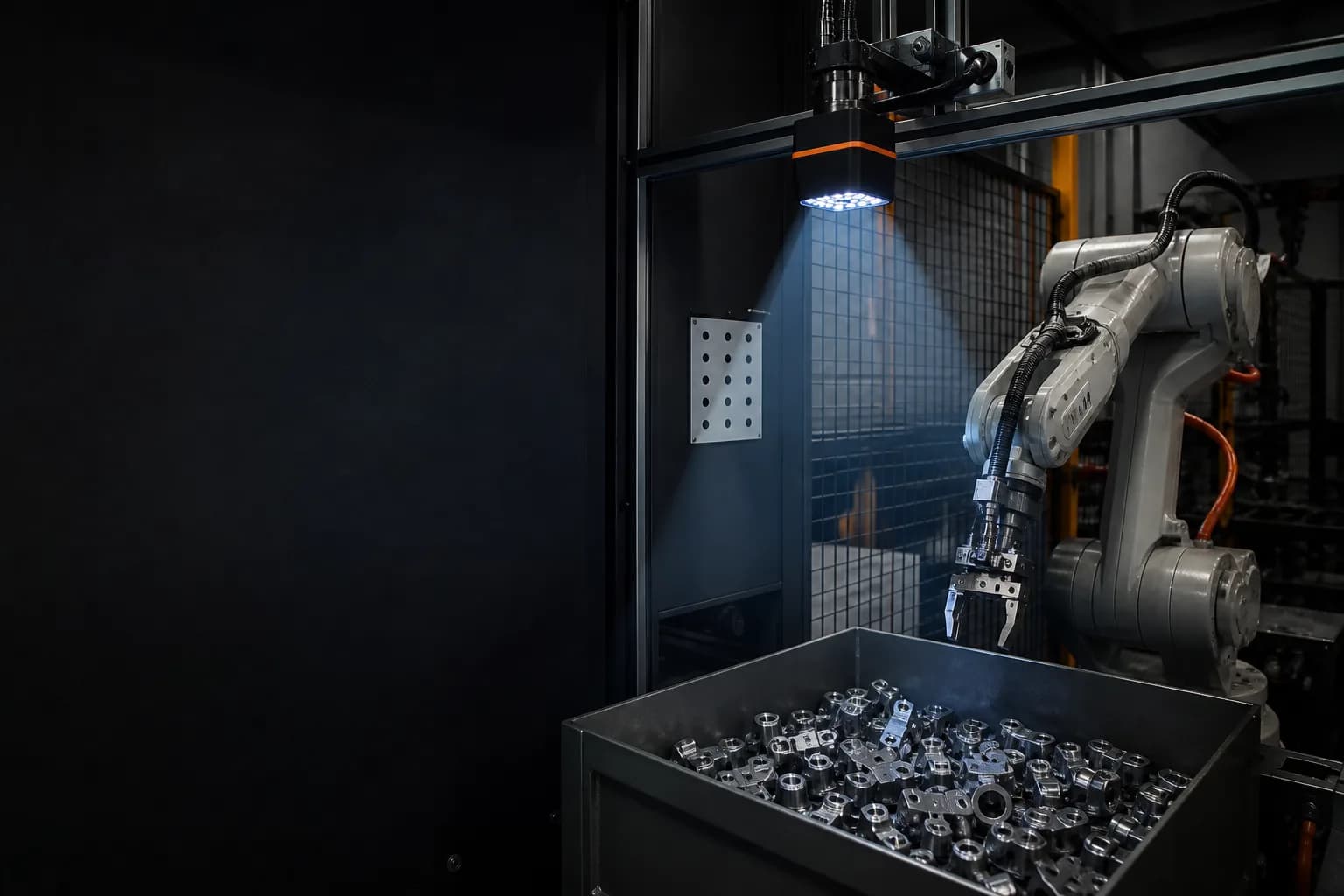
Integrate 2D or 3D robot vision around presentation, lighting, calibration, accuracy, cycle time and recoverable failure cases.
Reflective parts, occlusion, mixed orientations, unstable lighting and poor calibration can make a successful demo fail in production.
Selected and validated as part of the complete application package.
Include in review ↗Selected and validated as part of the complete application package.
Include in review ↗Selected and validated as part of the complete application package.
Include in review ↗Selected and validated as part of the complete application package.
Include in review ↗Selected and validated as part of the complete application package.
Include in review ↗Selected and validated as part of the complete application package.
Include in review ↗No. TubeFrame Automation leads requirements, selection, configuration and project coordination, while qualified manufacturing and integration partners may perform defined work packages.
Provide the workpiece drawing or photos, material, dimensions, mass, process, cycle/output, accuracy, environment, layout, utilities, safety, destination, preferred brand and budget range.
PDF, JPG, PNG, STEP, STP, IGES, IGS, DXF, DWG and ZIP files are accepted within the configured size limit for project evaluation.
Initial project inquiries are normally answered within 12 business hours. Technical resolution and service response times are defined in the project or order documents.
Send representative parts or images plus the required pose and accuracy for a vision feasibility review.