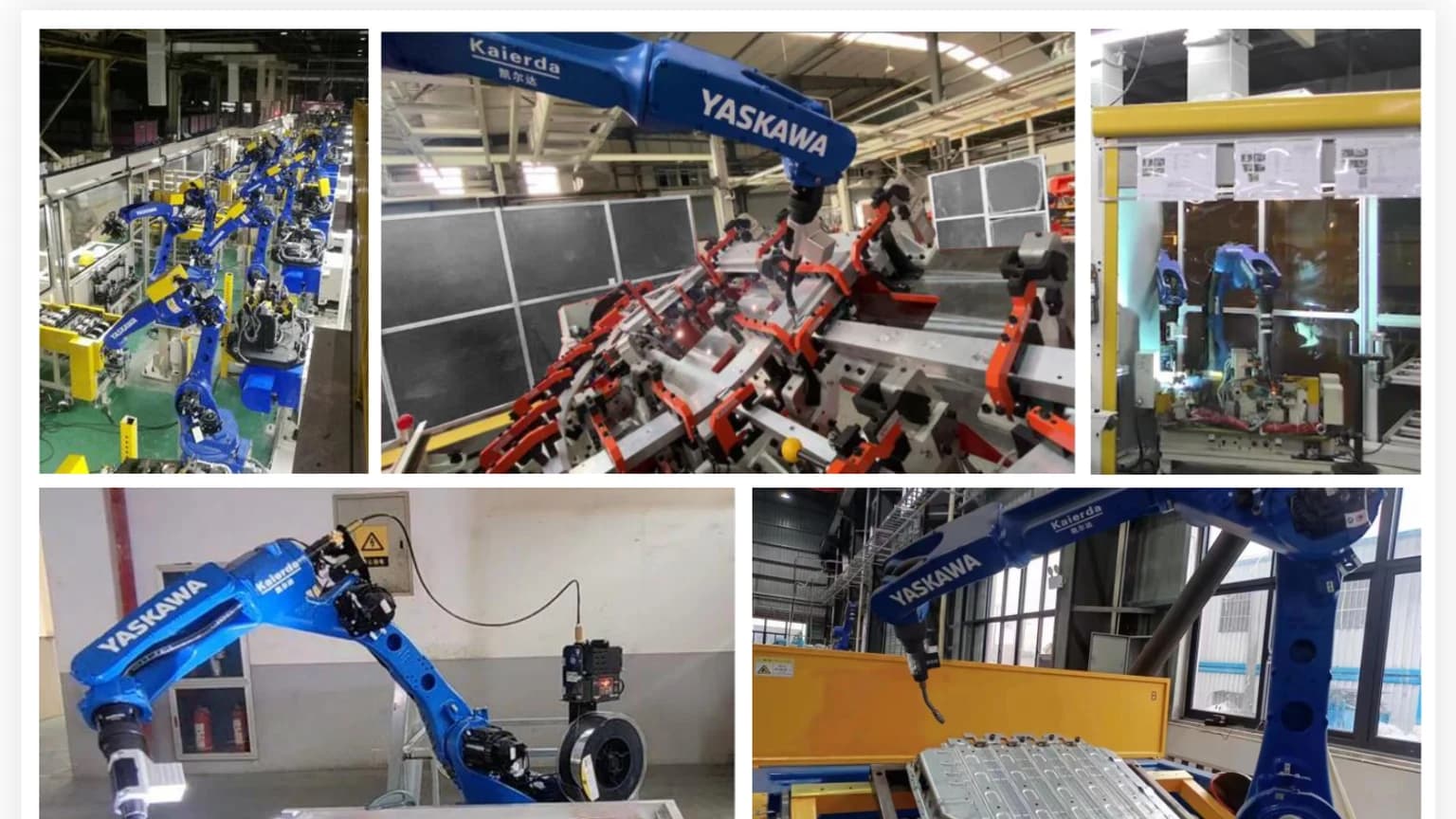
Use the catalog to narrow the cell—not to skip engineering.
The supplied Kaierda welding-system catalog combines Yaskawa robot platforms with controllers, welding equipment, seam tracking and positioners. That makes it useful for early architecture and RFQ decisions.
Use current manufacturer documentation, the actual workpiece and an agreed validation plan to complete the selection.
Arc welding, tending or heavy handling
Prove tool pose and fixture clearance
Match robot, axes and cell interfaces
Orient the weld without exceeding inertia
Choose access before nominal reach.
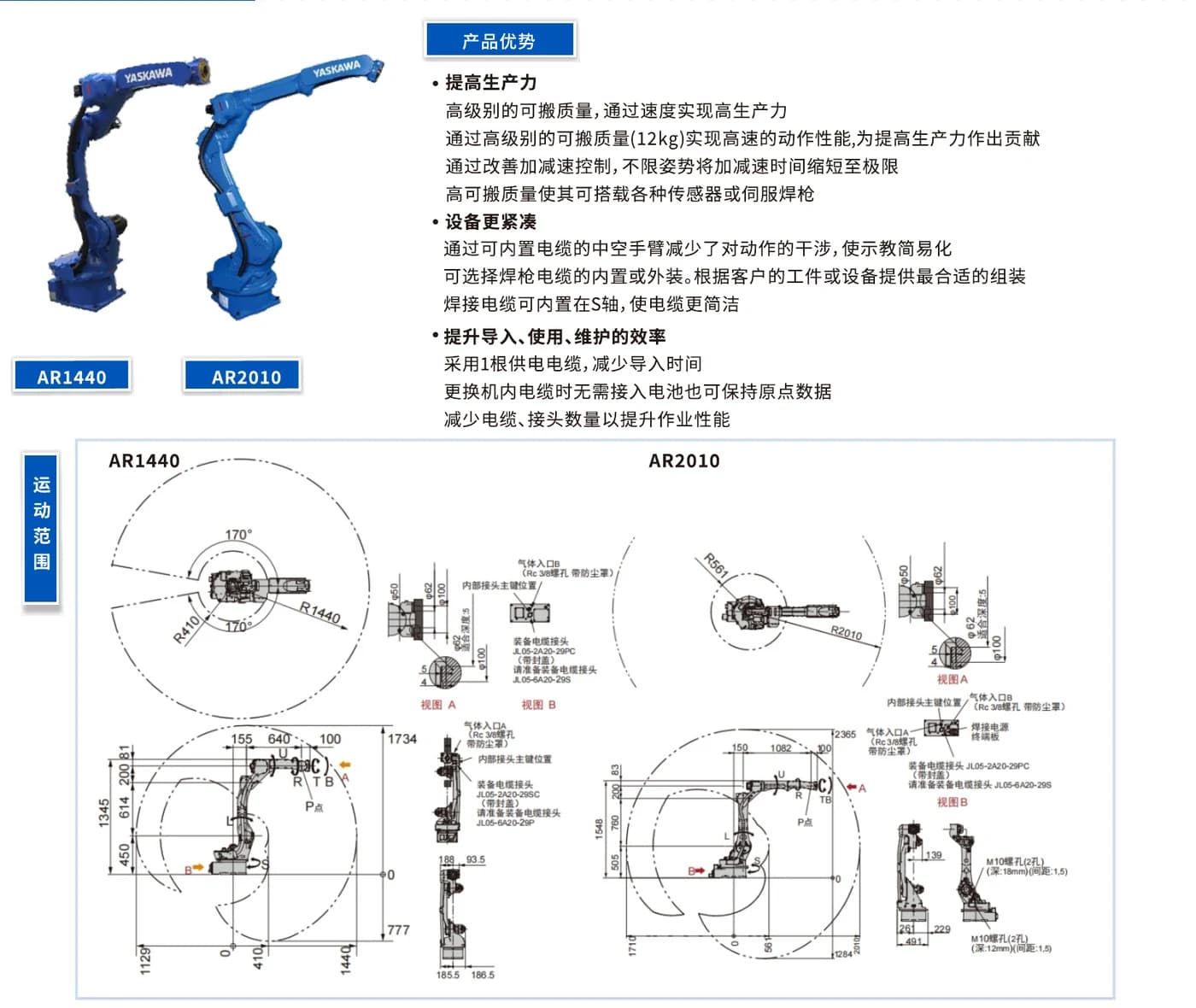
AR1440 and AR2010 are presented as 6-axis, 12 kg arc-welding platforms. The longer AR2010 envelope can solve deeper access, but torch angle, cable routing, fixture interference and singularity margin still need a layout study.
- Include torch, collision sensor, cables and dress package in the moving mass.
- Check every weld pose—not only the farthest point.
- Reserve access for nozzle cleaning, wire service and recovery.
Five robot routes, one application-led shortlist.
Values above are transcribed from the supplied catalog plates. They are screening inputs, not a substitute for the current model datasheet or project-specific load and reach validation.
Payload is only the first load check.
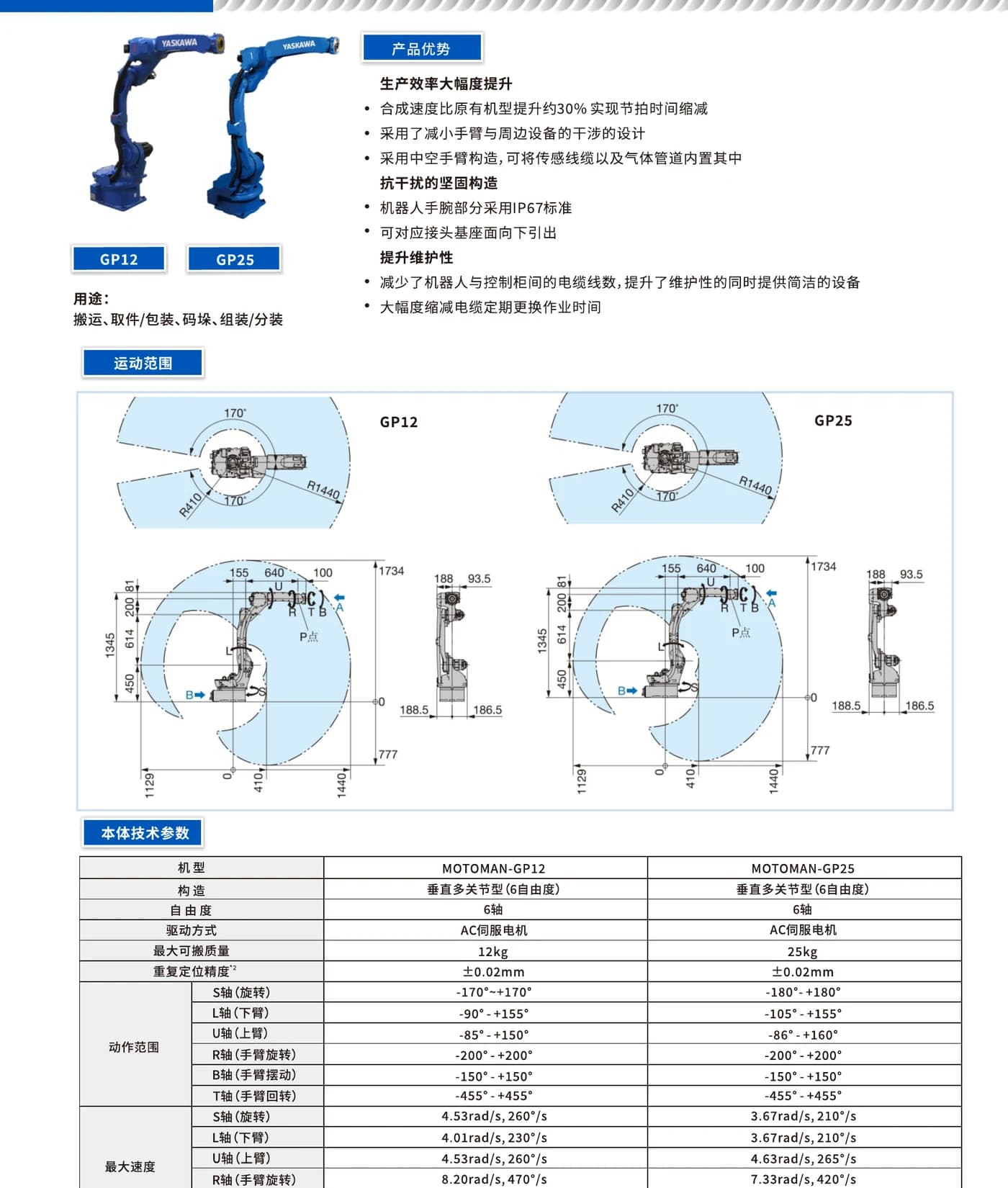
GP12 and GP25 support handling, tending, packaging, palletizing and assembly studies; GP180 addresses substantially heavier moving loads. Selection must include EOAT mass, workpiece center of gravity, wrist moments, acceleration and emergency-stop load cases.
A welding torch and a loaded gripper create different mass, cable, orientation and cycle constraints even when nominal payload looks similar.
Controller choice sets the interface ceiling.
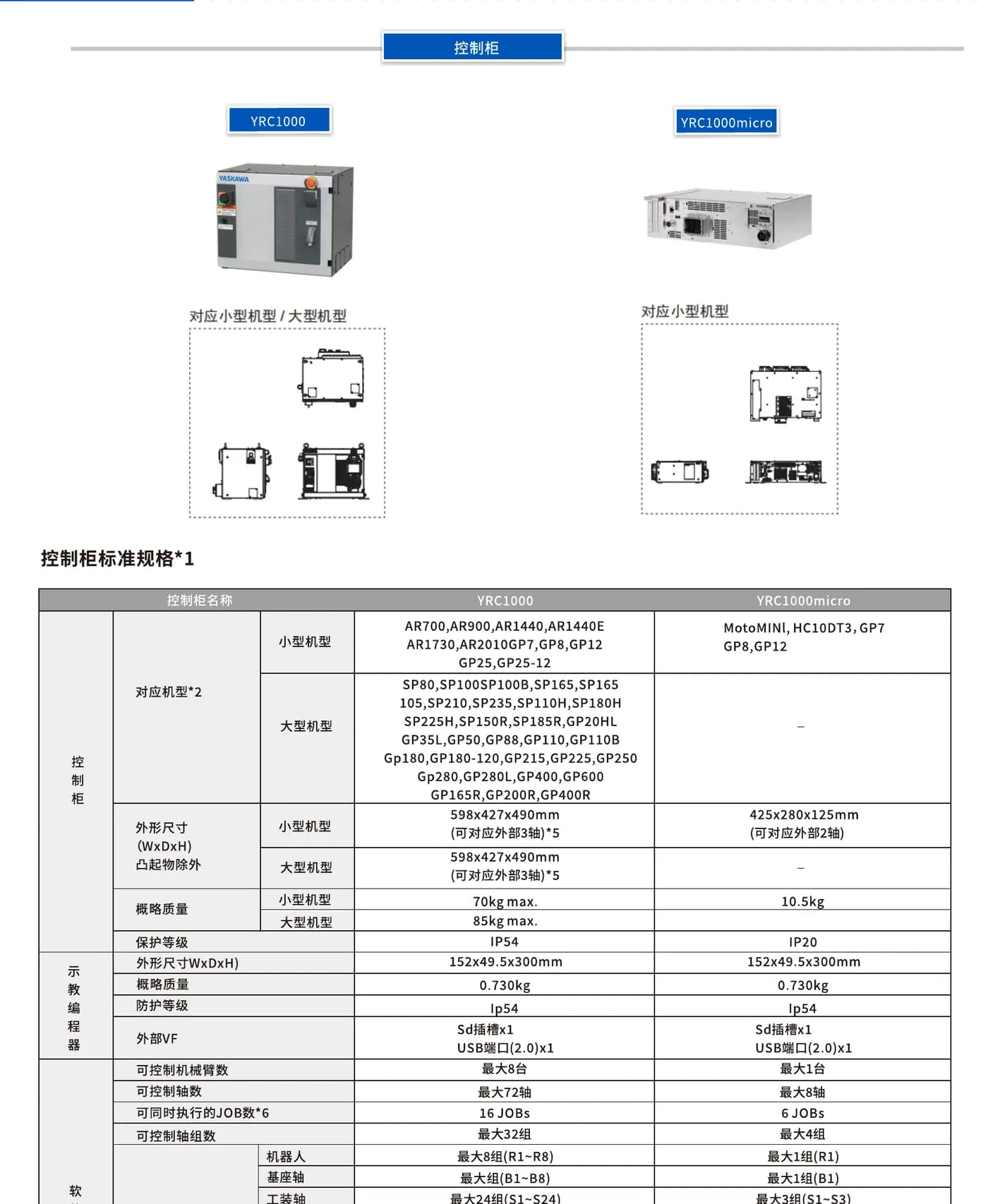
The catalog places YRC1000 across small and large robot classes and lists up to eight controlled robots / 72 axes. YRC1000micro is shown for compact platforms, including GP12, with one robot / eight axes. Confirm the exact robot-controller pairing, fieldbus, functional safety, cabinet environment and external-axis count before release.
The positioner is part of robot reach.
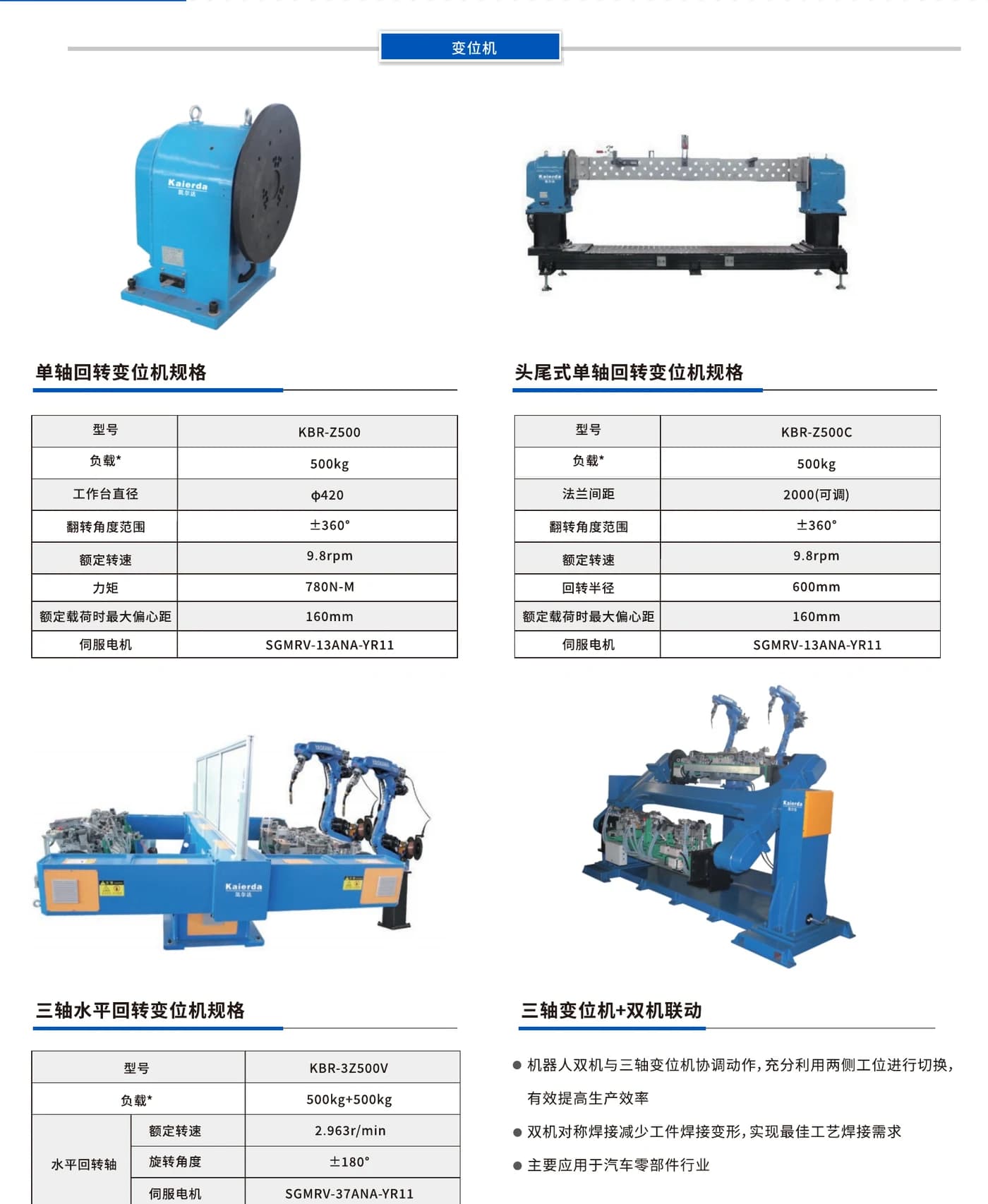
The catalog shows KBR-Z500 and KBR-Z500C as 500 kg positioning routes with ±360° rotation and 9.8 rpm nominal speed. A valid selection also needs fixture mass, workpiece inertia, center-of-gravity offset, weld orientation, cable routing and robot-positioner coordination.
Send the evidence that changes the selection.
A model request becomes reviewable when the supplier can reproduce the load, reach, process and interface assumptions behind it.
- 01Workpiece drawing, material and total assembly mass
- 02EOAT or torch package mass and center of gravity
- 03Required tool poses, weld sequence and fixture concept
- 04Target cycle, duty and quality acceptance criteria
- 05Controller, fieldbus, safety and external-axis requirements
- 06Installation layout, utilities, destination and delivery boundary