Robot
Selected and validated as part of the complete application package.
Include in review ↗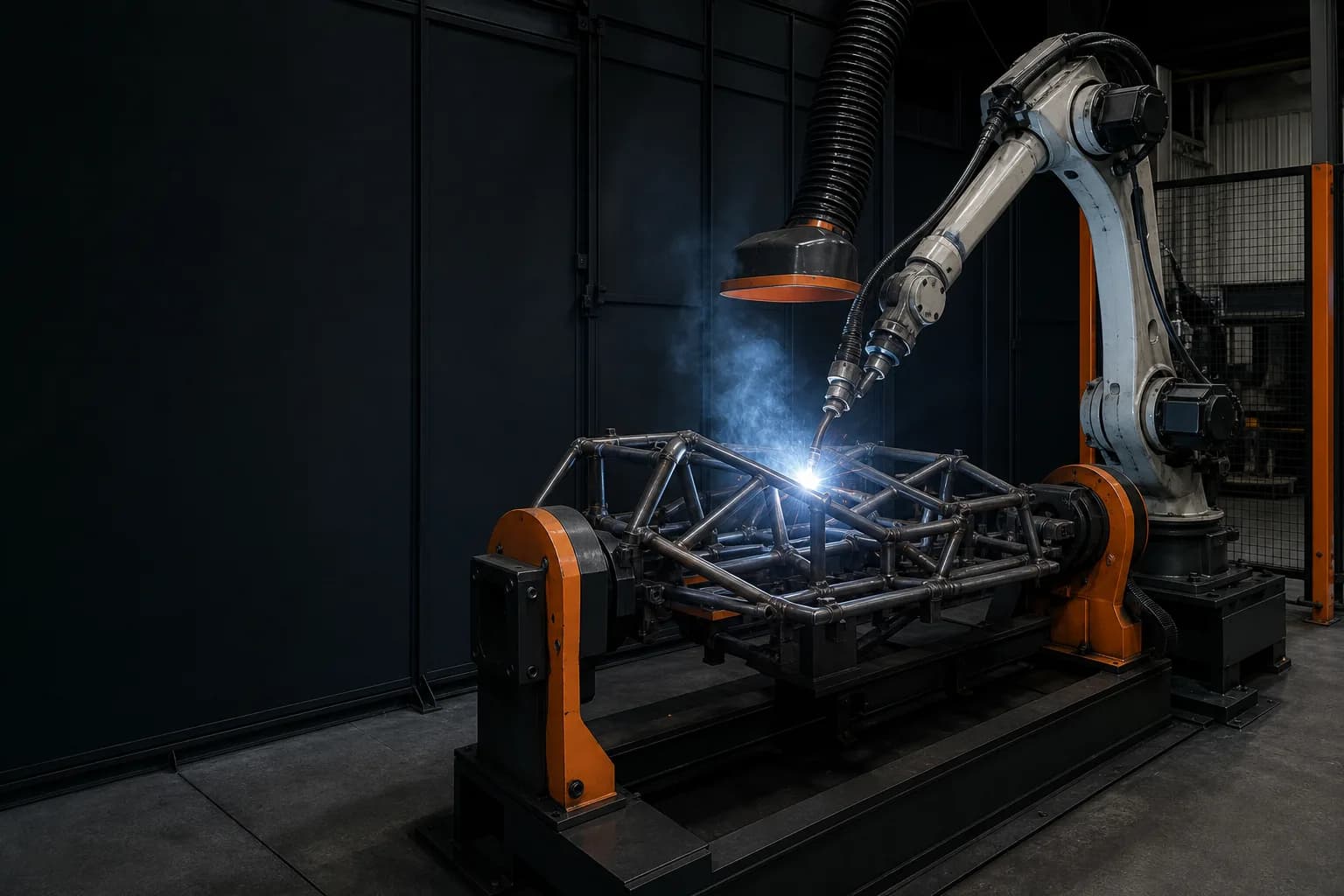
Build the robotic welding cell around the weldment, joint access, process stability, fixture, positioning and required production result.
Labor shortages, variable weld quality, rework and inconsistent cycle time cannot be solved by installing a robot arm without stabilizing fit-up and the welding process.
Selected and validated as part of the complete application package.
Include in review ↗Selected and validated as part of the complete application package.
Include in review ↗Selected and validated as part of the complete application package.
Include in review ↗Selected and validated as part of the complete application package.
Include in review ↗Selected and validated as part of the complete application package.
Include in review ↗Selected and validated as part of the complete application package.
Include in review ↗Selected and validated as part of the complete application package.
Include in review ↗MIG/MAG, TIG and arc-welding packages are core evaluation routes. Carbon steel, stainless steel, aluminum and galvanized steel may be considered; material, joint, source, torch and parameter suitability must be validated for the workpiece.
Fixture datums, clamping, distortion, weld access, workpiece inertia, positioner axes and arc/laser seam-tracking options are evaluated together.
No. TubeFrame Automation leads requirements, selection, configuration and project coordination, while qualified manufacturing and integration partners may perform defined work packages.
Provide the workpiece drawing or photos, material, dimensions, mass, process, cycle/output, accuracy, environment, layout, utilities, safety, destination, preferred brand and budget range.
PDF, JPG, PNG, STEP, STP, IGES, IGS, DXF, DWG and ZIP files are accepted within the configured size limit for project evaluation.
Yes. A package may include robot, controller, welding source, torch, feeder, fixture, positioner, seam tracking, sensors and safety. Process suitability is validated per workpiece.
MIG/MAG, TIG and arc-welding configurations are core options. Spot, laser and cobot welding may be evaluated when the process and partner scope support them.
Initial project inquiries are normally answered within 12 business hours. Technical resolution and service response times are defined in the project or order documents.
Choose the station rhythm, verify the plant layout, then define how the part will be held and how the delivered system will be accepted.
Upload the part and weld requirements to define the process, fixture, positioner and validation route.