Whole Robot Customization
Configure the robot body, controller, EOAT, process package, safety and peripherals around the application.
Review ↗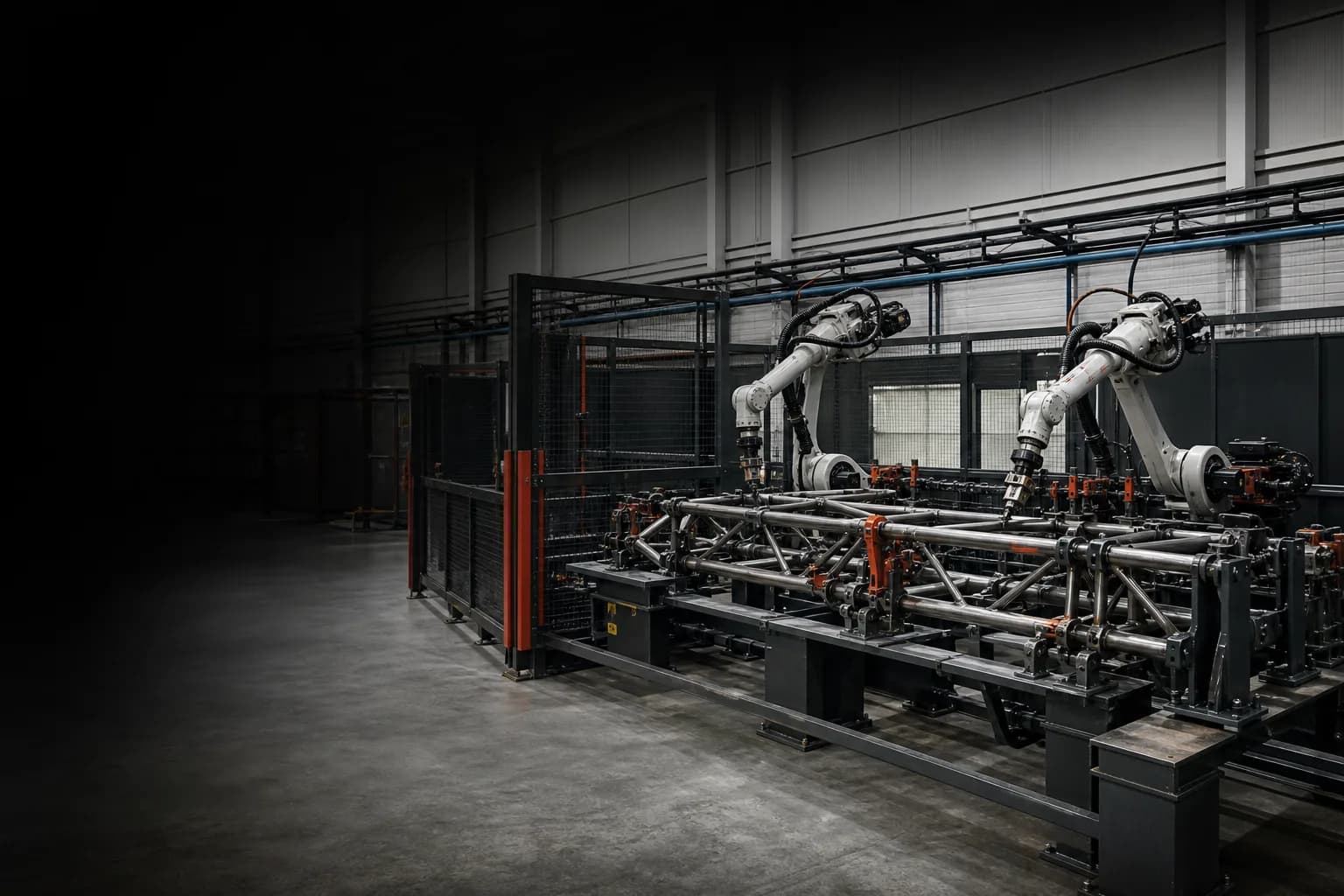
Source a complete industrial robot system, develop an OEM platform or quote one custom component from your workpiece, process and production target.
Explore welding robots, positioning, motion and cell peripherals. Open a product to compare models, specifications and quotation options.
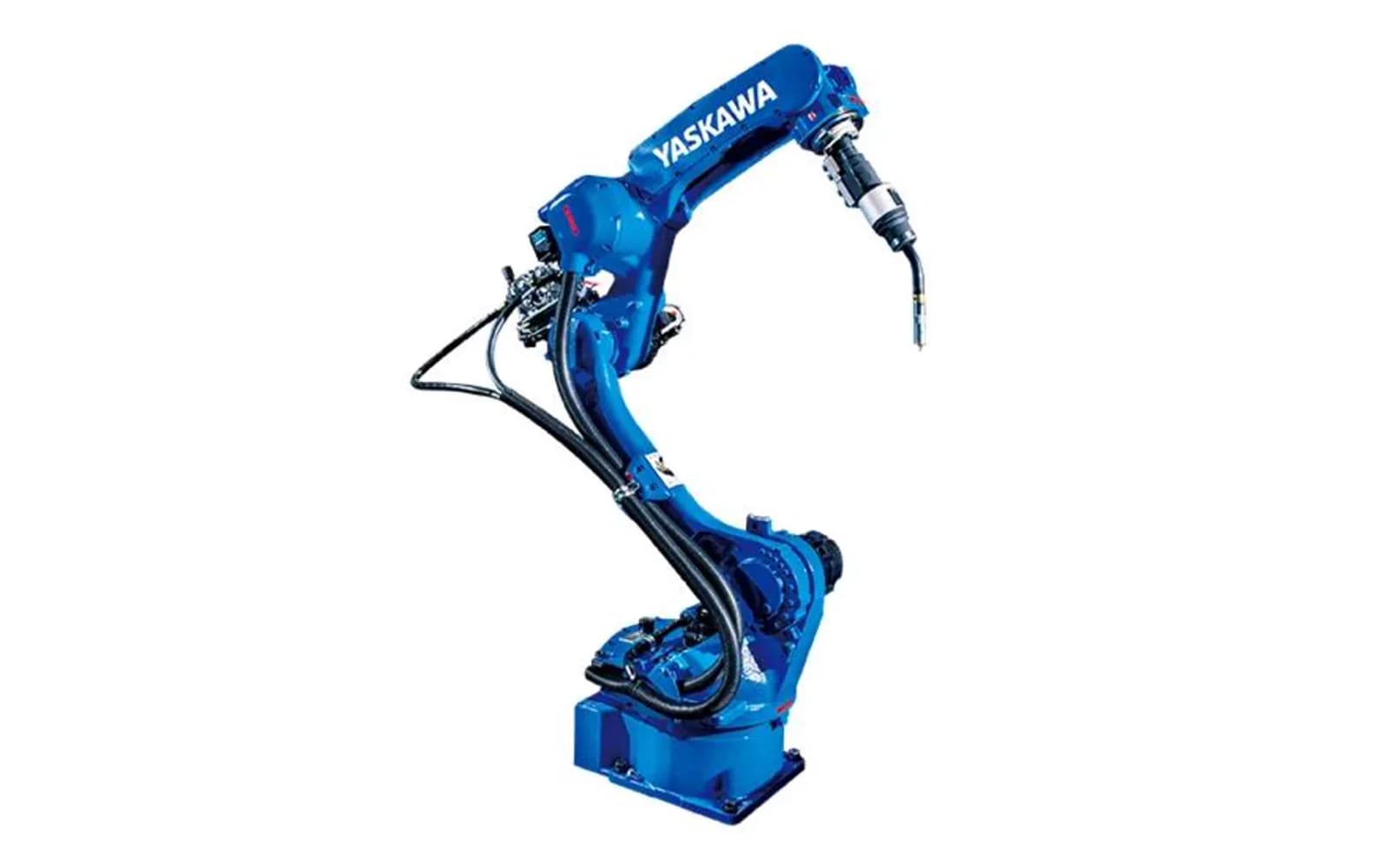
A six-axis arc-welding platform for cells built around the torch, joint access and workpiece fixture.
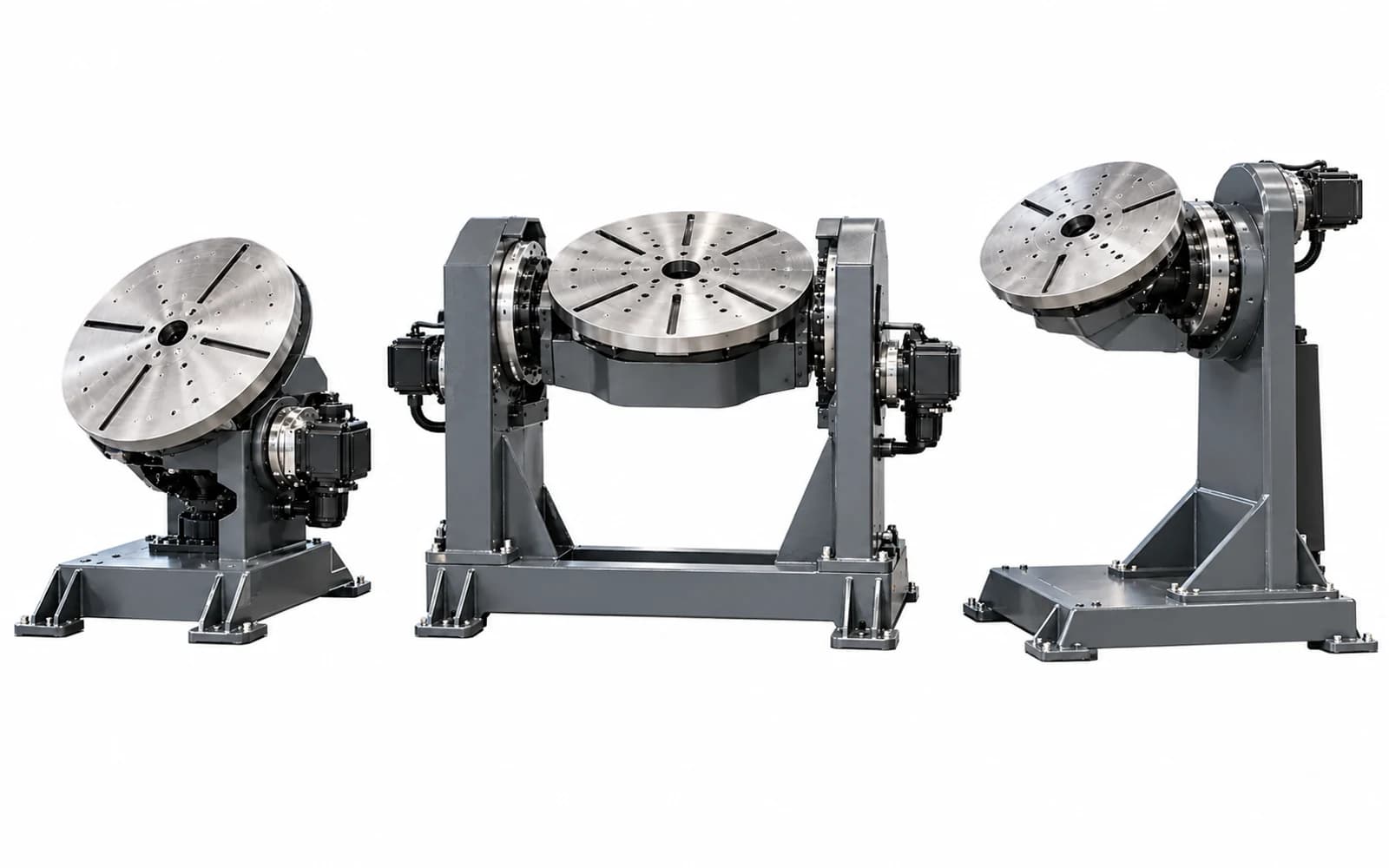
Rotate and tilt the fixture to present weld joints to the robot. Compare models by load and workpiece geometry.
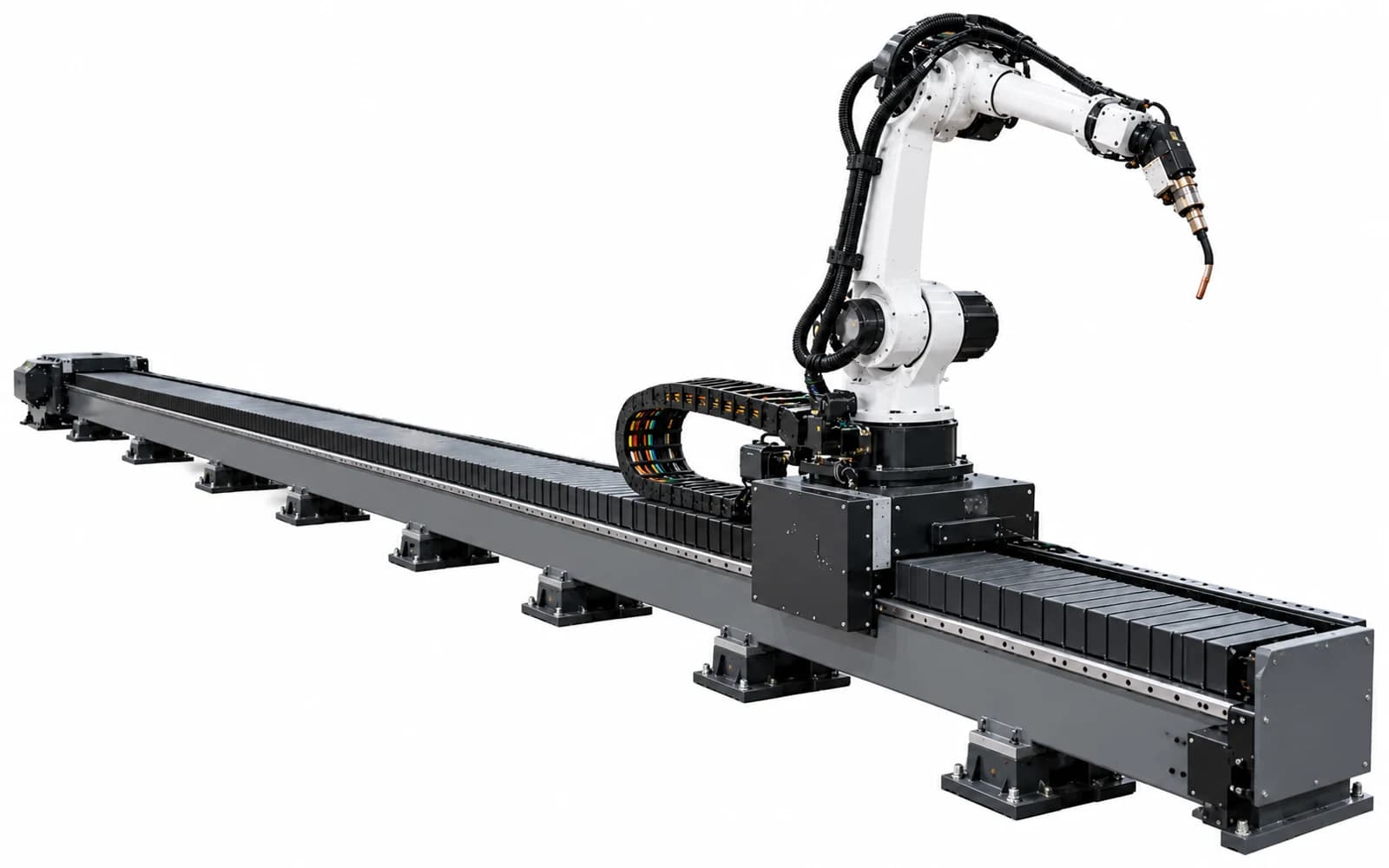
Move the robot between work areas with a linear track selected for travel, moving load and the shop environment.
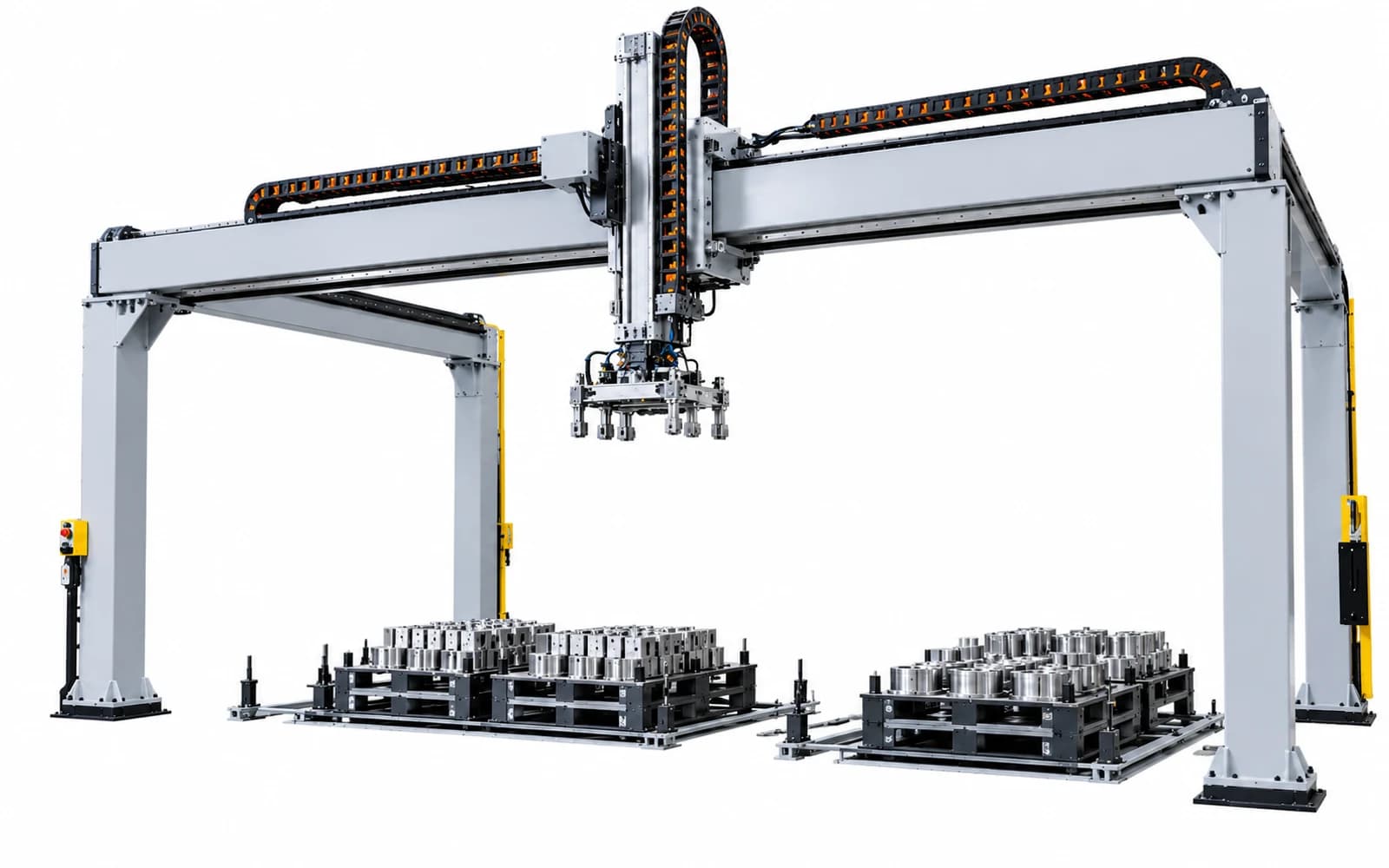
Explore overhead robot configurations for large work areas, with axis layout, tooling and service access planned together.
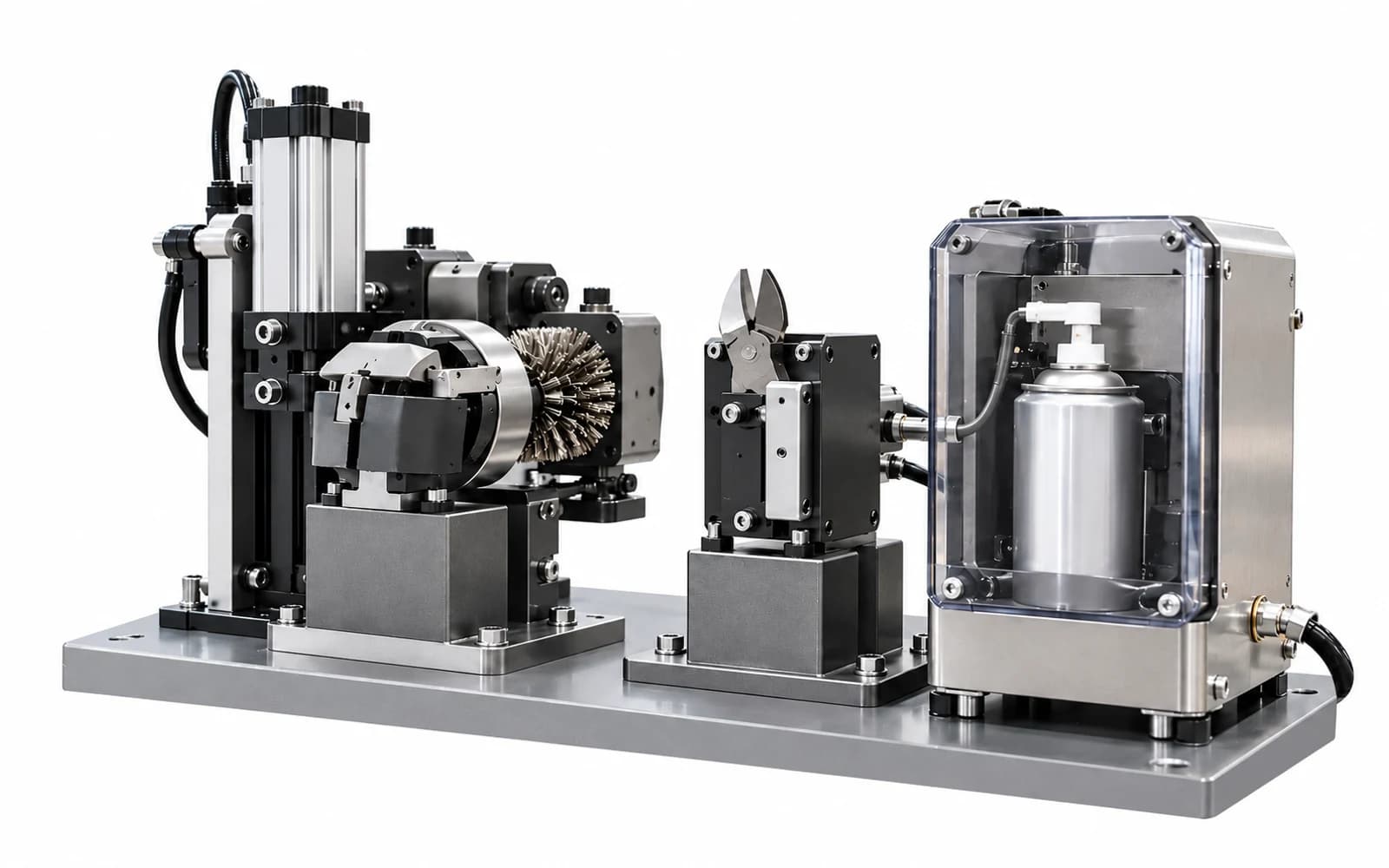
Compare cleaning, wire-cutting and spray functions for the welding torch, alongside pneumatic and robot-control connections.
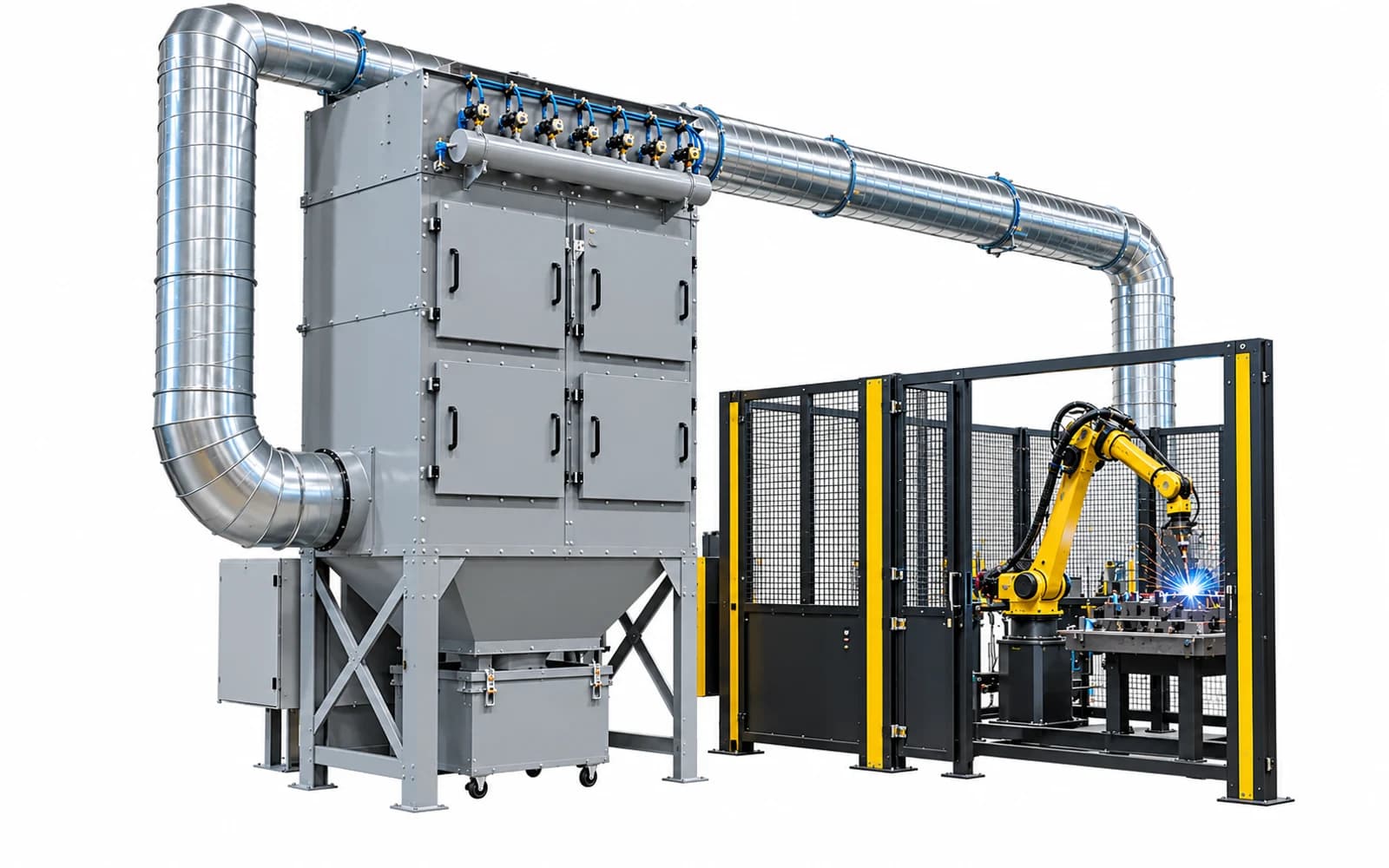
Plan multi-point welding-fume extraction around capture locations, ductwork, filtration and maintenance access.
You do not need to arrive with a model number. Choose the closest buying path and we will collect the right engineering inputs.
The product is one part of the decision. Configuration, interfaces, process equipment and delivery responsibility decide whether the result is usable.
Configure the robot body, controller, EOAT, process package, safety and peripherals around the application.
Review ↗Develop branding, color, nameplate, documentation and packaging scope through an engineering and commercial review.
Review ↗Compare viable robot and process-equipment routes without assuming one brand fits every cell.
Review ↗Source or fabricate EOAT, fixtures, bases, brackets and weldments from drawings or application inputs.
Review ↗Coordinate robot, power source, torch, feeder, fixture, positioner, sensing and safety as one package.
Review ↗Define interfaces, partner responsibilities, validation gates and delivery scope for a workable project handoff.
Review ↗Depending on technical and commercial review, a project can reconfigure the robot body, controller, tooling, process package, vision, safety, peripherals and OEM presentation.
Review the configuration layers ↗Each application has different payload, access, cycle, tooling, sensing, safety and validation requirements.
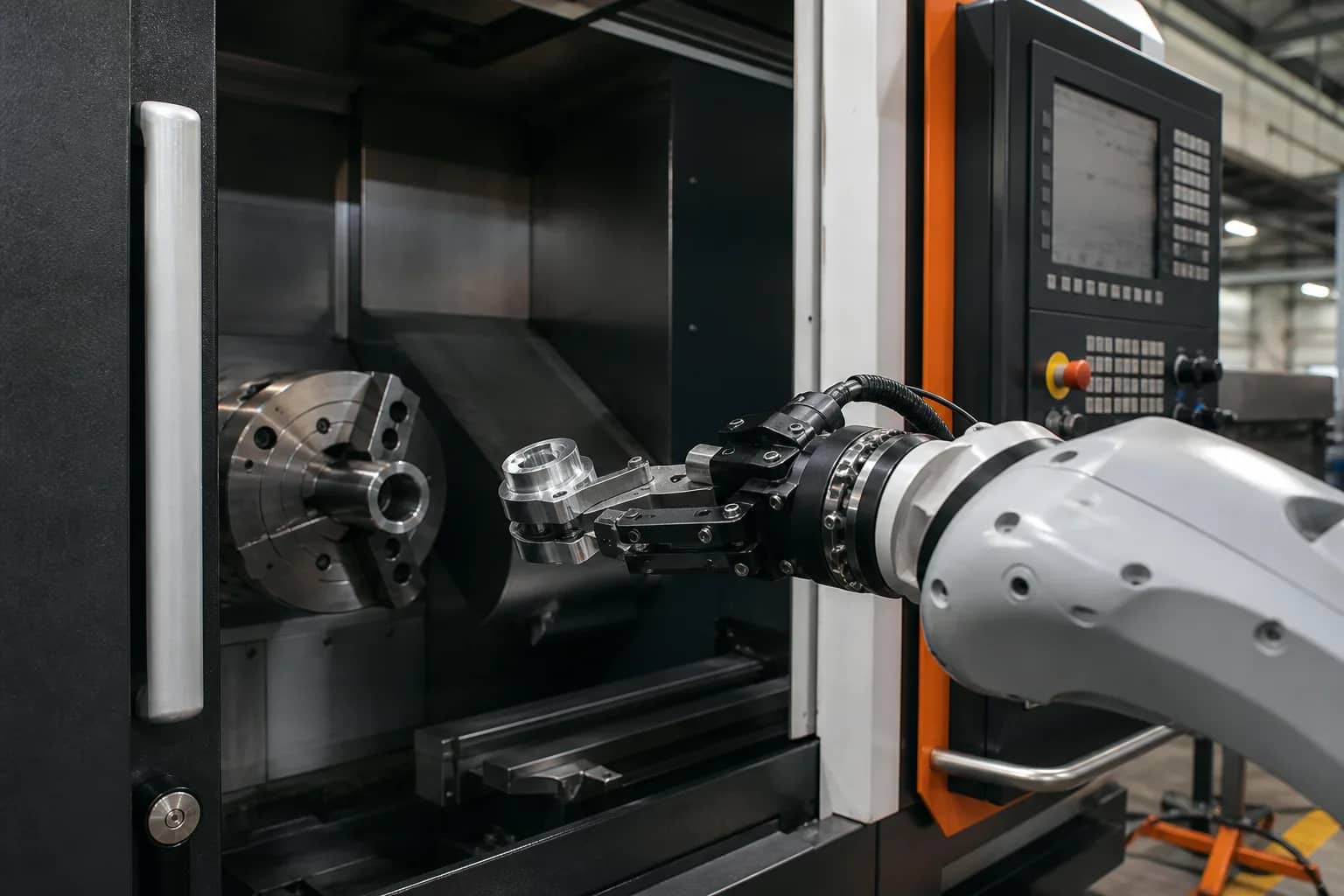
Machine opening, chuck access, gripping and part presentation are one workflow.
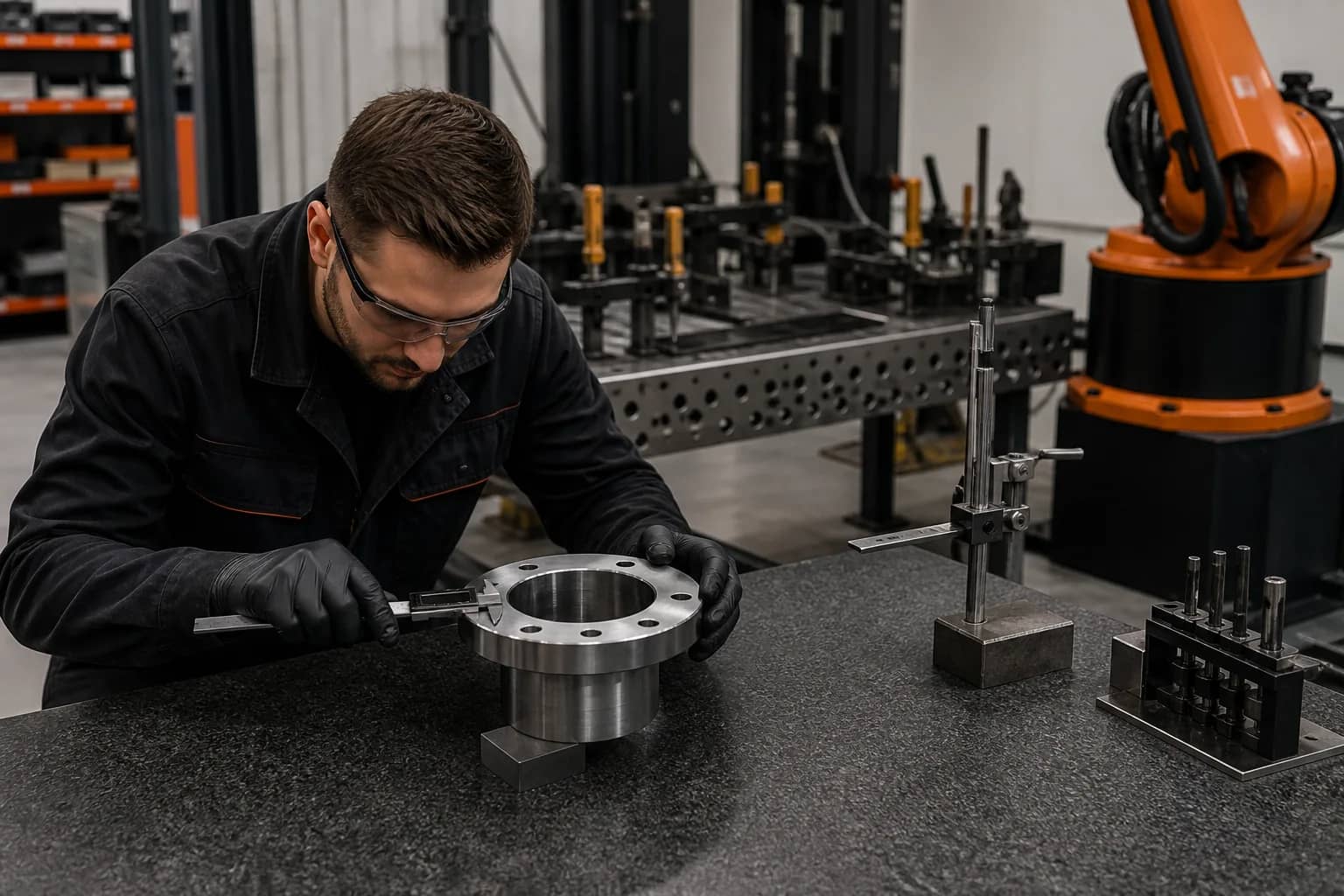
Machined flanges, bases, brackets and fixtures are controlled from dimensions and inspection.
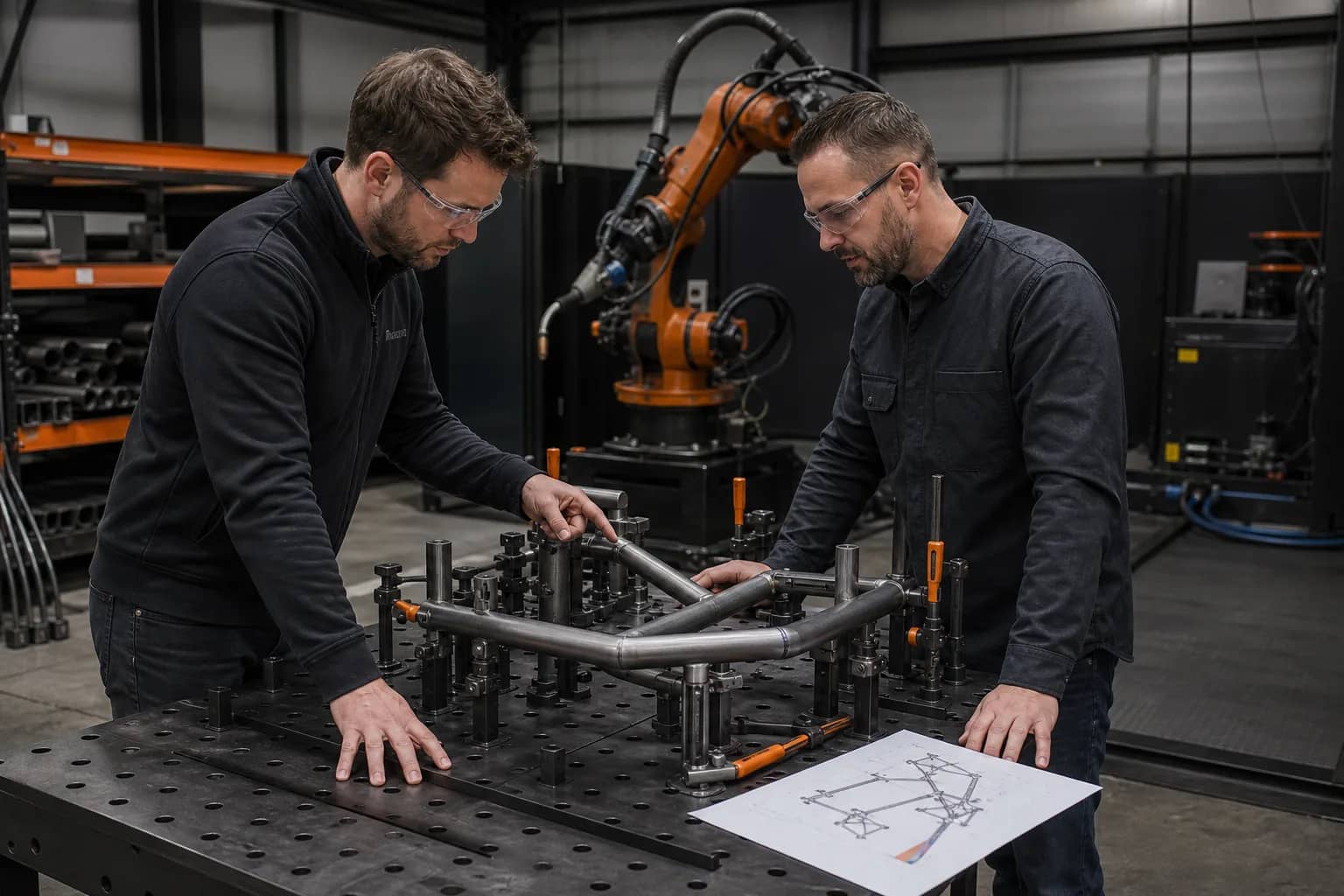
Workpiece, process, output and acceptance targets guide the complete configuration.
Configure robot, power source, torch, feeder, fixture, positioner, sensing and safety around the weld and workpiece.
Review application ↗Select the robot and EOAT from machine interface, door/fixture sequence, payload, reach, cycle and part presentation.
Review application ↗Define pick, place, orientation, infeed/outfeed and buffer logic before selecting the robot.
Review application ↗Coordinate tools, compliance, force/torque sensing, vision, fixtures and verification around the assembly process.
Review application ↗Review total moving mass, center of gravity, moment, reach, throughput and handoff points.
Review application ↗Match speed, product variation, detection, gripping and reject handling to an achievable cell concept.
Review application ↗Send a 2D/3D drawing, sample or technical specification for EOAT, fixtures, robot bases, mounting brackets, adapter flanges, positioner frames and custom weldments.
Send Your Drawing ↗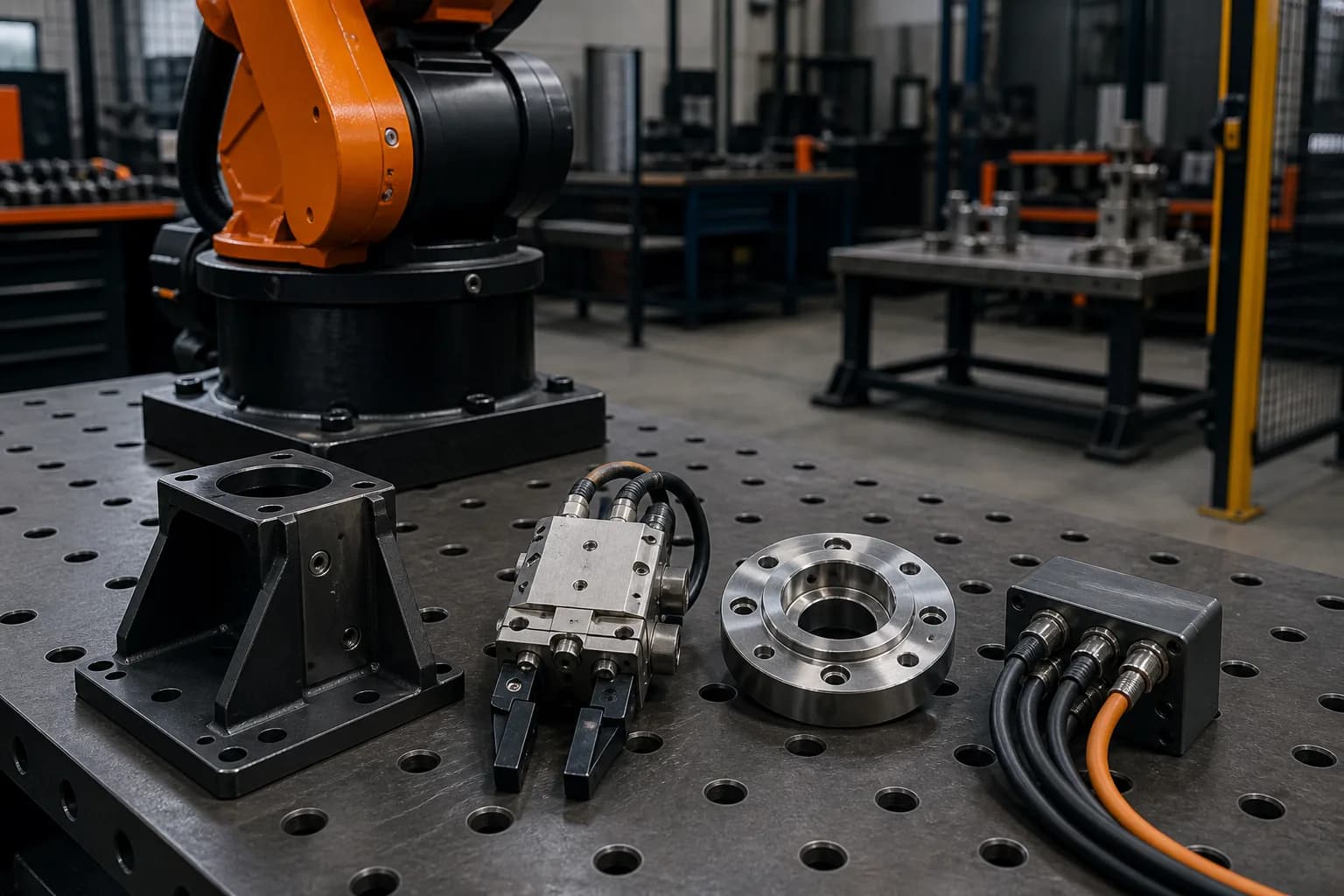
Define fixture geometry, mounting interfaces and controller integration around the workpiece and process.
Sourcing, integration and distribution availability are not the same as formal authorization. We display text-only brand references until public logo permission is documented.
Unknowns become explicit review items before equipment, interfaces or delivery responsibility are released.
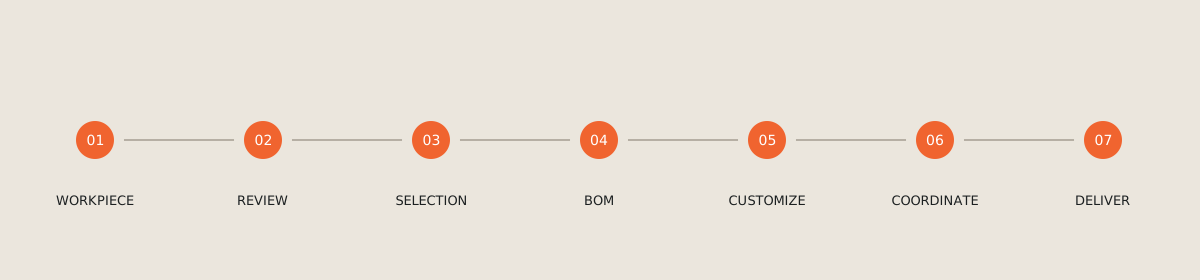
The review connects production outcomes to equipment, interfaces, validation and a commercial boundary your team can evaluate.
Identify repetitive or hazardous handling tasks that are suitable for automation.
Start review ↗Connect tooling, sensing and process controls to measurable acceptance criteria.
Start review ↗Test cycle-time and uptime assumptions against the required output.
Start review ↗Record interfaces, exclusions, validation gates and work-package ownership.
Start review ↗Compare platforms through payload, reach, process, support and lifecycle needs.
Start review ↗Convert the preferred concept into a defined technical and commercial review.
Start review ↗Use these procurement and engineering guides to identify the decisions that need evidence before a robot is selected.
Use manufacturer catalog evidence to compare AR welding robots, GP handling robots, YRC controllers and workpiece positioners as one cell decision.
Read guide →Define owner, supplier and integration partner interfaces before quotation and release.
Read guide →Balance grip physics, payload, interfaces, failure modes, part variation and maintenance.
Read guide →Check machine I/O, door/chuck control, part presentation, cycle, inspection and recovery.
Read guide →Provide datums, tolerances, materials, clamp zones and access constraints that suppliers can quote.
Read guide →Use workpiece mass, inertia, weld access, cycle and fixture interfaces to frame the choice.
Read guide →Send what you already know. We will identify the missing technical and commercial inputs before recommending equipment.