Robotic Welding
Configure robot, power source, torch, feeder, fixture, positioner, sensing and safety around the weld and workpiece.
Review ↗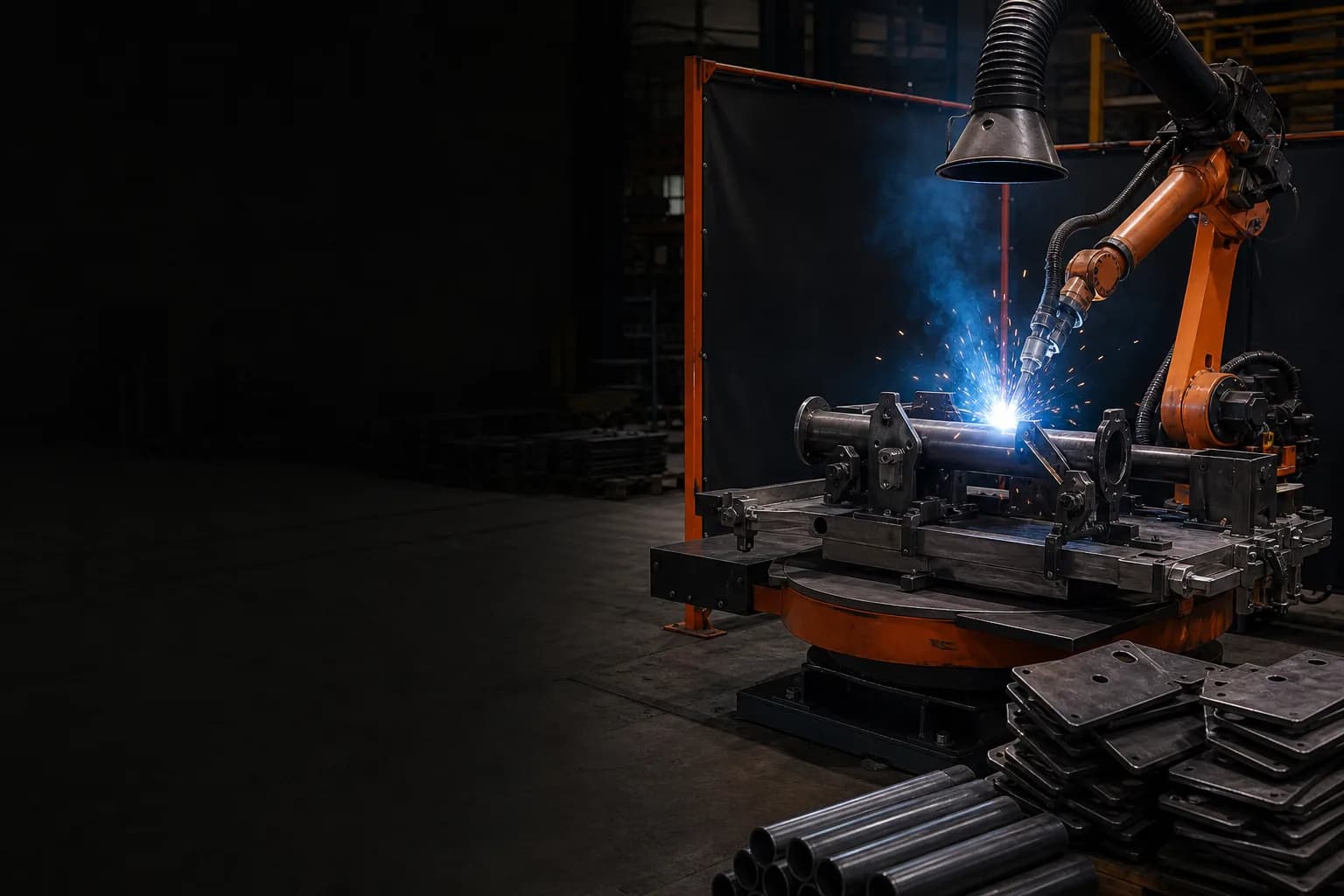
Configure welding and handling around fabricated-part variation, joint access, fixture strategy, quality and required throughput.
Welder shortages, inconsistent fit-up, rework and changing batches can limit output even when a robot is technically fast enough.
Configure robot, power source, torch, feeder, fixture, positioner, sensing and safety around the weld and workpiece.
Review ↗Review total moving mass, center of gravity, moment, reach, throughput and handoff points.
Review ↗Yes. A project may configure the body, controller, EOAT, process package, fixtures, positioner, vision, sensors, safety, software interfaces and peripherals. Feasibility is confirmed during review.
OEM/private-label presentation can be reviewed for logo, color, nameplate, model naming, packaging, manuals and documentation. Trademark, certification, volume and technical feasibility are confirmed per project.
No universal OEM MOQ is published. It depends on platform, branding scope, certification, packaging and commercial review.
Brand pages describe sourcing, integration and distribution availability only. Formal authorization wording and brand logos are used only when written proof is available.
No. TubeFrame Automation leads requirements, selection, configuration and project coordination, while qualified manufacturing and integration partners may perform defined work packages.
Provide the workpiece drawing or photos, material, dimensions, mass, process, cycle/output, accuracy, environment, layout, utilities, safety, destination, preferred brand and budget range.
Send representative drawings, welds and batch variation for a metal-fabrication automation review.