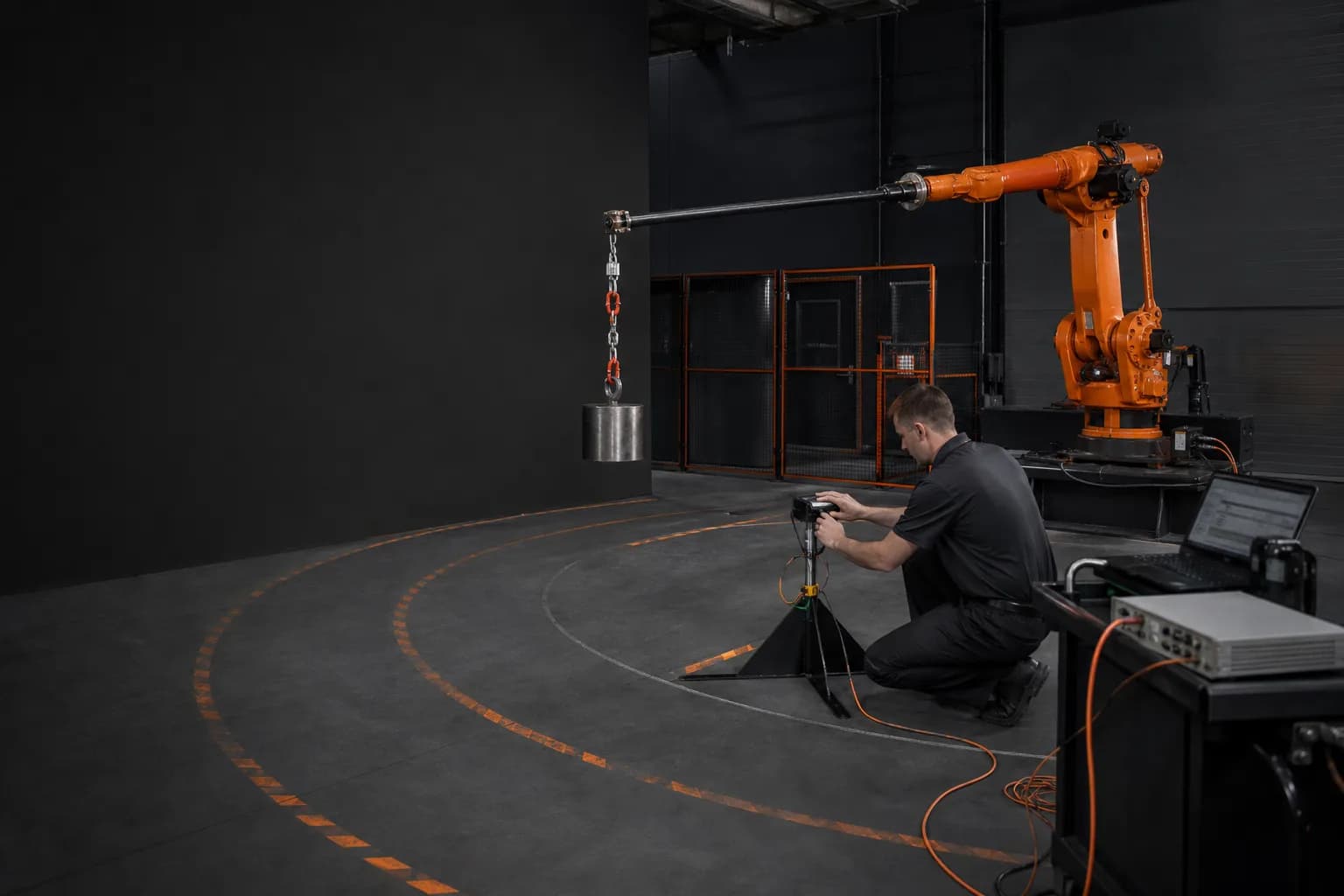
Build the maximum moving-load case
Start with the heaviest part and every item attached to the wrist. Use the most offset center of gravity and critical orientation, then compare the resulting moments and inertia with current manufacturer limits.
- Part, fingers, gripper and adapter
- Cables, hoses and process equipment
- Center of gravity and orientation
Treat nominal reach as a screening number
A catalog radius shows where the flange may travel, not whether the torch or gripper reaches the process point at the correct angle. Model the fixture, machine opening, wrist shape and approach path.
- Tool-center-point orientation
- Fixture and machine interference
- Singularity and joint-limit margin
Connect size to cycle and cost
A larger robot may add load margin but also footprint, guarding, base requirements and moving inertia. A smaller robot may be faster yet leave no allowance for product variation or future tooling.
- Acceleration and process dwell
- Mounting and cell footprint
- Expected future part range
Evidence to request before release
Ask for the payload calculation, reach or simulation view, assumed EOAT, selected mounting and unresolved collision risks. The quotation should state which load case and layout the proposed model was checked against.
- Load and moment record
- Reach/access evidence
- Approved assumptions and open risks
Decision checklist
Use the same inputs when comparing supplier proposals.
| Decision area | Inputs to confirm |
|---|---|
| Build the maximum moving-load case | Part, fingers, gripper and adapter; Cables, hoses and process equipment; Center of gravity and orientation |
| Treat nominal reach as a screening number | Tool-center-point orientation; Fixture and machine interference; Singularity and joint-limit margin |
| Connect size to cycle and cost | Acceleration and process dwell; Mounting and cell footprint; Expected future part range |
| Evidence to request before release | Load and moment record; Reach/access evidence; Approved assumptions and open risks |
Move from research to a commercial review
Send the part, EOAT and process points for a payload and envelope review.