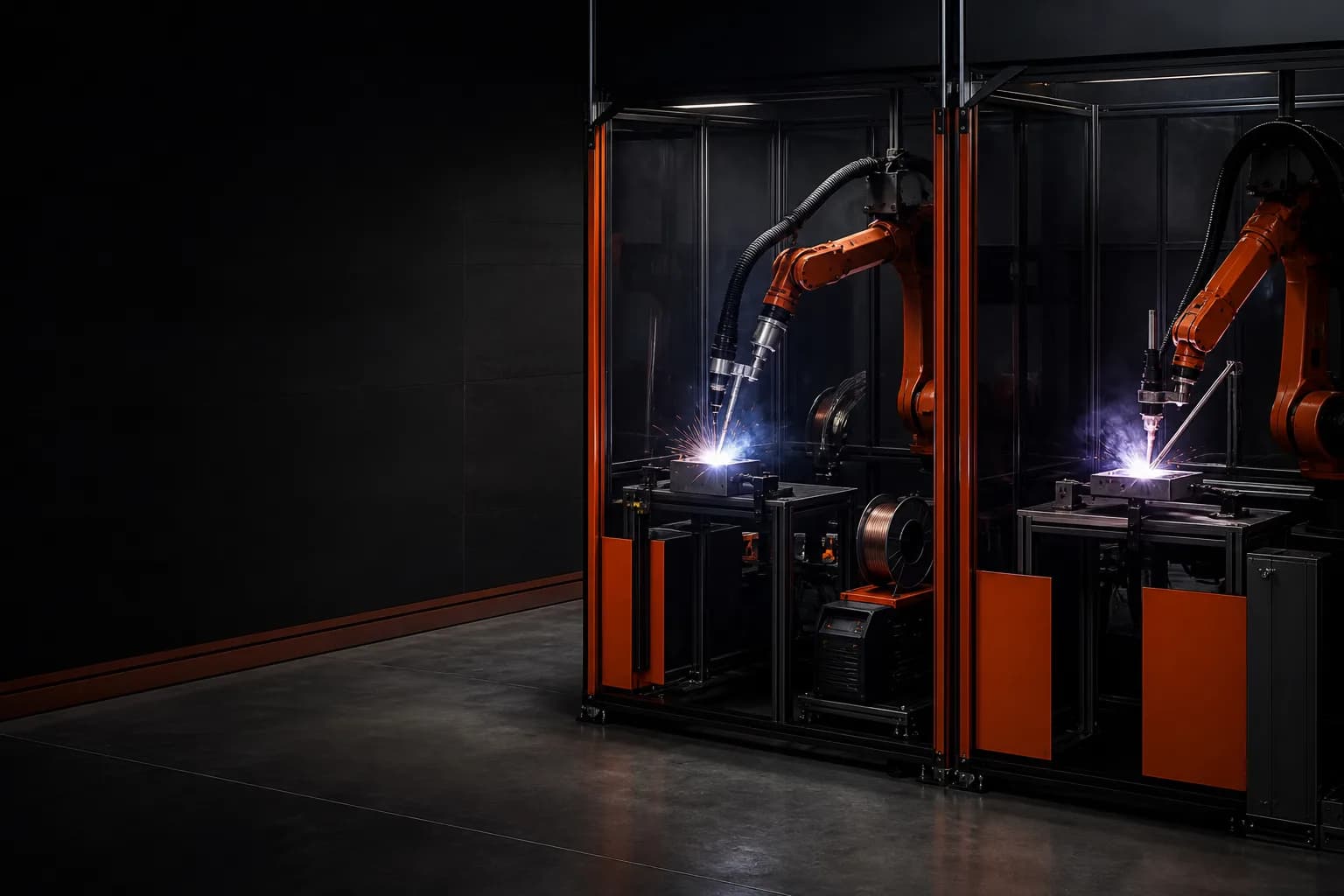
Where MIG/MAG usually leads
Continuous wire feeding and higher deposition make MIG/MAG common for carbon steel, stainless and aluminum production welding. It can support faster travel and gap filling, but spatter, torch access and consumable control remain important.
- Higher deposition and common automation route
- Useful tolerance to appropriate joint gaps
- Wire, gas and spatter-management needs
Where TIG may justify the slower process
TIG provides precise arc and heat control for suitable thin material, stainless or appearance-sensitive joints. Robotic consistency helps, but joint fit-up, travel speed, filler handling and torch clearance can limit output.
- Controlled heat and clean appearance
- High demand on joint consistency
- Lower deposition and longer cycle in many cases
Compare the complete production result
Do not select on weld appearance alone. Compare accepted weld quality, distortion, rework, finishing, consumables, operator intervention, cycle time and the fixture quality each process requires.
- First-pass acceptance and rework
- Heat input and distortion
- Throughput and consumable cost
Use trials for uncertain joints
Representative samples reveal arc access, gap sensitivity, distortion and achievable travel speed. Record the joint preparation, fixture, parameters and inspection result so the trial becomes evidence for system selection.
- Worst-case gap and material
- Representative fixture and orientation
- Documented inspection and cycle result
Decision checklist
Use the same inputs when comparing supplier proposals.
| Decision area | Inputs to confirm |
|---|---|
| Where MIG/MAG usually leads | Higher deposition and common automation route; Useful tolerance to appropriate joint gaps; Wire, gas and spatter-management needs |
| Where TIG may justify the slower process | Controlled heat and clean appearance; High demand on joint consistency; Lower deposition and longer cycle in many cases |
| Compare the complete production result | First-pass acceptance and rework; Heat input and distortion; Throughput and consumable cost |
| Use trials for uncertain joints | Worst-case gap and material; Representative fixture and orientation; Documented inspection and cycle result |
Move from research to a commercial review
Send the material, thickness, joint and quality target to define the validation route.