Five gate questions before pilot release
A gate is a management decision supported by evidence, not a calendar milestone or a successful demonstration.
- Requirements
- Are intended use, market, acceptance and open assumptions approved?
- Configuration
- Are BOM, software, labels, drawings and documents versioned?
- Build process
- Can the pilot be built with production-intent methods and records?
- Validation
- Do results cover requirements, interfaces, exceptions and recovery?
- Release control
- Are deviations closed and changes, traceability and support ready?
Do not convert prototype success into a production claim. Release only the identified configuration and evidence set, with unresolved items explicitly dispositioned and a change process that prevents later units from drifting away from what was tested.
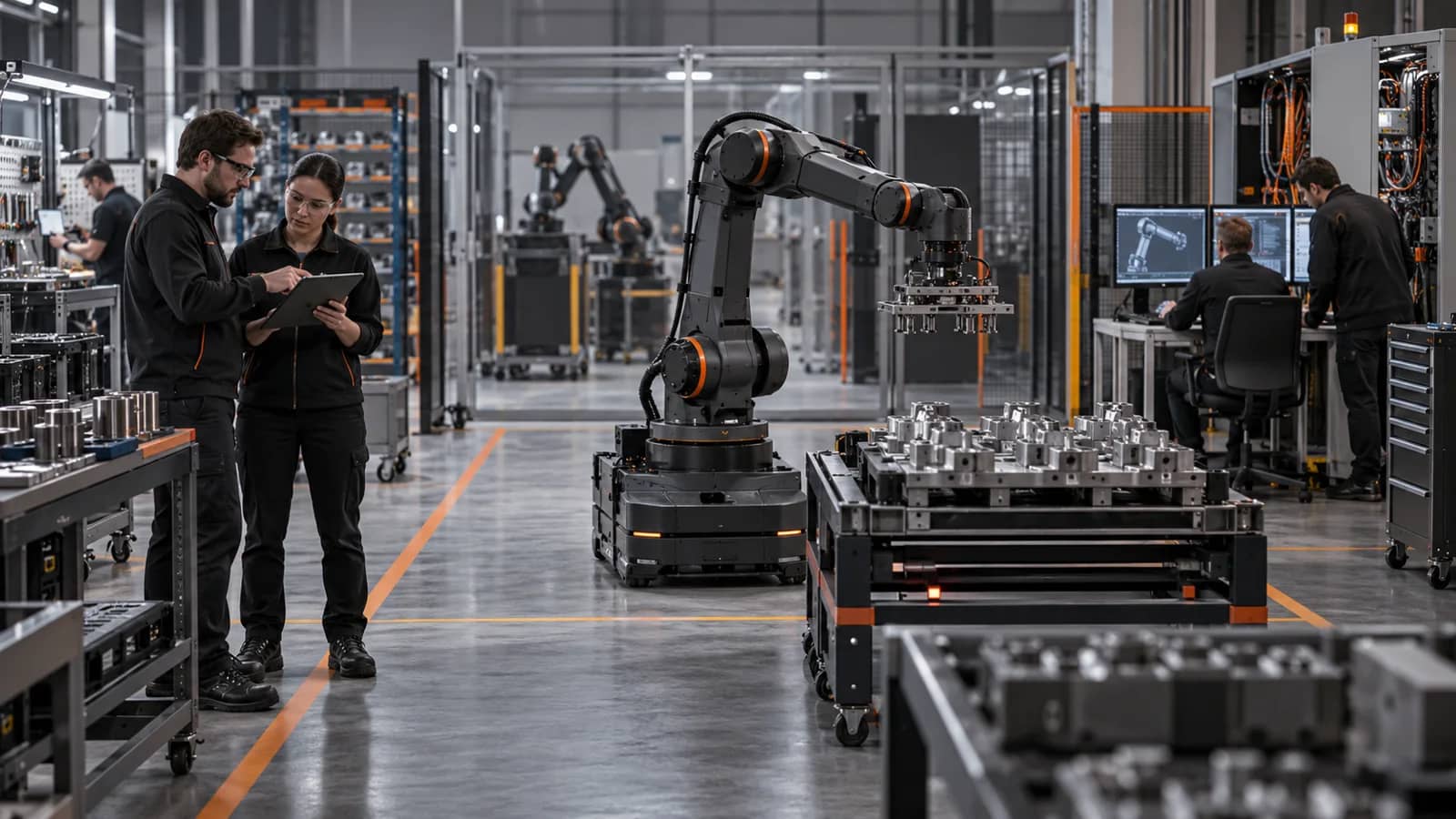
Gate 1: freeze requirements and define the pilot question
The first gate converts a commercial idea into a controlled requirement baseline. Identify intended use, users, operating environment, target markets, functional requirements, interfaces, protective measures, documentation languages, product identity and acceptance criteria. Separate mandatory requirements from targets and preferences, and record every assumption that cannot yet be verified. The pilot should answer named risks rather than serve as a general demonstration.
Stage-Gate describes gates as go/kill or resource-allocation decisions between defined work stages. Apply that discipline without copying a generic process: name the decision maker, required inputs, pass criteria and permitted conditions for this robot program. A date alone is not a gate, and a conditional approval needs an owner and closure date for every condition.
- State exactly what the pilot must prove and what remains outside it.
- Use the same requirement identifiers in tests and issue records.
- Hold release when a mandatory input has no owner or evidence route.
Further reading: Stage-Gate International — discovery-to-launch process ↗
Do not treat these four build states as equivalent
Answers technical questions; may contain temporary parts and methods.
Identified BOM, software, labels, documents and deviations.
Uses intended methods, controls, traceability and acceptance steps.
Approved configuration, evidence, changes and support package.
Gate 2: establish the prototype BOM, software and label baseline
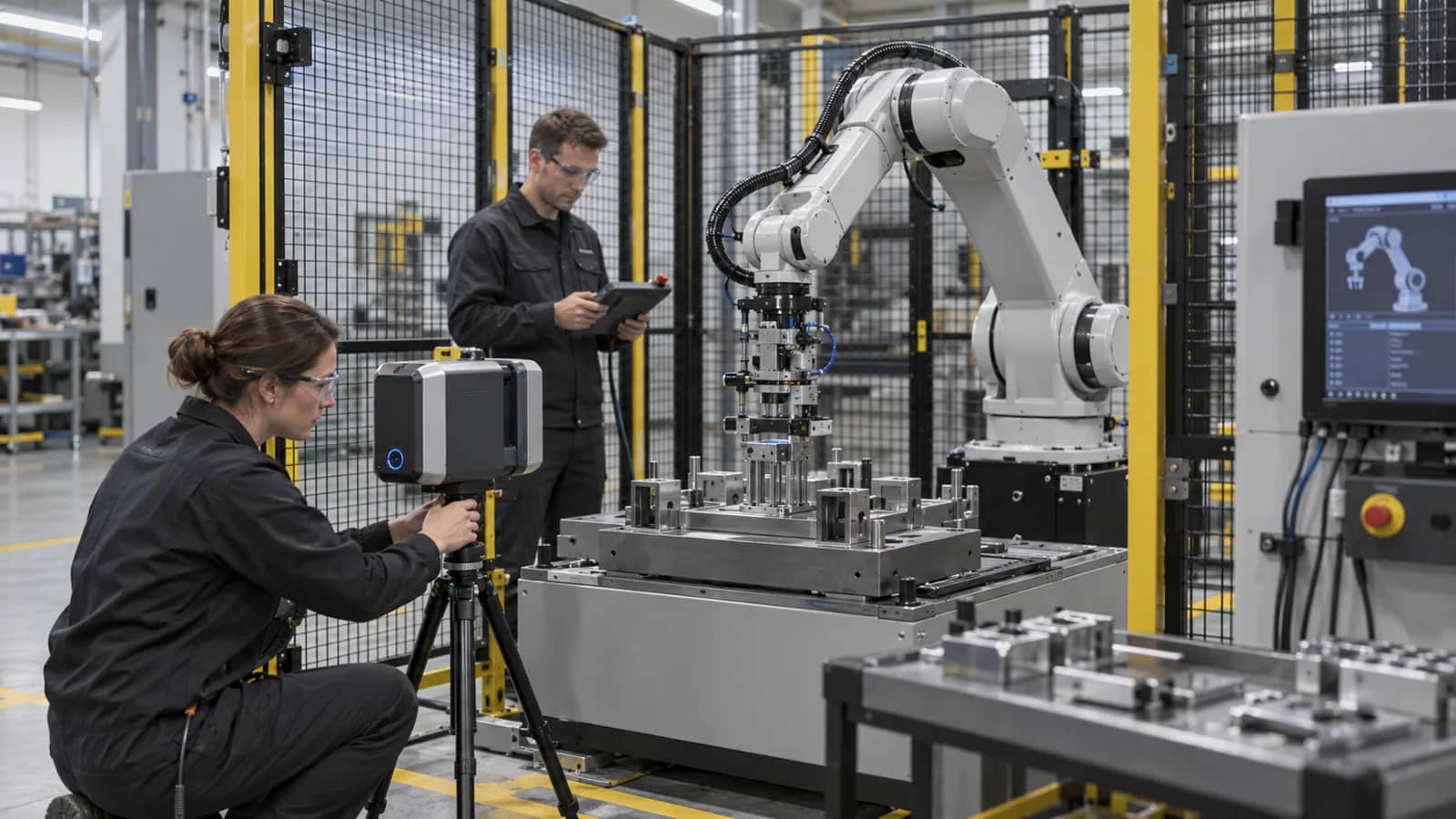
A pilot is traceable only when its build state can be reconstructed. Freeze the prototype bill of materials, approved alternatives, drawings, supplier part identities, controller and firmware versions, licensed options, application software, configuration files, safety settings, calibration data, label artwork, nameplate data, packaging and document index. Record serial or batch identity for items that can affect performance, compatibility or conformity.
The prototype BOM should distinguish development-only items from production-intent parts. Temporary cables, hand-made brackets, engineering licenses or diagnostic tools may be valid for learning, but they must not silently become the production design. For each deviation, record why it exists, what evidence it can support and what must change before the production-representative build.
Gate 3: run a production-representative pilot build and validation
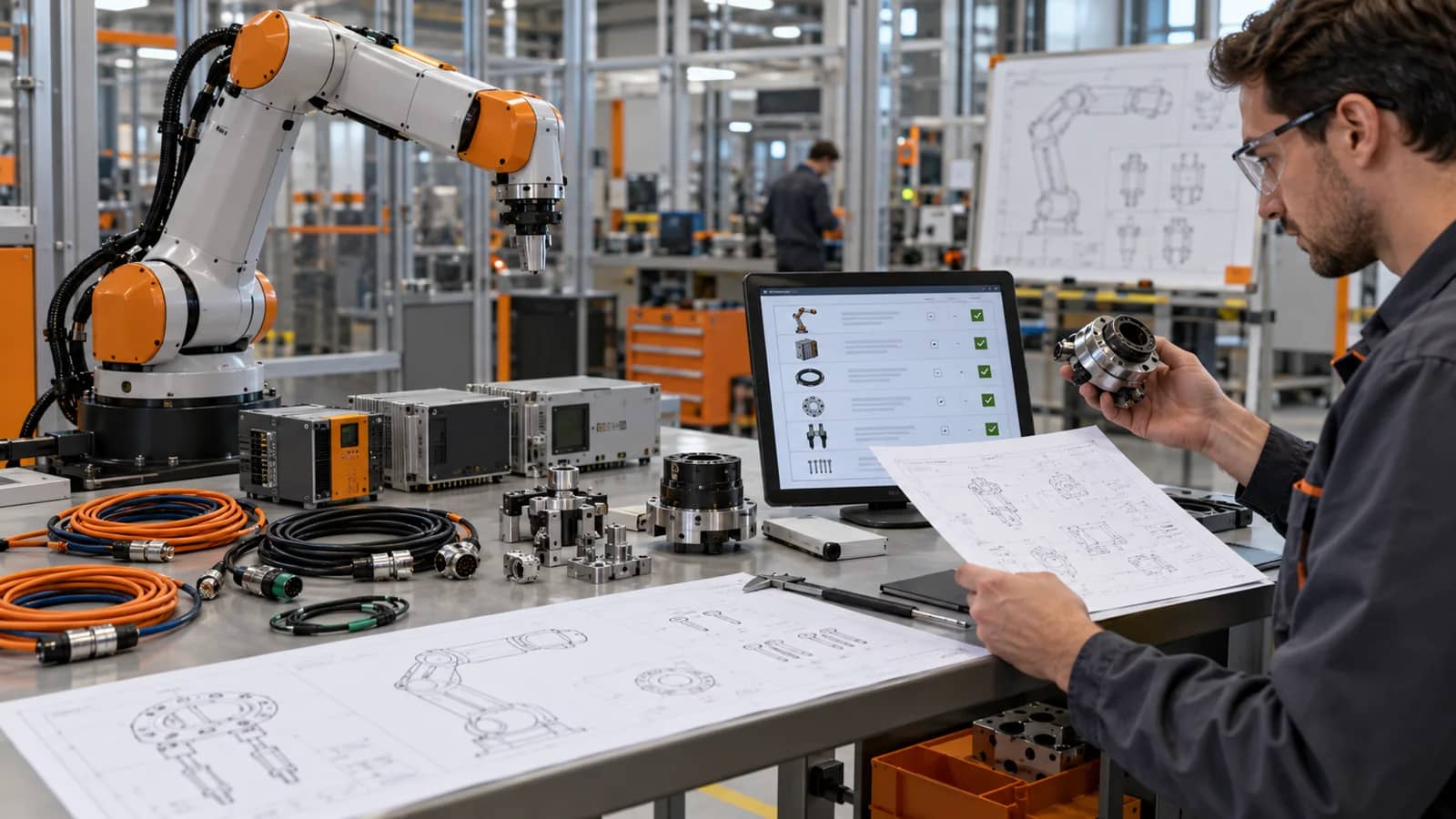
A pilot build evaluates both the robot and the process that creates it. Use production-intent work instructions, tools, inspection points, software loading, label application, traceability and document handoff wherever practical. Record substitutions, rework, build interruptions, missing information and operator questions. These observations expose repeatability risks that a single engineering prototype can hide.
NIST manufacturing-readiness language distinguishes a prototype system from a production-representative system and a pilot-line demonstration. Use that distinction as a maturity prompt, not as a self-awarded certification. Validate the requirements relevant to the selected application, interfaces, normal operation, safely testable exceptions, backup and recovery, documentation and service access. Test conditions, sample size and acceptance limits remain project-specific.
Further reading: NIST — manufacturing readiness level framework ↗
Five evidence gates from prototype to release
Approve use, market, interfaces and criteria
Freeze BOM, software, labels and documents
Build with production-intent controls
Test requirements and close deviations
Approve baseline, change and support
Gates 4 and 5: close issues, release production and control change
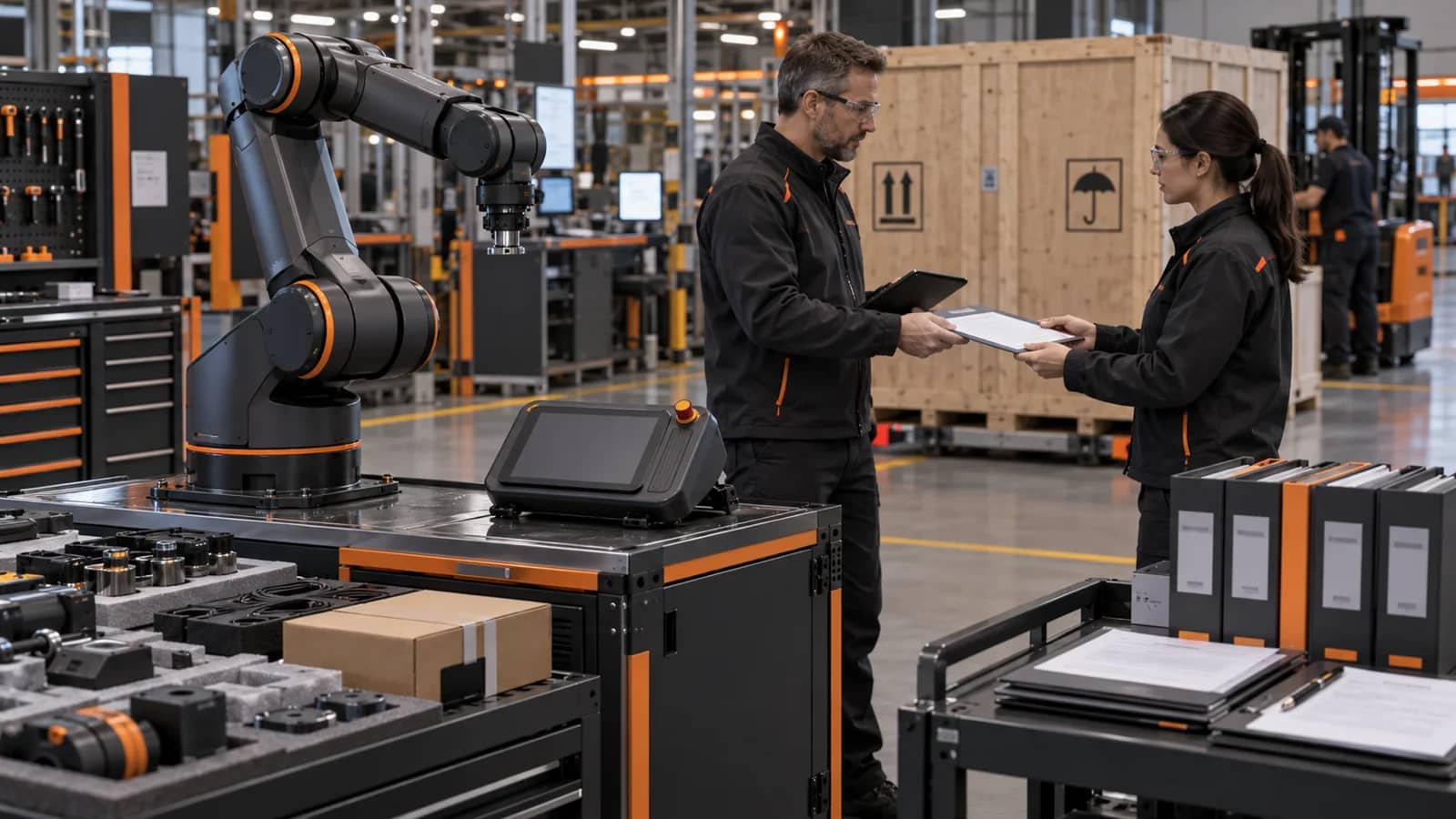
Every pilot issue needs a requirement link, severity, containment, root-cause action where appropriate, responsible owner, due date, disposition and objective closure evidence. A waiver should identify its scope and approving authority; it should not erase the deviation. Re-run affected tests after hardware, software, label or process changes. The release review then confirms that the production baseline and evidence match the same revision.
Production release should include approved BOM and alternatives, software image and restore method, manufacturing and inspection instructions, labels and traceability, acceptance records, open-item disposition, change approval classes, spare-parts list and service documents. AIAG presents control plans as documents that evolve through prototype, pre-launch and production; the useful principle is that controls follow the product into production and continue to change under control. The private-label owner retains the market responsibilities assigned to it regardless of who performs the build.
Further reading: AIAG — APQP and Control Plan resources ↗ · European Commission — Blue Guide on EU product rules ↗
Private-label robot pilot gate and evidence checklist
Use the evidence column as the minimum review pack. Add project-specific safety, regulatory and performance records before approval.
Copy the rows into your RFQ or investment worksheet.
| Gate item | Required input | Hold condition | Evidence / owner |
|---|---|---|---|
| Requirements approval | Intended use, market, interfaces and acceptance | Mandatory input or owner missing | Approved requirement baseline |
| Prototype BOM | Parts, suppliers, alternatives and revisions | Development item not identified | Controlled BOM and deviation list |
| Software baseline | Firmware, options, application, settings and backup | Uncontrolled file or license | Manifest, checksum and recovery record |
| Product identity | Brand artwork, label, nameplate and serial logic | Identity conflicts with product record | Released artwork and traceability plan |
| Pilot build readiness | Work instructions, tools, inspection and records | Critical process still ad hoc | Readiness review and build traveler |
| Functional validation | Requirement-linked tests and conditions | Acceptance criterion undefined | Test protocol and results |
| Interface and recovery | Mechanical, electrical, data, safety and restore checks | Unsafe or unowned interface | Interface and recovery record |
| Issue closure | Severity, containment, action, owner and re-test | Required issue lacks disposition | Closure evidence or approved waiver |
| Production release | Approved baseline and production controls | Evidence revision does not match product | Signed release record |
| Change and service | Change classes, spares, support and field traceability | No route for substitution or field issue | Change plan and service document set |
Frequently asked questions
What is private-label robot pilot production?
It is a controlled build used to prove that an identified robot configuration, production-intent process, documentation and acceptance evidence can support a release decision. It is not proof of unlimited production capability.
How is a pilot build different from an engineering prototype?
An engineering prototype may use temporary parts and methods to answer technical questions. A pilot build uses an identified BOM, software, labels, work instructions, controls, traceability and acceptance steps that are representative of the intended release.
What evidence should close a pilot issue?
Link the issue to a requirement, record severity and containment, assign the action and owner, repeat affected tests, and retain objective results or an approved, limited waiver.
When is a private-label robot ready for production release?
When the authorized team approves a matching configuration and evidence set, required deviations are closed or formally dispositioned, and change, traceability, spares and service controls are ready for the intended market.
Original sources and stage-gate boundary
Build a pilot plan that can support a real release decision
Share the intended product, market, current prototype state, configuration files, interface list and acceptance target. We can structure the open gates and supplier responsibilities before a project-specific proposal.
Discuss a private-label pilot ↗