JY
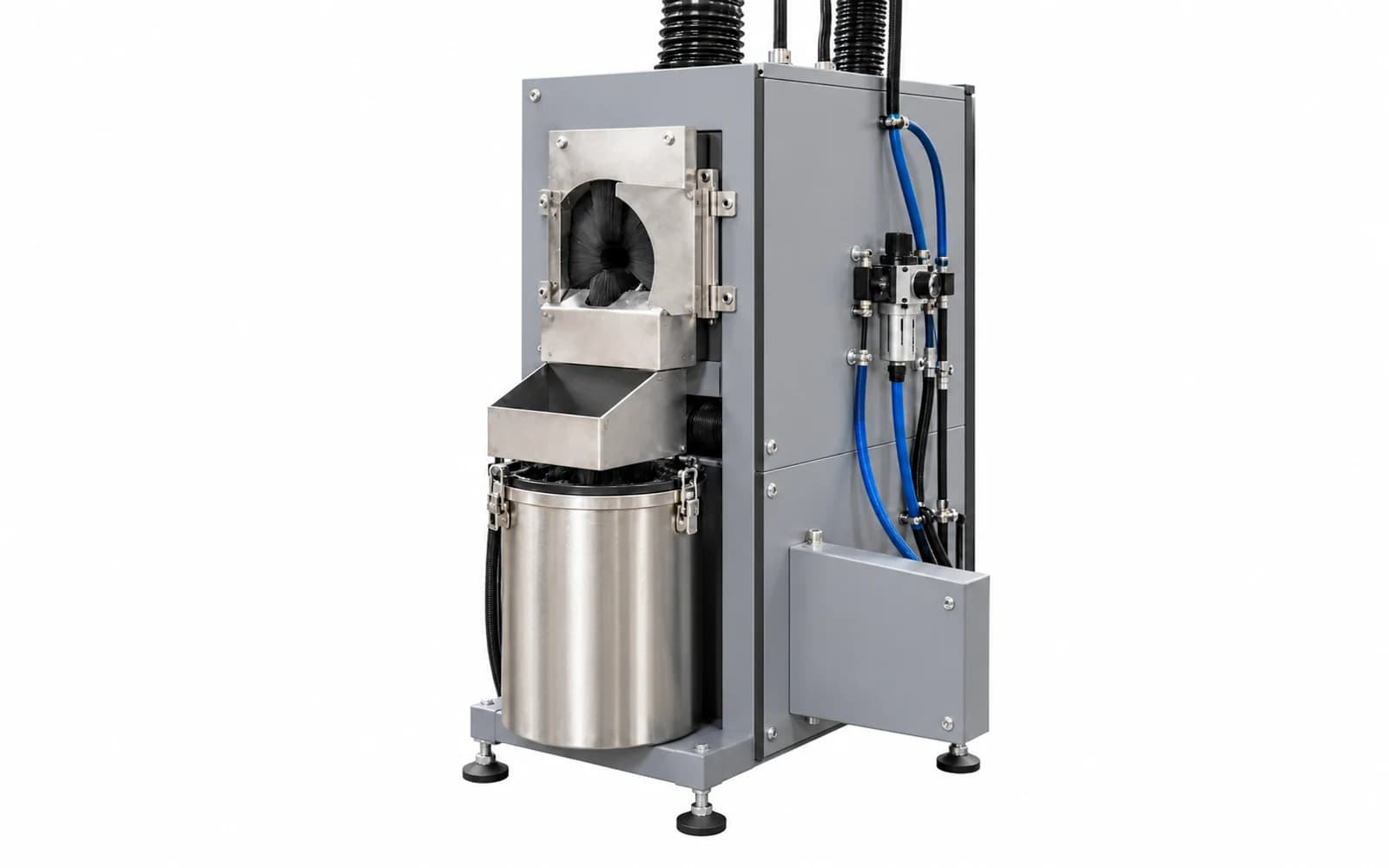
JY-2000SP Abrasive Torch Cleaner
JY-2000SP uses an abrasive-cleaning route rather than treating mechanical reaming as the only option. The source lists 24 V DC, a maximum 5 A supply requirement, 6–10 bar dry oil-free air and approximately 65 kg mass.
Request a project quoteChoose the configuration around your production task.
JY-2000SP uses an abrasive-cleaning route rather than treating mechanical reaming as the only option. The source lists 24 V DC, a maximum 5 A supply requirement, 6–10 bar dry oil-free air and approximately 65 kg mass. Confirm torch purge capability, approved media, containment and servicing before integrating it into the maintenance path.
Select a robot torch cleaning station around the actual nozzle, contact-tip arrangement, wire and torch neck. Reamer diameter and clamping geometry must fit the consumables; an unsuitable tool can damage parts instead of removing spatter. Wire cutting, internal cleaning and anti-spatter application are separate functions, so define which of them is included in the proposed configuration. Plan a collision-free approach and escape path, the cleaning position, robot signals and the conditions required before the robot returns to welding. Check dry air quality, available pressure under flow, electrical control, waste collection and the accessibility of cutters and fluid containers. Abrasive cleaning also needs the specified media, containment and servicing arrangement. A source-listed cleaning duration is not the total interruption to production: robot travel, clamping, process and restart all contribute. Ask for a demonstration with the intended torch and consumables before freezing the station package.
Published specifications
Published selection values: Models: JY-2000SP · Control voltage: 24 V DC, max. 5 A · Air supply: 6–10 bar, dry oil-free air · Mass: Approx. 65 kg. Read each model row separately; family ranges are not combined ratings.
Compare the model before you compare the quote.
| Model / arrangement | Published selection parameters |
|---|---|
| JY-2000SP |
|
Which configuration fits the task?
Mechanical reaming
Match the cutter and clamp to the nozzle geometry.
Cut and spray
Specify wire stick-out and fluid application as separate functions.
Abrasive cleaning
Confirm media, torch suitability, containment and maintenance.
Selection and RFQ matrix
Torch drawing, nozzle, tip and wire specification · Required cleaning, cutting and spray functions · Robot path, signals, dry air and waste collection
| What to confirm | Selection inputs | Project action |
|---|---|---|
| Torch drawing, nozzle, tip and wire specification | Models: JY-2000SP · Control voltage: 24 V DC, max. 5 A · Air supply: 6–10 bar, dry oil-free air · Mass: Approx. 65 kg | Select the exact model and define the loaded operating conditions. |
| Required cleaning, cutting and spray functions | Current part drawing, process sequence and layout. | Agree the motion, access and changeover checks before ordering. |
| Robot path, signals, dry air and waste collection | Existing equipment versions, service connections and access limits. | Assign an owner for each interface and its acceptance test. |
| Delivery and acceptance scope | Itemized equipment, integration, freight and site-work proposal. | Agree inclusions, exclusions, testing and handover responsibilities. |
From requirements to equipment handover.
- 01Part and process inputs
- 02Model and configuration selection
- 03Interfaces and layout
- 04Quotation and responsibilities
- 05Testing and handover
Start from the production task.
- 01Robotic welding
See the equipment in its decision context.
Questions before you request a quote
01How should I select JY-2000SP Abrasive Torch Cleaner?+
Compare the listed arrangements: JY-2000SP. Start with torch drawing, nozzle, tip and wire specification, then define required cleaning, cutting and spray functions. Use the model table to shortlist equipment and the project drawing to decide the final configuration. A family name alone does not define the supplied package.
02Will one cleaning tool fit every robot torch?+
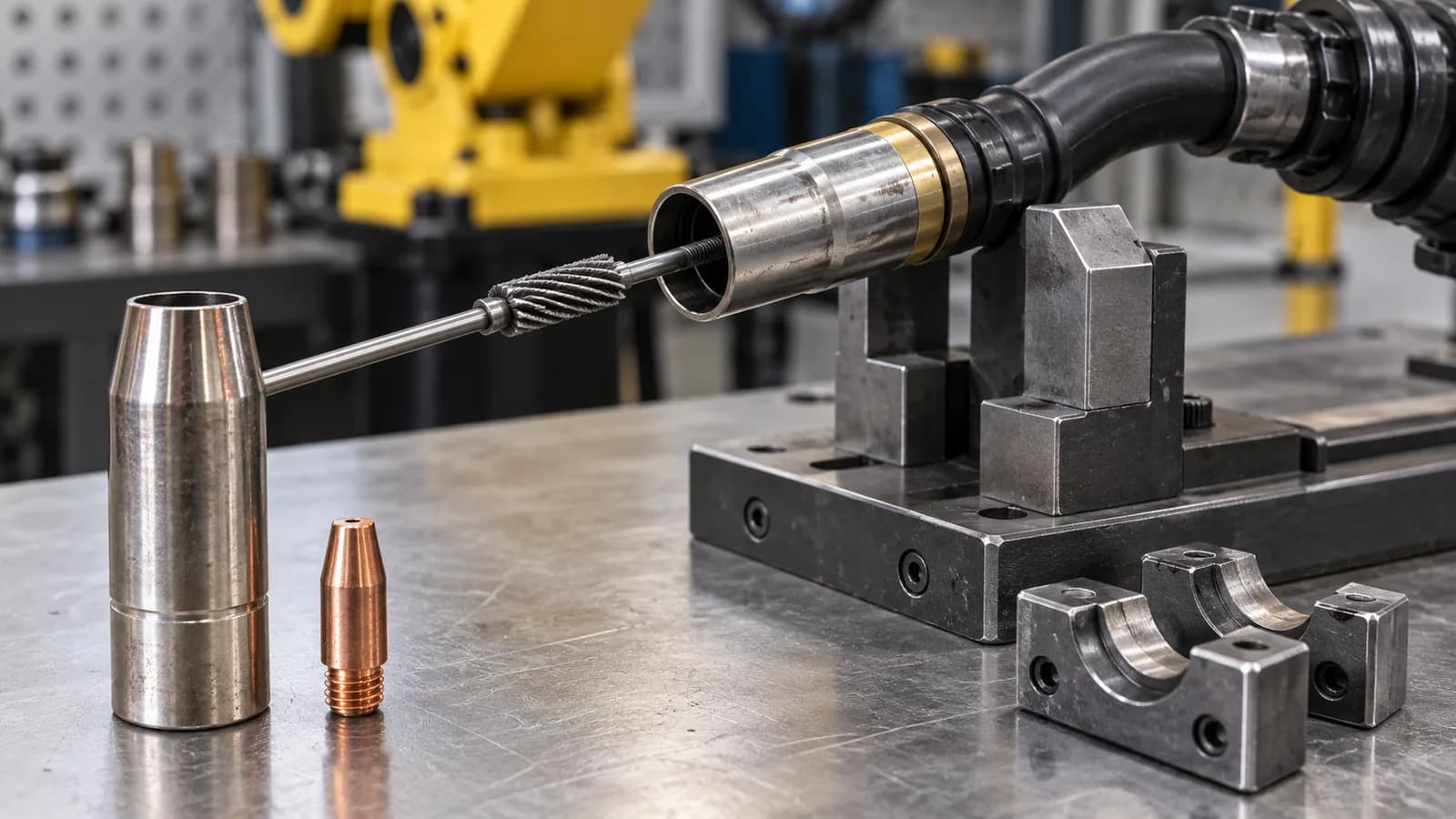
Do not assume that. Supply nozzle dimensions, torch-neck geometry, wire type and diameter, contact-tip arrangement and available robot access. The cutter, clamp, spray setting or abrasive package must be selected for that combination. Include consumable replacement and restart checks in the cell program.
03What determines the equipment quotation?+
A abrasive robot torch cleaning station quotation depends on the selected model or arrangement, tooling, control package, services, safeguards, testing and delivery scope. Separate equipment-only supply from complete-cell integration. Confirm quantity, destination, documentation, packaging and site work in the written proposal; prices and availability are not inferred from catalog values.
04Can the quotation include integration and commissioning?+
The proposal can define equipment sourcing and partner-supported integration as separate work packages. Specify mechanical and electrical installation, software, commissioning, training, FAT/SAT, spares and service ownership. Existing robot/controller versions and site utilities must be identified before an interface or installation commitment is agreed.
05What should I send to request a project proposal?+
Send torch drawing, nozzle, tip and wire specification; required cleaning, cutting and spray functions; robot path, signals, dry air and waste collection. Add drawings, quantity, destination and the acceptance method. Identify existing equipment by model, nameplate and software revision. These inputs allow the technical proposal, interfaces and commercial exclusions to be discussed together.
Turn the product shortlist into a complete scope.
Send the workpiece, process, drawings, output target and destination. We will align the equipment with the technical interfaces and commercial delivery path.