JY
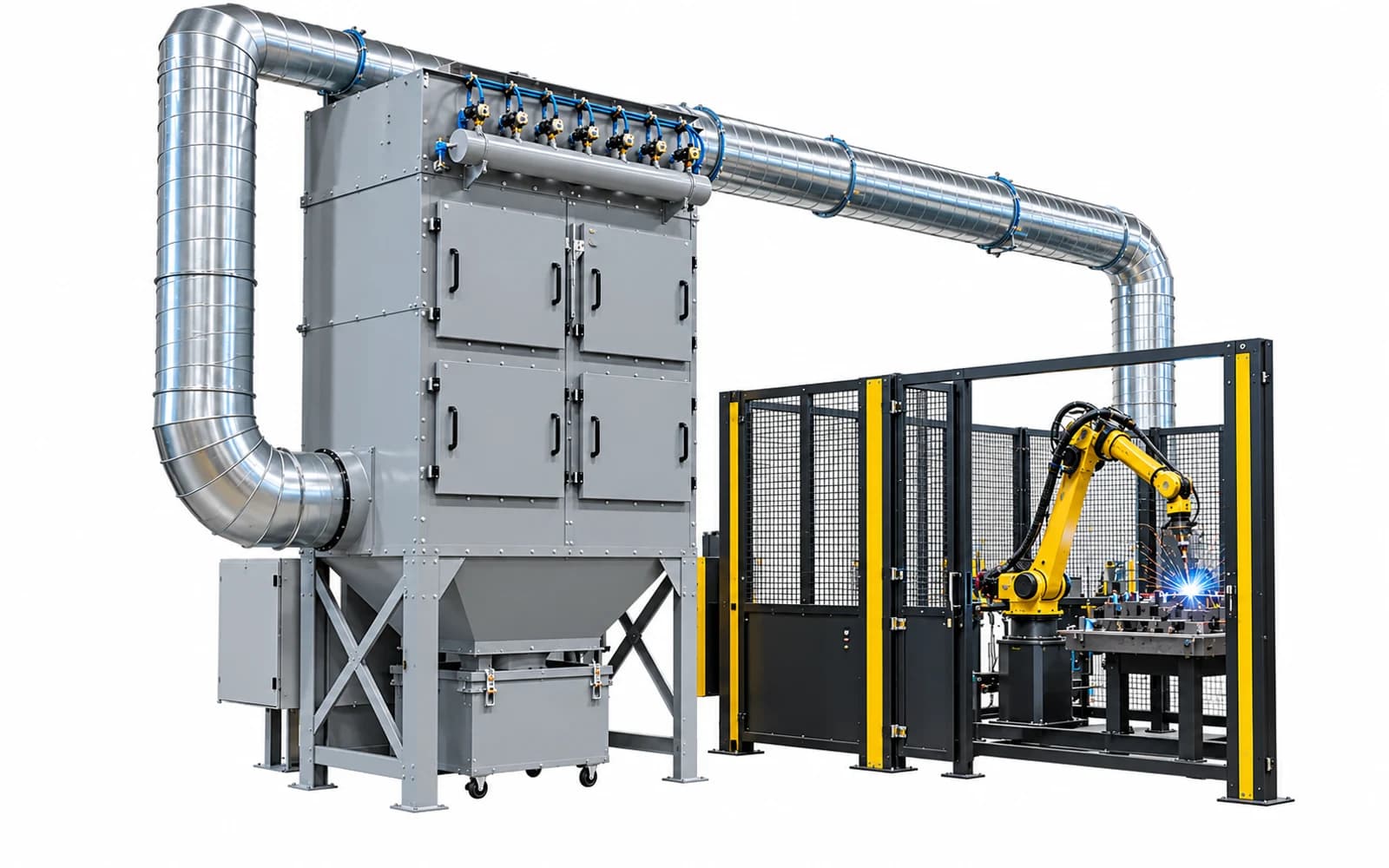
JY-XF Central Fume Collectors
Compare JY-XF04, XF06, XF09, XF12 and XF16 using the published airflow and motor pairs rather than selecting a collector by workshop area alone. The table spans 4000 to 16000 m³/h and 5.5 to 18.5 kW.
Request a project quoteChoose the configuration around your production task.
Compare JY-XF04, XF06, XF09, XF12 and XF16 using the published airflow and motor pairs rather than selecting a collector by workshop area alone. The table spans 4000 to 16000 m³/h and 5.5 to 18.5 kW. Duct design, simultaneous capture points and the operating pressure determine the useful installed selection.
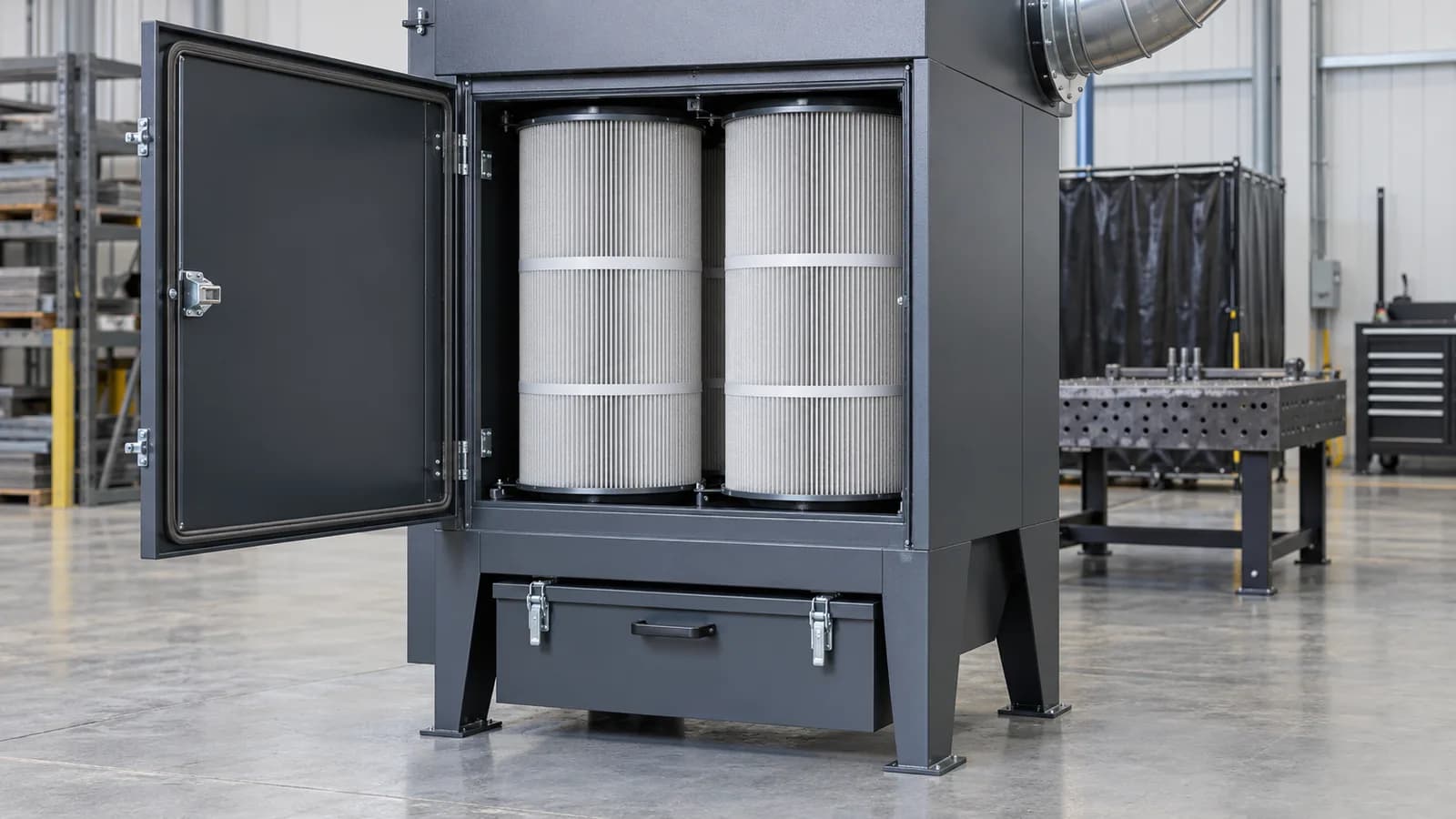
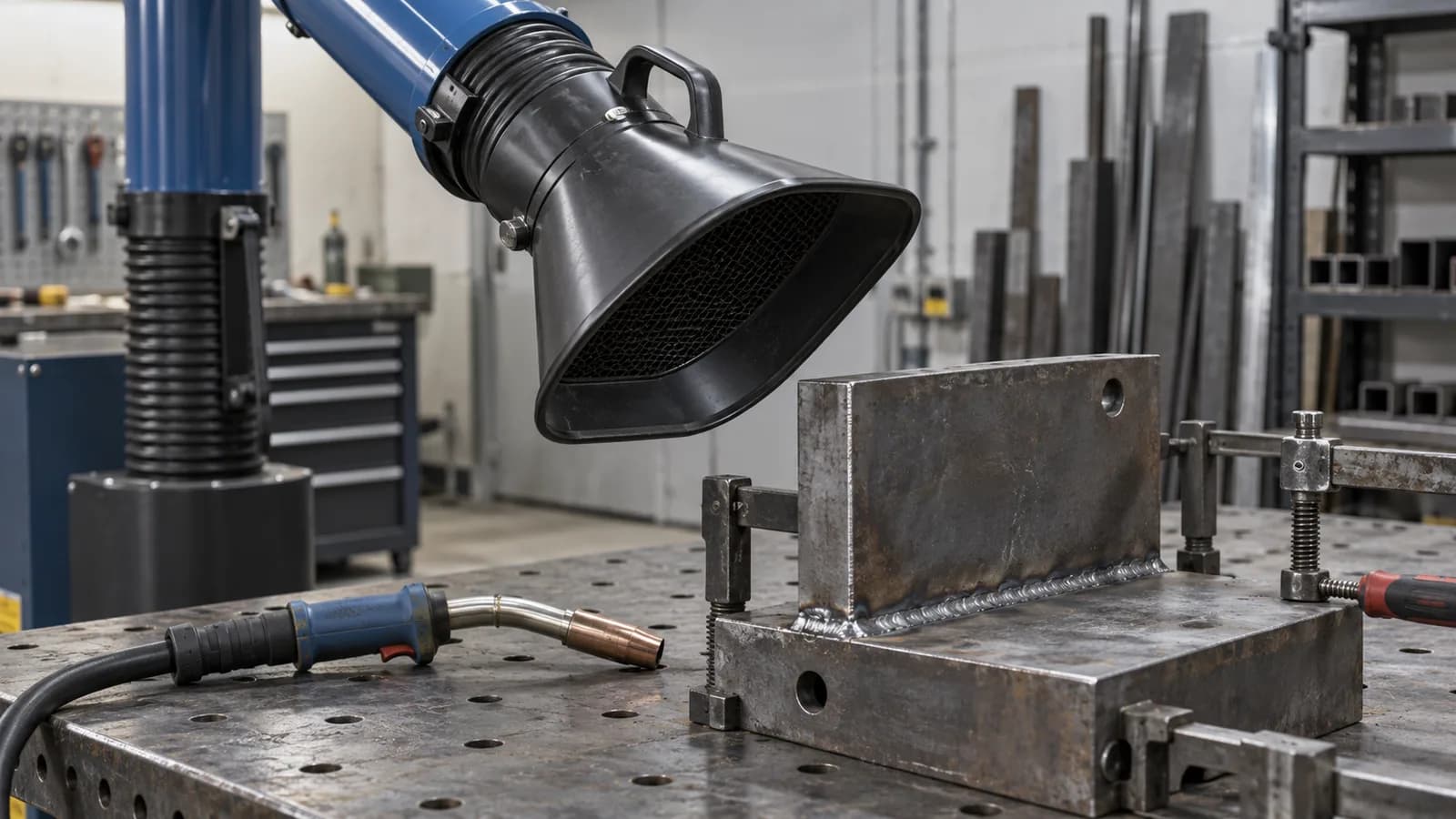
Choose fume or dust extraction from the contaminant and capture point, then size the complete air path. Nominal collector airflow is not the flow delivered at a hood after duct losses, branches and loaded filters. Record the welding or grinding process, material, consumables, number of simultaneous stations and the location of the emission. Hood position, operator access and robot travel have to coexist. A portable arm can suit a changing workstation, while a central collector requires a duct and branch-control plan. Grinding dust, hot particles, combustible materials and mixed processes need a specific fire and dust-risk review; do not treat every collector as interchangeable. Specify filter type, replacement access, pulse-air requirements, collection-bin handling, discharge or recirculation arrangements and commissioning measurements. Filtration percentages do not establish worker exposure or regulatory compliance. Acceptance should test capture under the agreed operating conditions, with responsibility for ventilation design and workplace assessment clearly assigned.
Published specifications
Published selection values: Models: JY-XF04 / JY-XF06 / JY-XF09 / JY-XF12 / JY-XF16 · Airflow: 4000m3/h · Motor power: 5.5kW · Dimensions: 1200*1100*2270mm. Read each model row separately; family ranges are not combined ratings.
Compare the model before you compare the quote.
| Model / arrangement | Published selection parameters |
|---|---|
| JY-XF04 |
|
| JY-XF06 |
|
| JY-XF09 |
|
| JY-XF12 |
|
| JY-XF16 |
|
Which configuration fits the task?
Portable arm
Capture near a changing work location; confirm hood positioning and reach.
Central collection
Coordinate simultaneous branches, pressure and filter servicing.
Grinding extraction
Review particles, sparks, materials and dust/fire risks separately.
Selection and RFQ matrix
Process, material, contaminant and simultaneous capture points · Hood geometry, duct route and pressure losses · Filter service, waste handling and site verification
| What to confirm | Selection inputs | Project action |
|---|---|---|
| Process, material, contaminant and simultaneous capture points | Models: JY-XF04 / JY-XF06 / JY-XF09 / JY-XF12 / JY-XF16 · Airflow: 4000m3/h · Motor power: 5.5kW · Dimensions: 1200*1100*2270mm | Select the exact model and define the loaded operating conditions. |
| Hood geometry, duct route and pressure losses | Current part drawing, process sequence and layout. | Agree the motion, access and changeover checks before ordering. |
| Filter service, waste handling and site verification | Existing equipment versions, service connections and access limits. | Assign an owner for each interface and its acceptance test. |
| Delivery and acceptance scope | Itemized equipment, integration, freight and site-work proposal. | Agree inclusions, exclusions, testing and handover responsibilities. |
From requirements to equipment handover.
- 01Part and process inputs
- 02Model and configuration selection
- 03Interfaces and layout
- 04Quotation and responsibilities
- 05Testing and handover
Start from the production task.
- 01Process extraction
See the equipment in its decision context.
Questions before you request a quote
01How should I select JY-XF Central Fume Collectors?+
Compare the listed arrangements: JY-XF04 / JY-XF06 / JY-XF09 / JY-XF12 / JY-XF16. Start with process, material, contaminant and simultaneous capture points, then define hood geometry, duct route and pressure losses. Use the model table to shortlist equipment and the project drawing to decide the final configuration. A family name alone does not define the supplied package.
02Does the listed airflow prove effective fume capture?+
No. Useful capture depends on the hood, its distance and orientation, duct resistance, simultaneous branches, filter condition and the emission process. Define the design conditions and commissioning measurements. Filter efficiency is a separate characteristic and does not certify the installed workplace exposure level.
03What determines the equipment quotation?+
A central welding fume collection system quotation depends on the selected model or arrangement, tooling, control package, services, safeguards, testing and delivery scope. Separate equipment-only supply from complete-cell integration. Confirm quantity, destination, documentation, packaging and site work in the written proposal; prices and availability are not inferred from catalog values.
04Can the quotation include integration and commissioning?+
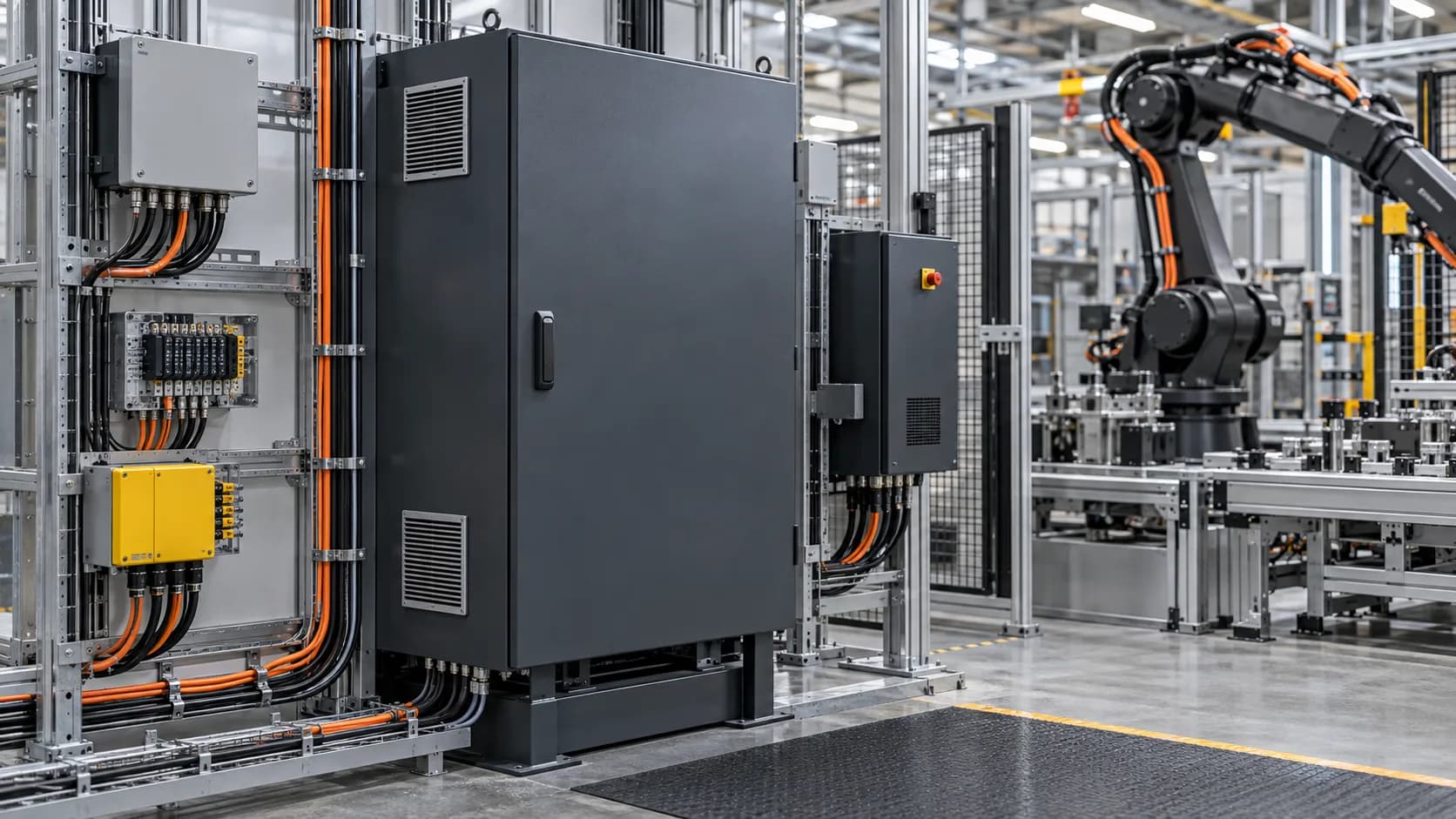
The proposal can define equipment sourcing and partner-supported integration as separate work packages. Specify mechanical and electrical installation, software, commissioning, training, FAT/SAT, spares and service ownership. Existing robot/controller versions and site utilities must be identified before an interface or installation commitment is agreed.
05What should I send to request a project proposal?+
Send process, material, contaminant and simultaneous capture points; hood geometry, duct route and pressure losses; filter service, waste handling and site verification. Add drawings, quantity, destination and the acceptance method. Identify existing equipment by model, nameplate and software revision. These inputs allow the technical proposal, interfaces and commercial exclusions to be discussed together.
Turn the product shortlist into a complete scope.
Send the workpiece, process, drawings, output target and destination. We will align the equipment with the technical interfaces and commercial delivery path.