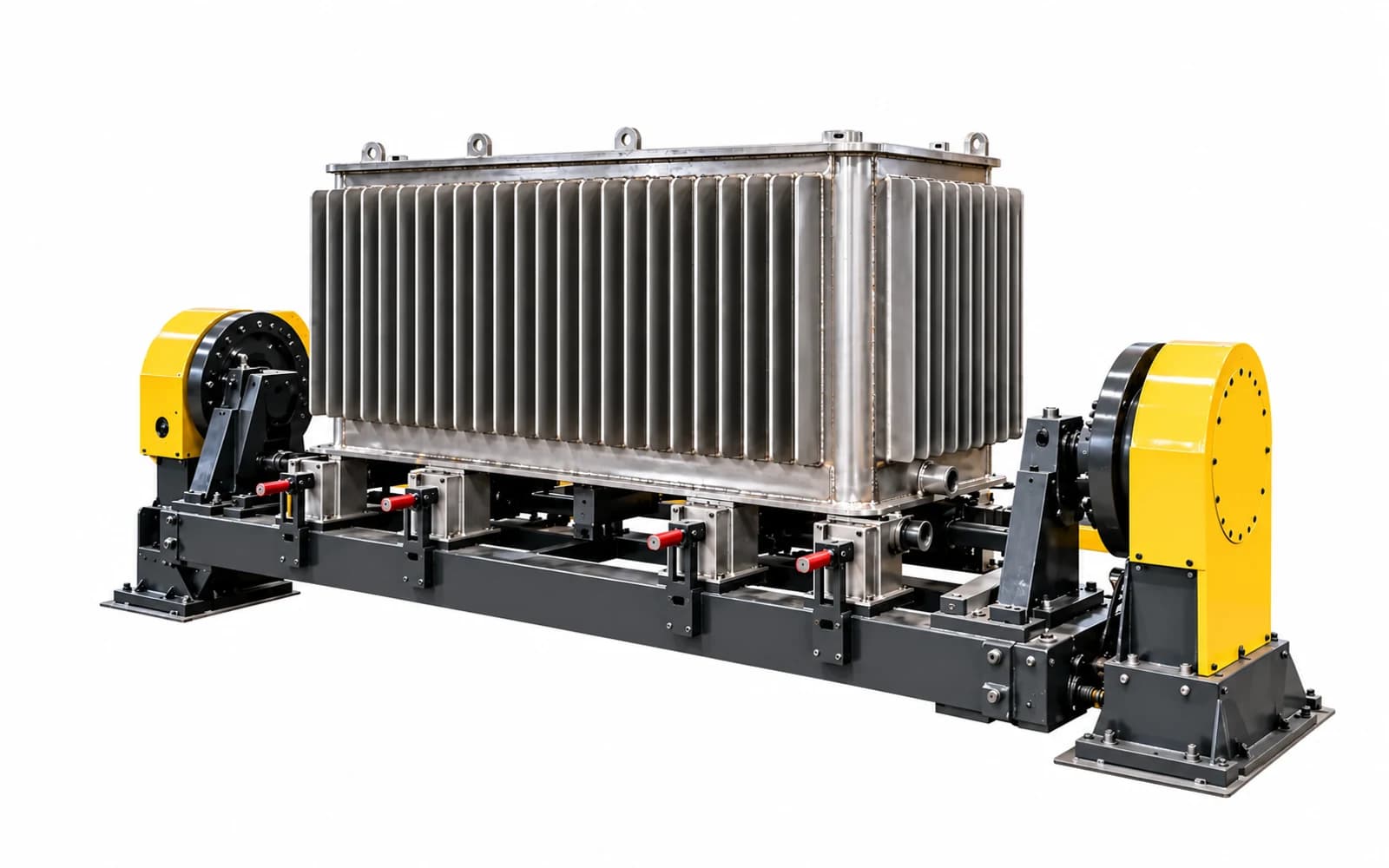
Application-specific configuration
Transformer Tank Robotic Welding
A corrugated transformer tank welding concept should begin with seam access between fins, sheet thickness, fit-up, heat distortion and the specified leak-test method. Plan part support and turning so the torch can maintain the required orientation around the enclosure.
Request a project quoteChoose the configuration around your production task.
A corrugated transformer tank welding concept should begin with seam access between fins, sheet thickness, fit-up, heat distortion and the specified leak-test method. Plan part support and turning so the torch can maintain the required orientation around the enclosure. No generic robot or positioner capacity is assigned: tank drawings and process trials define the equipment package.
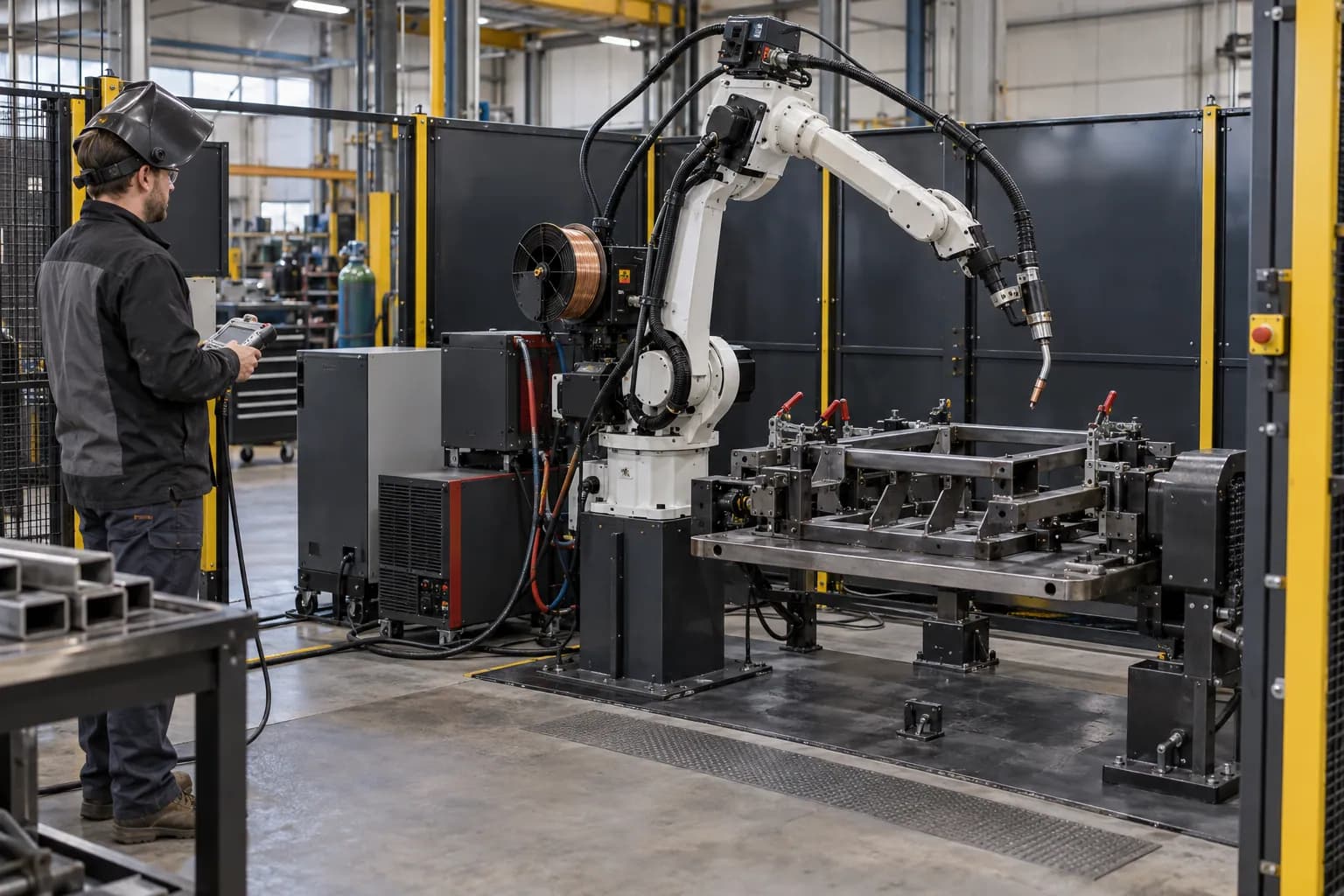
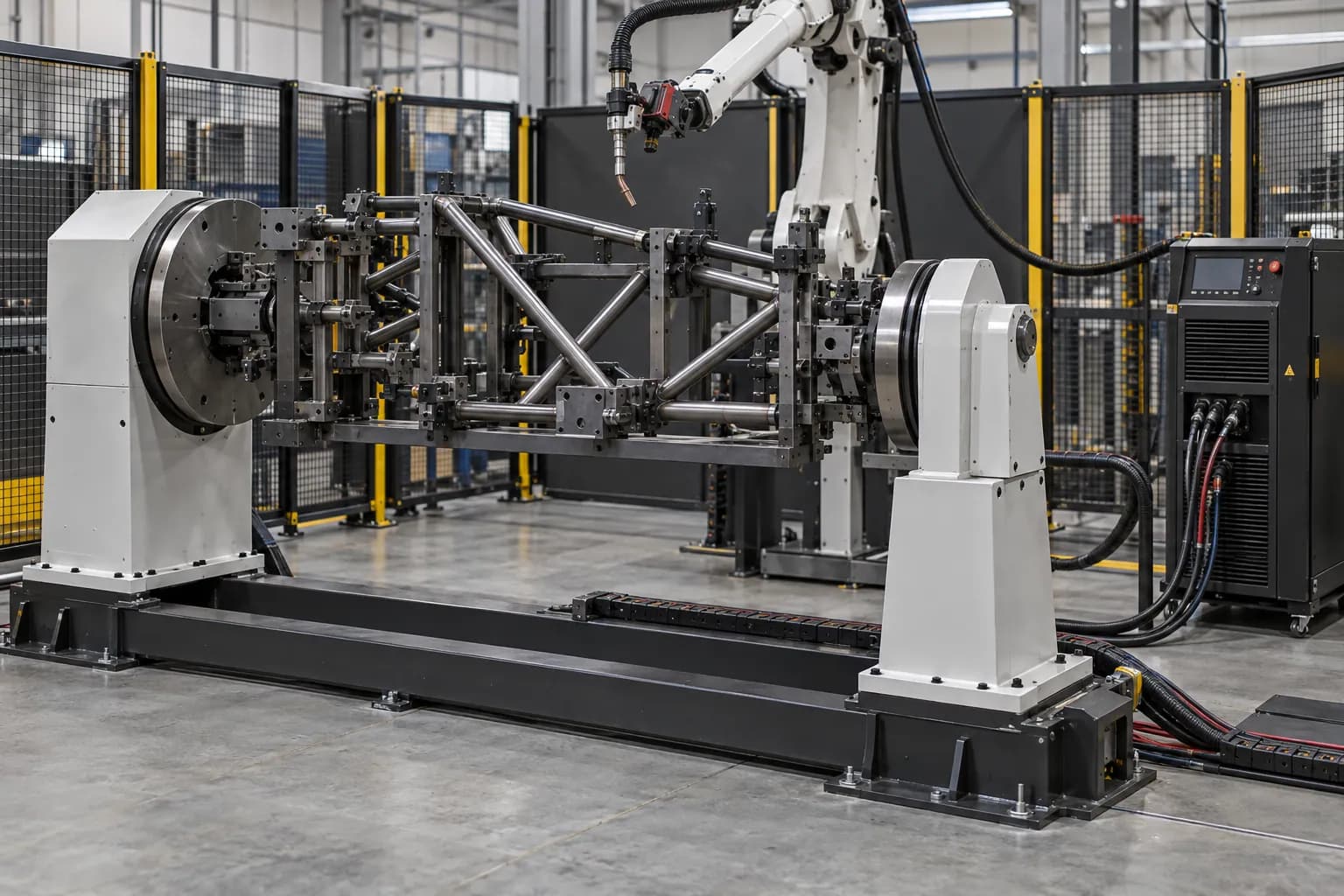
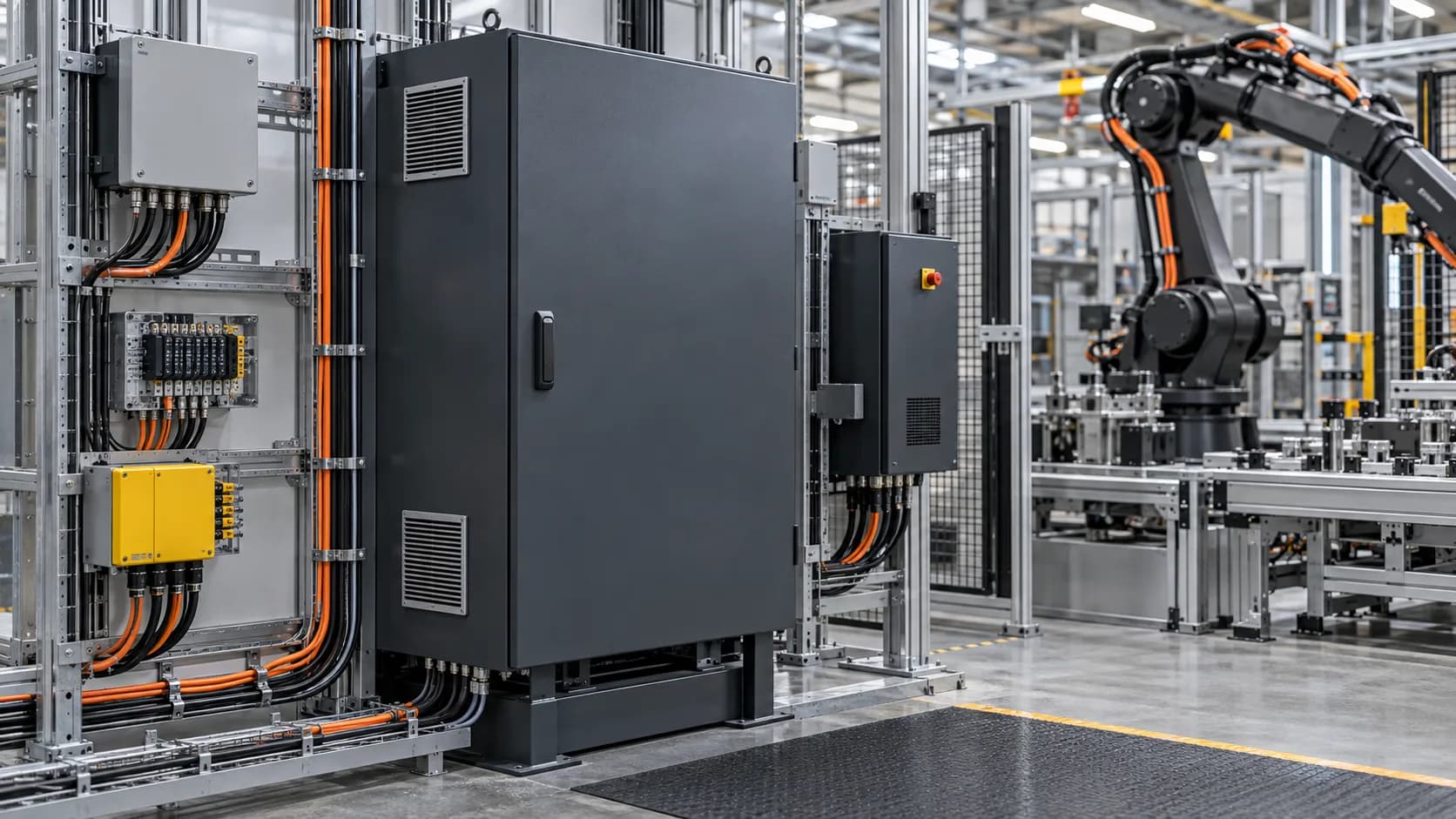
Plan a welding system from the joint and the part family before selecting the robot arrangement. Drawings should identify material, thickness, joint preparation, weld locations, appearance requirements and the method used to judge the finished weldment. Incoming fit-up and fixture repeatability determine how much location variation the process must accommodate. A mobile or rail-mounted cell adds questions about leveling, docking, cable management, extraction and how a work coordinate is established after relocation. A collaborative arm does not remove arc-radiation, fume, hot-metal, clamping or unexpected-motion hazards. For multiple stations, separate welding time from loading, repositioning, inspection and changeover; parallel work is useful only if the limiting stage and protective measures allow it. Put robot, process package, tooling, sensing, guarding, programming and site commissioning into explicit quote lines so a complete-cell proposal can be compared fairly.
Published specifications
Published selection values: Models: Corrugated transformer tank · Configuration: Application-specific equipment package. Read each model row separately; family ranges are not combined ratings.
Compare the model before you compare the quote.
| Model / arrangement | Published selection parameters |
|---|---|
| Corrugated transformer tank | Configuration, current specification sheet and interface package to be defined with the project drawings. |
Which configuration fits the task?
Fixed station
Stable work references with a defined loading and weld sequence.
Rail or mobile
Move the process to the part; define relocation and coordinate recovery.
Multiple stations
Evaluate parallel loading against the complete cell cycle and protected zones.
Selection and RFQ matrix
Joint drawings, material, thickness and incoming variation · Fixture, torch access and full production cycle · Site protection, extraction, utilities and acceptance
| What to confirm | Selection inputs | Project action |
|---|---|---|
| Joint drawings, material, thickness and incoming variation | Models: Corrugated transformer tank · Configuration: Application-specific equipment package | Select the exact model and define the loaded operating conditions. |
| Fixture, torch access and full production cycle | Current part drawing, process sequence and layout. | Agree the motion, access and changeover checks before ordering. |
| Site protection, extraction, utilities and acceptance | Existing equipment versions, service connections and access limits. | Assign an owner for each interface and its acceptance test. |
| Delivery and acceptance scope | Itemized equipment, integration, freight and site-work proposal. | Agree inclusions, exclusions, testing and handover responsibilities. |
From requirements to equipment handover.
- 01Part and process inputs
- 02Model and configuration selection
- 03Interfaces and layout
- 04Quotation and responsibilities
- 05Testing and handover
Start from the production task.
- 01Robotic welding
See the equipment in its decision context.
Questions before you request a quote
01How should I select Transformer Tank Robotic Welding?+
Compare the listed arrangements: Corrugated transformer tank. Start with joint drawings, material, thickness and incoming variation, then define fixture, torch access and full production cycle. Use the model table to shortlist equipment and the project drawing to decide the final configuration. A family name alone does not define the supplied package.
02Is a collaborative welding station automatically safe without guarding?+
No. The complete application must address the robot, torch, fixture, hot parts, radiation, fume and operator tasks. Define protective measures and verification for the actual installation. Hand-guided programming and collision detection do not by themselves establish that people may share an active welding area.
03What determines the equipment quotation?+
A transformer tank robotic welding quotation depends on the selected model or arrangement, tooling, control package, services, safeguards, testing and delivery scope. Separate equipment-only supply from complete-cell integration. Confirm quantity, destination, documentation, packaging and site work in the written proposal; prices and availability are not inferred from catalog values.
04Can the quotation include integration and commissioning?+
The proposal can define equipment sourcing and partner-supported integration as separate work packages. Specify mechanical and electrical installation, software, commissioning, training, FAT/SAT, spares and service ownership. Existing robot/controller versions and site utilities must be identified before an interface or installation commitment is agreed.
05What should I send to request a project proposal?+
Send joint drawings, material, thickness and incoming variation; fixture, torch access and full production cycle; site protection, extraction, utilities and acceptance. Add drawings, quantity, destination and the acceptance method. Identify existing equipment by model, nameplate and software revision. These inputs allow the technical proposal, interfaces and commercial exclusions to be discussed together.
Turn the product shortlist into a complete scope.
Send the workpiece, process, drawings, output target and destination. We will align the equipment with the technical interfaces and commercial delivery path.