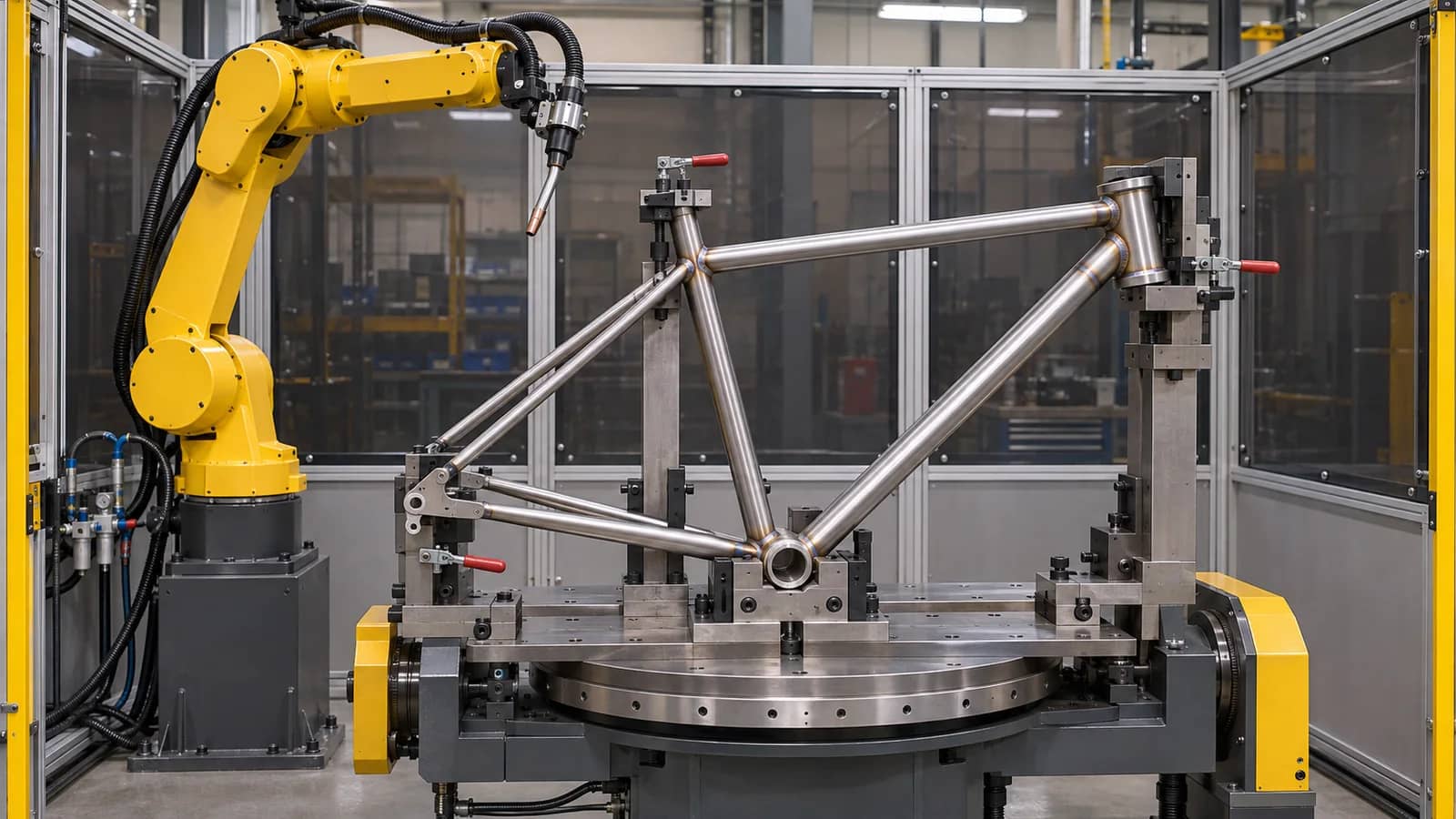
The frame RFQ input pack
Prepare one shared package for engineering and purchasing. Keep each drawing, part sample and inspection requirement tied to the same frame revision.
- Frame family
- List sizes, geometry changes, annual mix, batch sizes and the launch sequence. Identify the first variant to trial.
- Material and preparation
- Specify alloy/grade, condition, tube dimensions, local wall changes, cut profiles, cleaning and incoming inspection.
- Joint and setup map
- Number every joint, locate starts/stops and identify tack welding, fixture transfers and inaccessible areas.
- Accepted frame
- Provide drawing tolerances, inspection locations, surface requirements and the applicable frame test specification.
Ask every bidder to quote the same frame revision and list the preparation, fixture, process and inspection work included in its offer.
Equipment to compare for your frame RFQ
Use these pages to compare specifications and prepare questions for a workpiece-specific configuration. Select the process and prove access with your frame and fixture.
Start with the frame family and incoming parts
A frame size change can move a weld, alter a clamp location or change how the torch approaches the head tube, bottom bracket and seat cluster. Separate a shared visual appearance from shared locating geometry. List the datums that stay constant, the supports that move and the joints that need a different tool orientation. Include brackets, cable guides and reinforcement pieces in the assembly sequence rather than adding them after the cell has been specified.
Send measured examples of the tube-to-tube fit that production actually supplies. Record where cut profiles, ovality, bends or formed ends vary and who corrects a part outside the agreed range. A robot follows a planned path; the purchasing question is whether the incoming preparation and locating method consistently present the joint to that path. Ask the supplier to identify any preparation equipment or manual operation that remains outside its quotation.
Choose the fixture route by the frame family
Best evaluated for a stable geometry with frequent repeat batches. Quote separate variants and storage.
Evaluate when datum interfaces remain consistent. Include identification, locating checks and changeover work.
Consider when joints, material or access require different preparation, torches or acceptance tasks.
Choose the process from the material and joint
Record the material specification and condition for each member, not just a description such as aluminum frame. Include filler, shielding gas, cleanliness, surface treatments and any heat-treatment requirements set by the frame design. TWI identifies surface contamination and shielding problems among causes of weld porosity. Translate that into purchasing inputs: preparation method, storage, elapsed handling stages, gas delivery and the joint condition at the moment of welding.
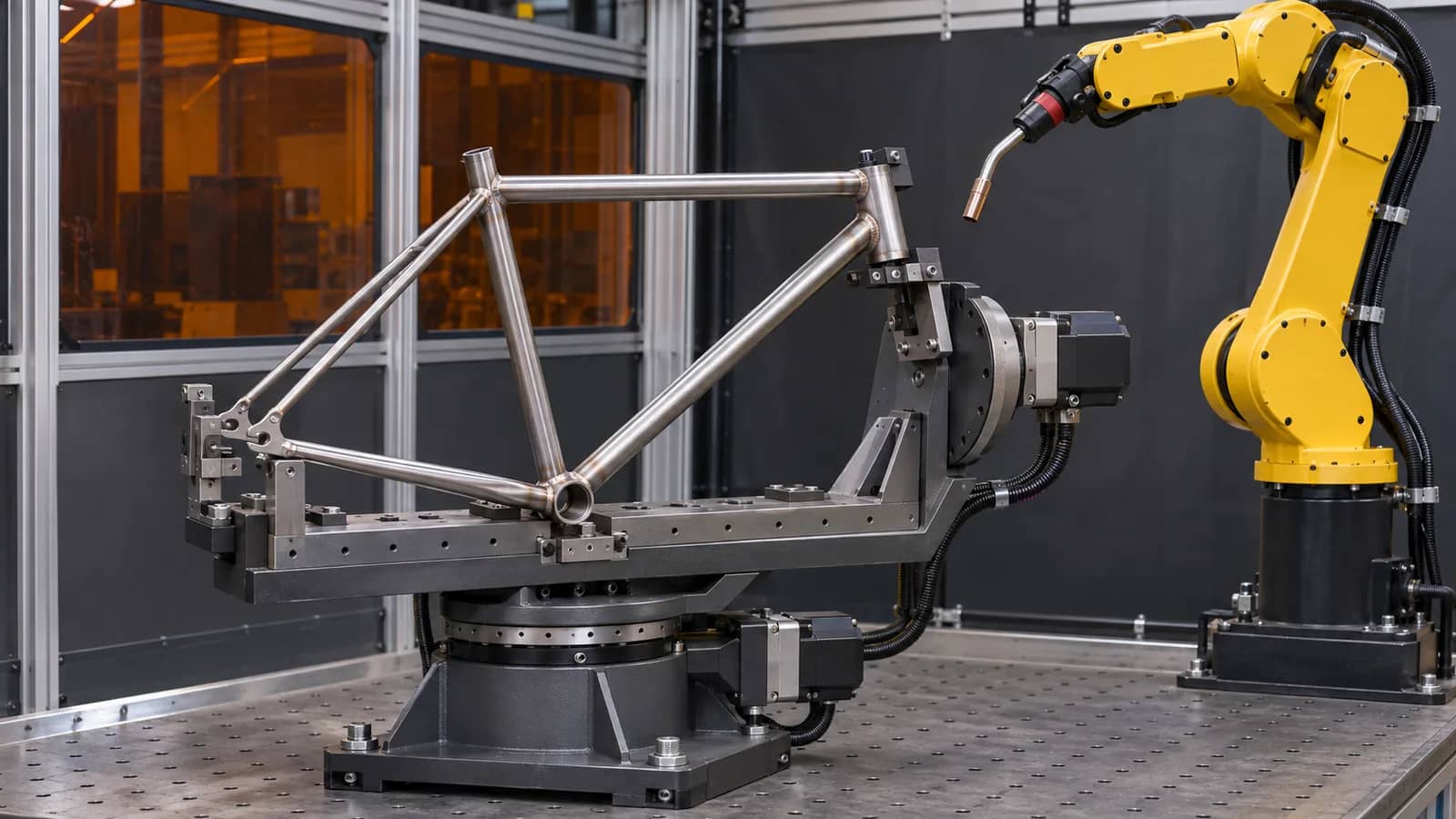
Shuz Tung lists both turning-axis and fixed-table bicycle-frame cells with TIG/MIG routes. That range is a reason to request a process-and-fixture proposal for your joint, rather than choose equipment from an industry label. Have the welding specialist define the proposed procedure, torch package, wire-feed arrangement where relevant and trial inspections. Keep steel and aluminum trial plans separate, including cleaning tools and handling practices appropriate to the selected material.
Further reading: Shuz Tung — bicycle-frame welding cell configurations ↗ · TWI — porosity causes, preparation and shielding ↗
Specify locating, clamping and weld access together
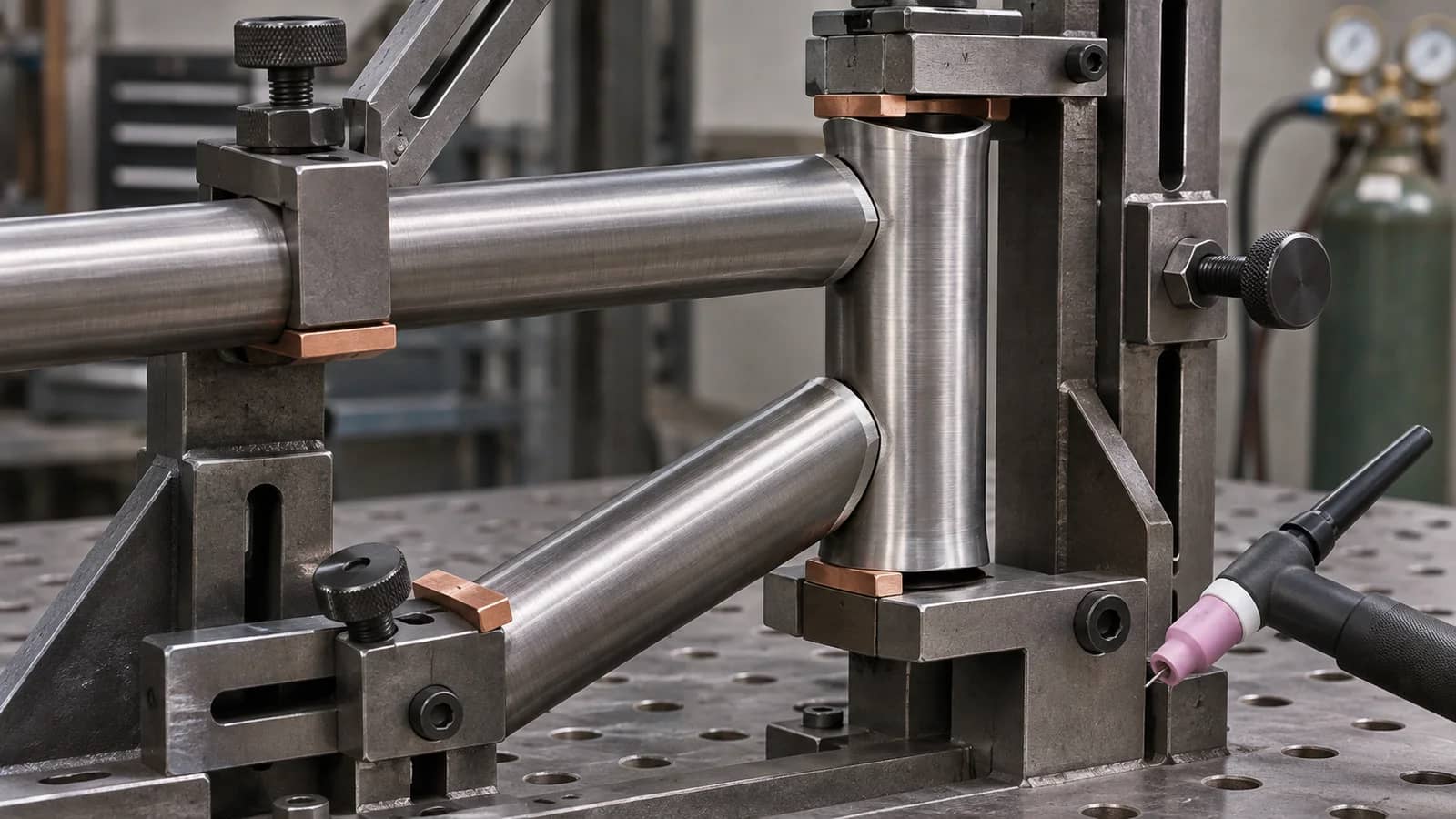
Locate the frame from functional references chosen by the design team, then identify which clamps retain the parts without blocking the weld. Include loading clearance, tack sequence, full torch-neck and cable motion, heat movement and removal after cooling. Check the rear triangle as well as the main triangle: an accessible outside seam can conceal a difficult start, stop or return path on the opposite side.
A tilt-and-rotate positioner can change how the joint is presented, but the fixture, frame and service connections move with it. Provide total rotating mass, center of gravity, required orientations and swept envelope when discussing the positioner. For each frame size, ask how the fixture is identified, adjusted, checked and connected to the correct robot program. Price removable nests, dedicated fixtures and recipe changes as distinct deliverables.
From frame drawing to purchase scope
Frame revision, materials, joint map and first family
Locating, torch access, positioner motion and cycle sequence
Representative parts, released-frame measurement and weld checks
Included equipment, documents, acceptance and support
Compare robot and tooling options as one package
The catalog lists a 1440 mm working range for AR1440 and 2010 mm for AR2010. Use these as starting points for a reach study with the actual torch, fixture and frame poses. Check robot mounting, wrist orientation, feeder and cable routing, access for cleaning and the load carried at each mounting point. The longer nominal range is useful only when the required weld poses and service paths fit the installation.
Compare the robot/controller, welding process equipment, fixture, positioner, guarding and integration as separate quote lines. Include the drawings, editable programs, operator training, maintenance access and spare consumables needed for operation. Ask who supplies sample parts and gauges for the trial and who retains the setup after approval. This makes a lower equipment subtotal easier to compare with an offer that includes more engineering and commissioning work.
Agree the trial and accepted-frame checks before ordering
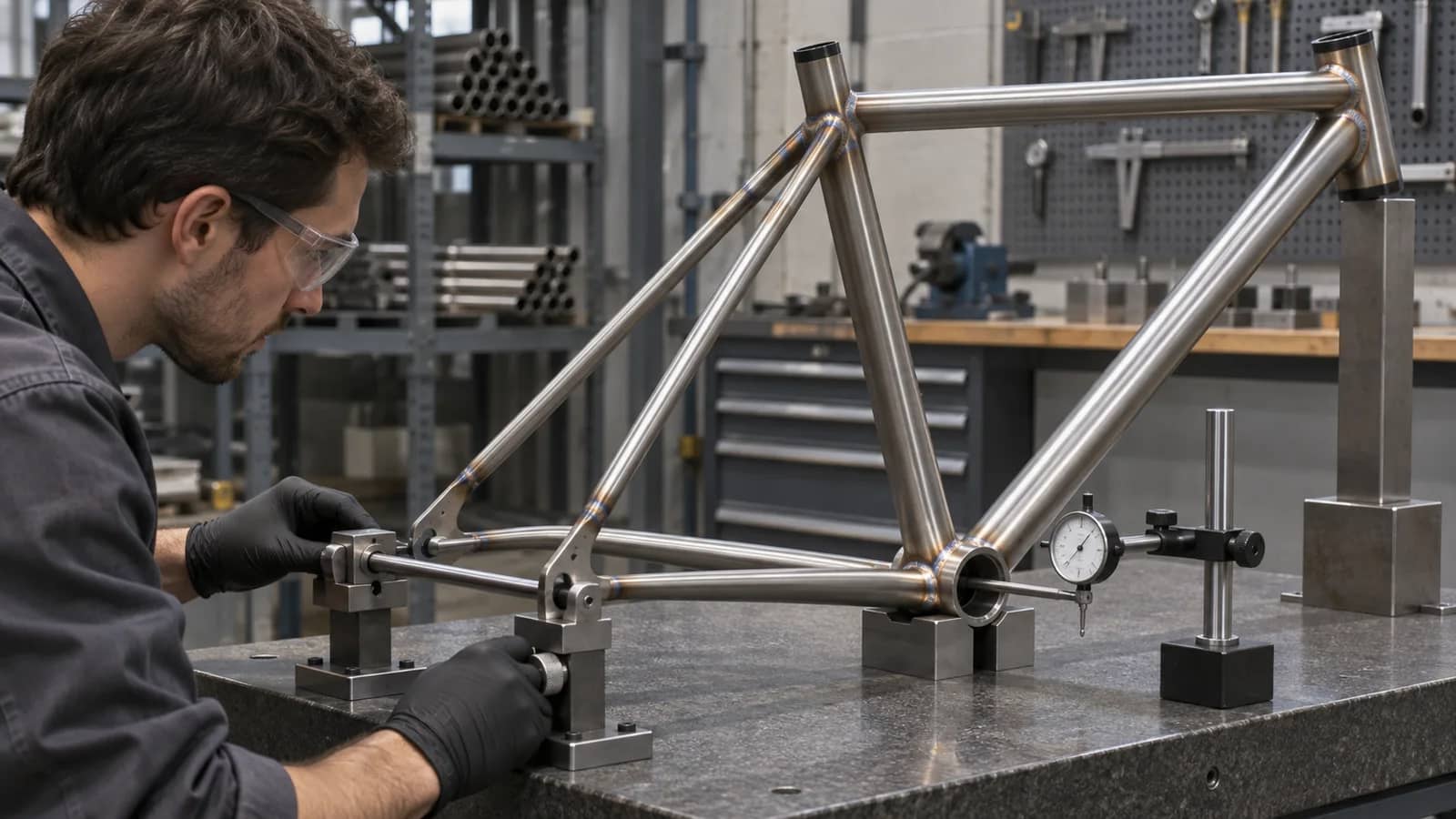
Select samples that represent the first production family and the agreed incoming variation. Identify each part and fixture revision. During the trial, observe fit-up, clamp sequence, torch approach, weld starts/stops and unloading. Measure the cooled frame after fixture release, using the agreed references and inspection methods. Assign separate records to weld inspection, frame dimensions and any functional or durability testing required by the buyer's product specification.
Before placing the order, convert trial findings into the final fixture and process scope. Record which variants were tried, which changes remain, the acceptance criteria and the person responsible for each action. Specify factory tests and the checks that depend on installation at your site. Include a sample-retention plan, program backup, setup instructions and a first-production support arrangement in the purchasing package.
Bicycle frame RFQ and responsibility matrix
Copy these rows into your inquiry. Add the drawing revision, responsible party, supplier response and agreed acceptance record to each line.
Copy the rows into your RFQ or investment worksheet.
| RFQ item | Buyer input | Supplier scope to quote | Acceptance / owner |
|---|---|---|---|
| Frame variants | Sizes, mix, batch and drawing revision | Included variants and future options | Variant list; buyer engineering |
| Tube preparation | Cuts, formed ends, fit-up samples | Preparation supplied or buyer operation | Incoming checks; preparation owner |
| Material condition | Grade, thickness, treatment and cleaning | Process package and handling requirements | Material record; welding specialist |
| Joint map | IDs, preparation, starts/stops, inspection | Weld programs and setup allocation | Trial weld record; process owner |
| Fixture | Datums, clamps, size changes | Nests, sensors, drawings and service parts | Locating and release checks; tooling owner |
| Robot access | Fixture poses, torch and layout | Robot/controller, tool and cable package | Agreed poses; integration owner |
| Positioner | Rotating mass, center of gravity, swing | Axes, services and control interfaces | Motion and clearance check; integration |
| Cycle and staffing | Good-frame demand, loading and checks | Full sequence, operator tasks and cleaning | Agreed trial method; production |
| Released dimensions | Cooled-frame datums and tolerances | Gauges and inspection work included | After-release results; quality |
| Changeover | Batch pattern and variant sequence | Fixtures, recipes and first-piece checks | Variant-to-variant trial; production |
| Site interfaces | Utilities, access, extraction, destination | Guarding, installation and facility work | Factory/site split; project manager |
| Handover | Training roles and file access | Programs, manuals, backups and support | Document list; buyer and supplier |
Frequently asked questions
What should I send for a bicycle frame welding quote?
Send revisioned frame and tube drawings, material condition, joint map, fit-up samples, frame-size mix, output target, inspection requirements and site details. Identify which preparation and inspection operations you will supply.
Can steel and aluminum frames share one cell?
Evaluate the exact materials, process equipment, fixtures, cleaning, consumables and changeover requirements. Ask for separate trial conditions and a clearly described shared or dedicated setup before choosing a combined package.
How do I choose AR1440 or AR2010?
Compare the 1440 mm and 2010 mm catalog working ranges using the actual frame, fixture, torch and robot mounting. Include tool load, wrist poses, cables, collision checks and maintenance access in the selection study.
Does each frame size need its own fixture?
That depends on common datums, geometry, clamp access and the required changeover. Compare dedicated fixtures with removable nests on a common base, and test the first-piece procedure for each included size.
What should the trial demonstrate?
Use representative parts to check fit-up, access, the complete sequence, frame removal, cooled dimensions and specified weld inspection. Agree acceptance methods and responsibilities before the trial, including any separate product testing.
References and further reading
Send the frame inputs for a welding-cell quotation
Share your drawings, material, joint map, frame sizes, sample availability and destination. TubeFrame can help organize the robot, positioner, fixture, process equipment and partner-supported integration scope for your application.
Request a welding-cell quote ↗