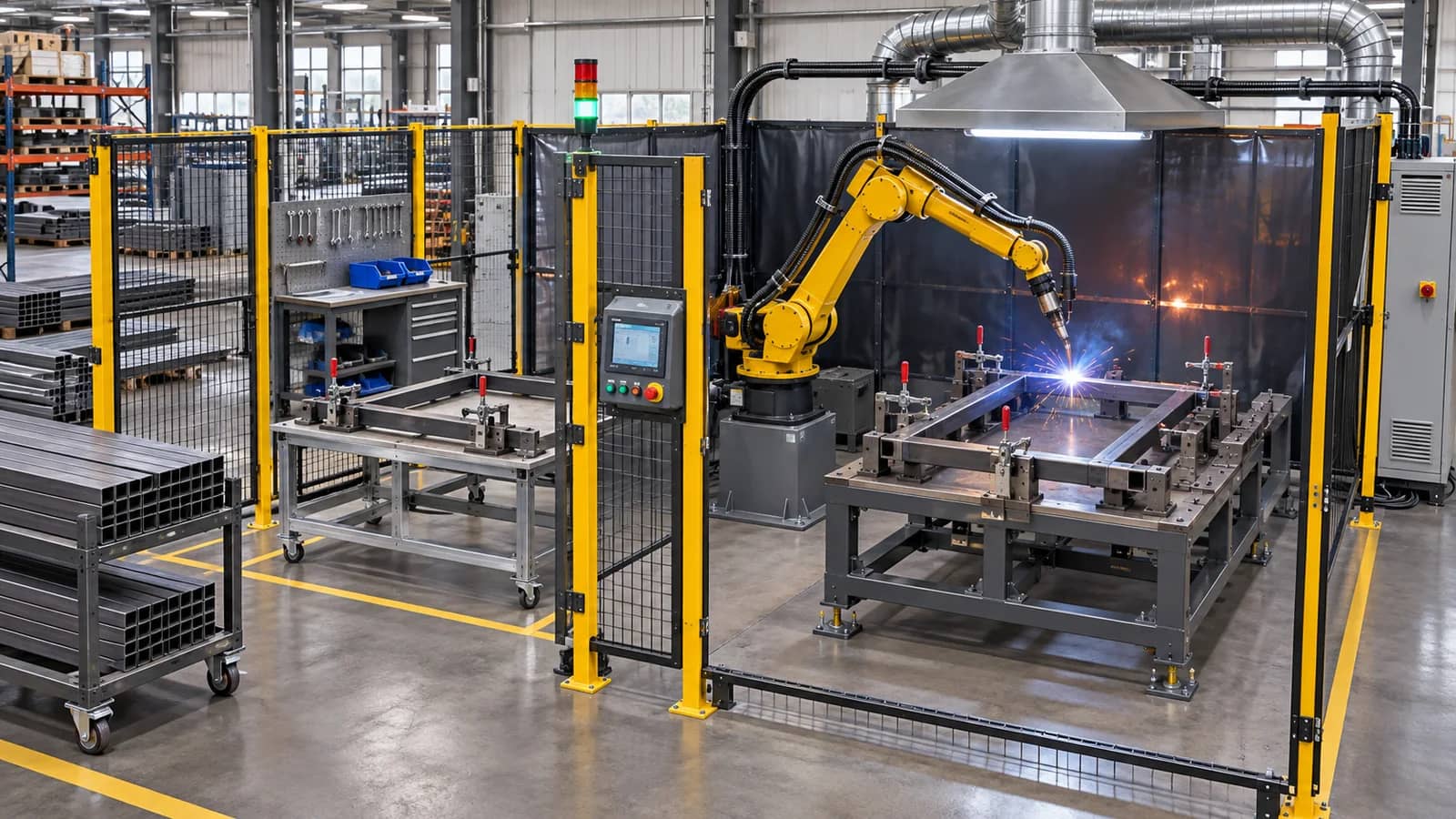
Define the product family before the cell
Group parts by locating and welding requirements, then compare how each proposal handles the differences.
- Geometry
- Frame envelope, tube sections, brackets, holes and weld locations for every included variant.
- Production pattern
- Good assemblies required by variant, batch sequence, operator tasks and planned changeovers.
- Quality requirements
- Dimensional references, accessible inspection, visible surfaces, weld requirements and product-test responsibility.
- Purchasing scope
- Equipment, tooling, integration, site work, documentation and acceptance included in each offer.
Compare the same representative assemblies and the same responsibilities in every offer. List future variants as named options.
Products to compare in your cell proposal
Start with the assembly and operating sequence, then compare these equipment routes. Ask for a configuration matching your material, fixtures and installation.
Build a part-family and fixture map
A rack upright, bench base and cable-machine frame may all use rectangular tubing, yet need different locating faces, clamp access and welding sequences. Group assemblies by their functional references and joint arrangement. Record section dimensions, bends, cutouts, mounting plates and any threaded inserts that must stay clean. Separate welded subassemblies from the final equipment so the quote describes the operation the cell will actually perform.
For every variant, identify the locator positions that stay fixed and the ones that change. A shared fixture is attractive when common references support the family and clamps remain accessible. Dedicated tooling may simplify a substantially different assembly. Compare the cost and operator work of a complete fixture exchange with changing removable nests or adjustable stops, including the first-piece check after the change.
Compare fixture routes before adding stations
Useful to evaluate for common datums; include adjustment checks and first-piece work.
Compare for different geometry, frequent repeat batches or difficult clamp access.
Evaluate only after the full loading, welding and changeover sequence is defined.
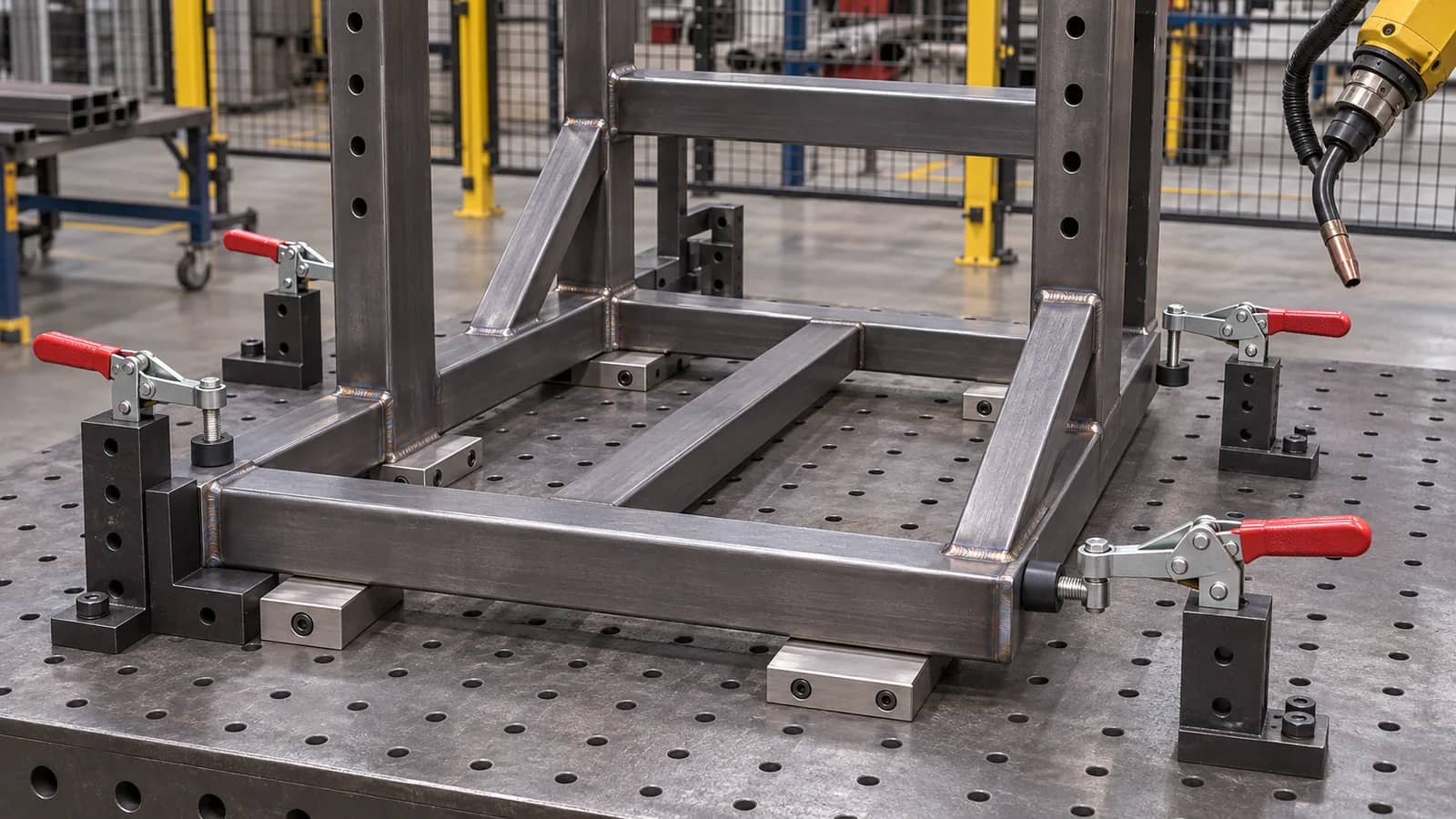
Compare the complete station sequence
Ask the supplier to show loading, locating, clamp confirmation, positioning, welding, torch cleaning, inspection and unloading for the quoted product mix. Identify the operator's tasks and the equipment that limits output. Multiple stations can create opportunities to prepare one part while another is welded, but only when safeguarding, access and the actual sequence support the overlap. Include station exchange and interruption recovery in the comparison.
Use the same timing basis for each proposal: measured or explicitly assumed times, included operator tasks, quality checks and part mix. Compare accepted assemblies over the intended production period after allowing for changeovers, planned service and interruptions. Keep the underlying observations with the proposal. The separate single-versus-dual-station guide provides a timing model; this checklist connects that result to the fixtures and equipment being purchased.
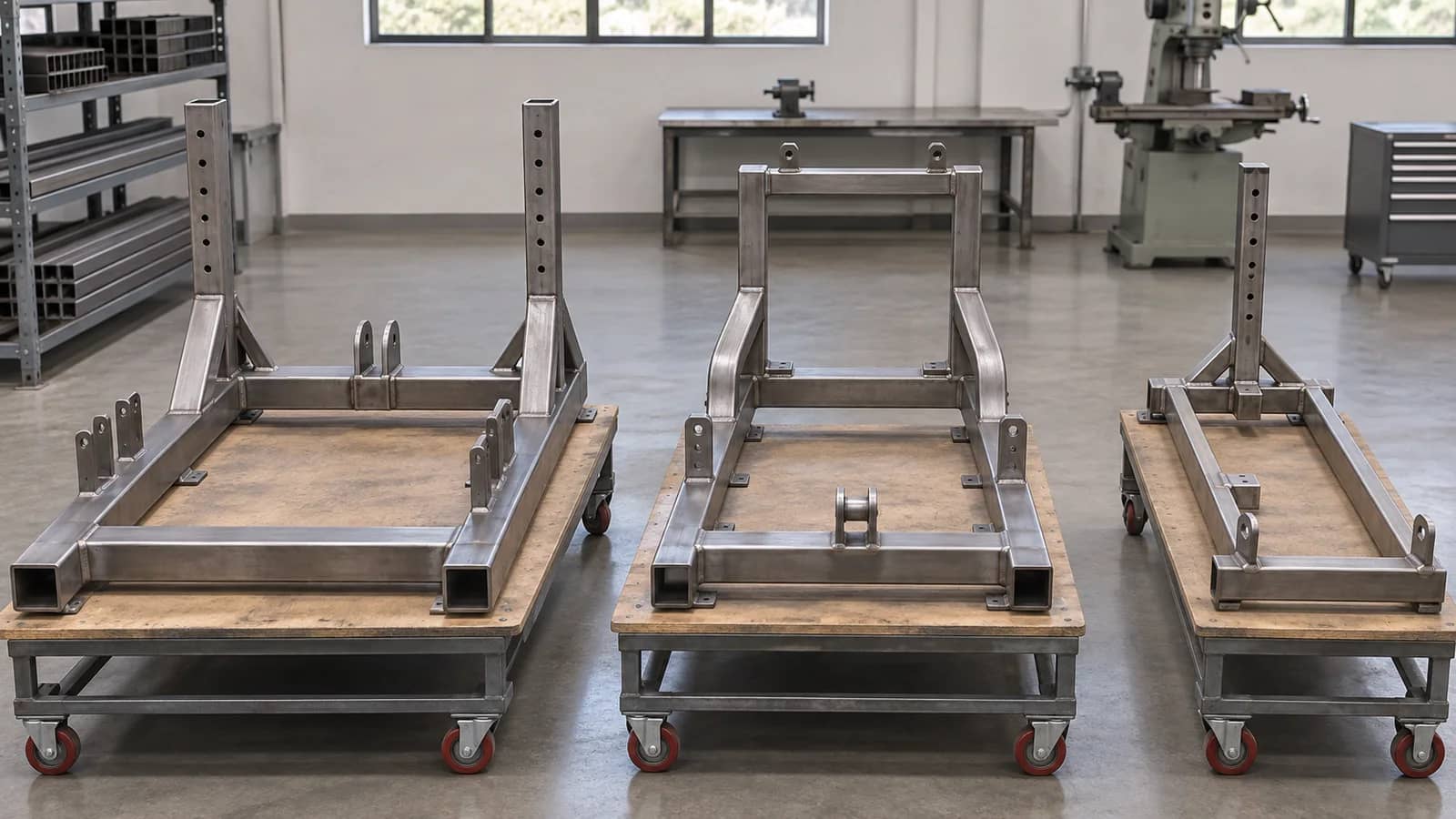
Specify appearance and structural acceptance separately
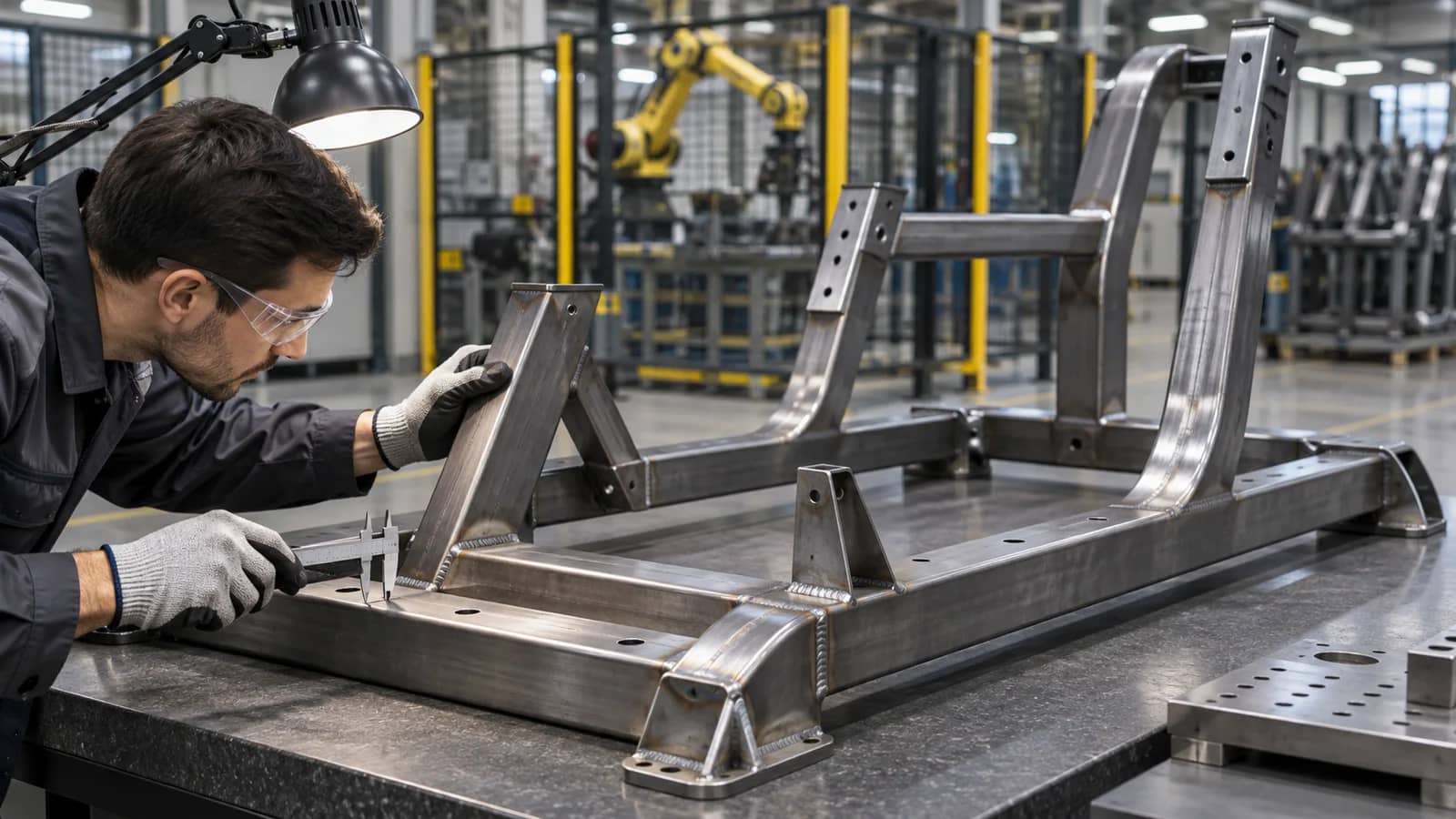
Mark visible welds, coating surfaces and assembly interfaces on the drawing. Agree which surface condition is acceptable before coating, whether grinding or blending is required and who performs it. A frame can meet a dimensional check yet need additional finishing around a visible corner or a mounting plate. Include masking, spatter removal and access for inspection where these operations affect delivery of the welded assembly.
The buyer's product specification should identify the required weld inspection, dimensional checks and equipment-level structural or durability tests. Assign the welding procedure, sampling plan, instruments and acceptance decisions to the responsible specialists. Measure representative assemblies after removal from the fixture. Keep the fixture's ability to locate components, the weld inspection result and the finished product's test requirements as separate checks in the purchase scope.
From product mix to comparable proposals
Map tube frames, datums and weld requirements
Choose fixture routes and the complete operating sequence
Normalize included equipment, options and buyer-side work
Run representative parts, changeover and agreed quality checks
Normalize the equipment and integration scope
Lincoln Electric's package descriptions distinguish a robot/software package, welding equipment and an integrated cell. Use that distinction when comparing offers for fitness equipment. Identify the robot and controller, power source, feeder, torch, fixture, positioner, controls, safeguarding and integration work. A package title is only the starting point; request the included model, quantity, software options and responsibility for each interface.
The D350S product page lists a 30–350 A output range and CO₂/MAG/MIG short-circuit and MAG/MIG pulse process options. Use the page to discuss a material, wire, gas, cooling and control package with the welding specialist. Match the proposed process to your tube sections and joint trials. For multi-axis positioning, distinguish the axes presenting the weld from motions exchanging a station, then include services and protected loading access in the proposal.
Further reading: Lincoln Electric — robotic package equipment scope ↗
Turn the comparison into an order and trial plan
Choose representative assemblies that exercise the common fixture and its most different included variant. Run the planned changeover, confirm the selected recipe and inspect the first accepted assembly after the change. Record the complete operating sequence and the finishing work still required. Agree who supplies sample parts, consumables, instruments and production staff for the factory test, then specify the site-dependent checks for installation.
Before comparing totals, resolve mandatory open items and keep optional future variants separate. Include fixture drawings, program and recipe backups, service access, training, wear parts and the support responsibilities needed by your operating team. Request a line-by-line reply to the matrix below. It gives purchasing a consistent basis for clarification while engineering confirms the part-family and process choices.
Fitness-frame cell proposal comparison matrix
Give every bidder these rows and ask for Included, Optional, Excluded or Open, plus the model, quantity, owner and acceptance method. Compare required totals after clarifying open items.
Copy the rows into your RFQ or investment worksheet.
| Purchase item | Define with the buyer | Supplier reply | Trial / handover |
|---|---|---|---|
| Assembly family | Variants, dimensions, mix, drawing revision | Included assemblies and options | Named representative assemblies |
| Incoming parts | Cut profiles, fit-up, coatings and preparation | Preparation work and acceptance conditions | Incoming sample measurements |
| Fixture architecture | Common references and different geometry | Base, nests, clamps, sensors and drawings | Locate, clamp, release and inspect |
| Robot/controller | Tool load, poses, environment and interfaces | Model, controller, options and cables | Access and complete sequence |
| Welding package | Material, joints, wire, gas and trial process | Source, feeder, torch, cooling, control | Representative weld inspection |
| Positioning/stations | Fixture load, orientation and loading tasks | Axes, arrangement, services and guards | Motion, transfer and protected access |
| Changeover | Variant order and batch pattern | Nests, recipes, identification and setup work | First accepted part after change |
| Appearance/finishing | Visible surfaces and pre-coating condition | Spatter removal, blending and masking scope | Agreed finish sample |
| Dimensions and tests | References, tolerances and product test plan | Gauges, inspection and external tests | Released-part report; quality owner |
| Production sequence | Good-part demand, staffing and timing basis | All tasks and remaining manual operations | Observed full-cycle breakdown |
| Installation | Utilities, floor, extraction and destination | Supply/install split and commissioning | Site checks and responsible parties |
| Operating handover | Training roles, service and file access | Manuals, backups, wear parts and support | Document register and restoration check |
Frequently asked questions
What information is needed for a fitness-frame welding quote?
Provide assembly drawings, material and tube sections, variant mix, incoming fit-up samples, required good output, quality and finish requirements, changeover pattern and site details. Identify which manual and finishing work should be included.
Can different gym frames use one fixture?
Compare their datums, support points, clamp access, joints and removal paths. A common base with dedicated nests may work for a defined family; substantially different geometry may justify separate fixtures. Include first-piece checks after adjustment.
Should I choose a single or multi-station cell?
Compare loading, positioning, welding, cleaning, inspection, unloading and changeover with the same product mix. Check whether safe loading overlap actually reduces the limiting task, and include station exchange, floor space and maintenance in the decision.
How should I compare welding power sources?
Match the material, joint, welding process, wire/gas package, duty requirements, cooling and robot communication. Use the D350S specifications as selection inputs, then agree representative-part trials for the actual tube family.
What must be checked before accepting the cell?
Run the agreed assemblies and variant changes, inspect released dimensions and specified weld/finish requirements, check the full sequence and confirm documentation, backups, training and site responsibilities. Product-level tests follow the buyer's applicable specification.
References and further reading
Request a quote around your fitness-frame family
Send drawings, tube sections, material, product mix, finish requirements, target output and destination. TubeFrame can help connect the fixture, station arrangement, robot and welding equipment with a clearly defined supply and integration scope.
Request a welding-cell quote ↗