Multi-Robot Welding: One Workpiece, Connected Stations
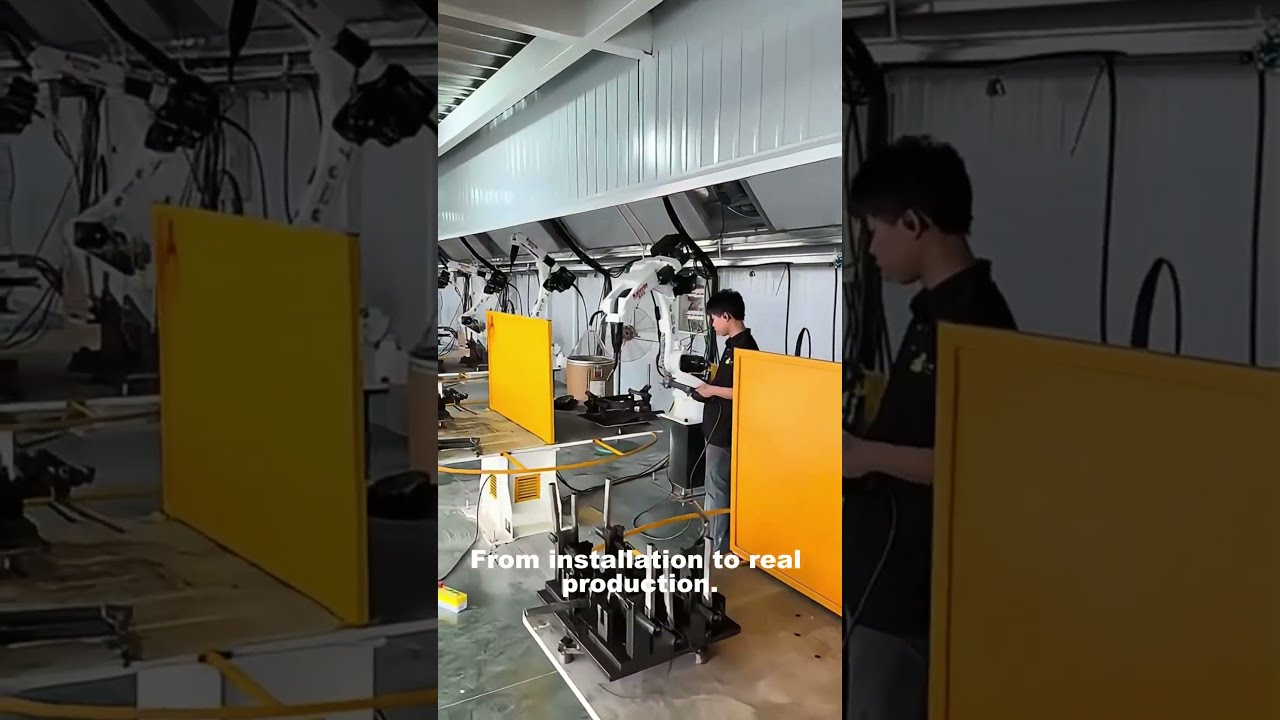
A welding line is not simply two robots working near each other. This TubeFrame Automation short follows one workpiece from a welding station to a material-handling robot, onward to another welding station and finally to a conveyor. That sequence is useful for teams planning a multi-robot welding system because the transfer points can govern fixture design, controls, safety and cycle balance as much as the weld itself. Watch the motion first, then use the station map below to decide what belongs in your supplier brief. The linked robot and fixture pages are comparison routes for a new project, not a claim that those specific models appear in the footage.
Source: TubeFrame Automation YouTube channel ·
At a glance
- The video follows welding → robotic transfer → welding → conveyor handoff for one workpiece.
- The application combines welding stations with material handling; the interfaces between them are part of the system.
- For a quotation, define the part, station sequence, gripping points, weld requirements and required output.
- Explore related welding and handling platforms, then send your project brief for a configured scope.
What is multi-robot welding automation?
Multi-robot welding automation connects two or more robot tasks around a controlled workpiece flow. In this video, a handling robot transfers a part between robotic welding stations before conveyor handoff. For a buyer, the essential design question is not the robot count alone: it is how each station presents, grips, confirms and releases the same workpiece without losing access, traceability or a safe operating sequence.
The transfer points shape the welding line
The first welding station must leave the workpiece in a position the handling robot can reach. The gripper then needs a repeatable pick surface and a clear route to the next fixture. At the second station, placement must support the remaining welds without forcing the torch into poor access or the fixture into excessive complexity.
This is why a multi-station proposal should show the part’s datum scheme, pickup and placement poses, transfer path, conveyor handoff and the signals exchanged at each step. The video shows the sequence; your own part geometry and production target determine the equipment.
What a buyer should ask a system supplier to include
Request one responsibility matrix covering welding robots, process equipment, handling robot, gripper, fixtures, conveyor interface, guarding, controls and programming. A quotation should say which supplier owns interlocks and recovery when a transfer fails or a weld station is unavailable.
For the fastest useful discussion, send a representative part or drawing, weld map, material, part weight, target output and plant layout. Those inputs help suppliers define a comparable request.
Project specifications that determine the line
These are design inputs for a new proposal, not measured specifications of the system in the video.
- Workpiece family
- Drawings, dimensions, material, mass and variation between parts.
- Weld scope
- Joint locations, process, sequence, quality criteria and access constraints.
- Handling interface
- Pickup areas, orientation, gripping limits and transfer poses.
- Fixtures
- Datums, clamping method, loading mode and changeover requirements.
- Conveyor handoff
- Presentation, pitch, signal exchange and downstream ownership.
- Production target
- Required good parts per shift, availability assumptions and recovery expectations.
Single welding cell or connected stations?
Both approaches can be appropriate. The part mix, weld sequence and transfer burden decide which architecture deserves a feasibility study.
| For your project | Single cell | Connected multi-station line |
|---|---|---|
| Workpiece movement | One loading and unloading boundary | Defined transfer and conveyor handoff between operations |
| Process allocation | Welds share one work envelope | Welds can be divided by access, time or fixture orientation |
| Controls | Cell-level interlocks and recovery | Station, transfer and downstream states must coordinate |
| Quotation scope | Robot, weld package, fixture and safety | Adds handling, transfer tooling, interfaces and line-level responsibility |
The workpiece path shown in the video
Use this observed sequence as a starting map, then replace it with your actual part and weld plan.
- 01Present the workpiece
- 02Weld at station one
- 03Transfer with a handling robot
- 04Weld at station two
- 05Release to the conveyor
Questions buyers ask
Why use a handling robot between welding stations?
A handling robot can transfer and orient a workpiece between operations when manual movement or a fixed transfer device does not fit the required sequence. The choice depends on part geometry, weight, takt and access.
Does this video identify the welding or handling robot models?
No model is named in the video description. The linked robot platforms are related options for a new project and should be selected against the actual workpiece and manufacturer data.
What makes a multi-robot welding quotation comparable?
Ask each supplier to state the station sequence, included equipment, transfer and conveyor interfaces, cycle assumptions, acceptance tests, installation boundary and exclusions.
Can the line be configured for different workpieces?
A part family can be reviewed for common datums, tooling and changeover, but feasibility depends on the drawings, weld access, variation and target output. Send representative variants before selecting equipment.
What should I send to discuss a similar line?
Start with a part drawing or sample, weld map, material, mass, desired station order, output target and available layout. Photos of the current process also help define handling and safety boundaries.
Turn the station sequence into a welding-system scope.
Share the part, weld map and planned flow. We can outline the robot, handling, fixture and interface decisions needed for a project-specific quotation.
More videos
Technical references
Schema.org: VideoObjectGoogle Search Central: Video structured data